What Are the Best and Most Affordable Semrush Alternatives?
 Written by James Parsons • Updated April 15, 2026

Semrush is a fantastic platform that does a lot of things marketers need done one way or another.
The problem is, they know it. While a mid-sized or larger business is going to be fine paying a bundle for a tool that does everything, a lot of marketers don't have that kind of budget.
When you're trying to build a business, and every guide and reference eventually tells you to get Semrush, you're staring down the barrel of a $200+ per month bill, and that's not something many businesses can just grab. And that's before the optional add-on modules adding more features, data, and credits.
What's a growth hacker to do? Well, there are a few possibilities.
Key Takeaways
- Semrush costs $200+ monthly, making it unaffordable for many small businesses and growth-stage marketers.
- SE Ranking, Mangools, and Ubersuggest are the top recommended affordable alternatives, each offering core SEO functionality.
- Mangools starts at just $30/month, making it the most budget-friendly option among the recommended platforms.
- Ahrefs and Moz were considered but excluded due to high pricing and stagnating data quality, respectively.
- Building a custom toolset from individual tools is possible but creates management headaches and potential cost overruns.
Semrush Without Semrush
Semrush does a lot of things, but will you?
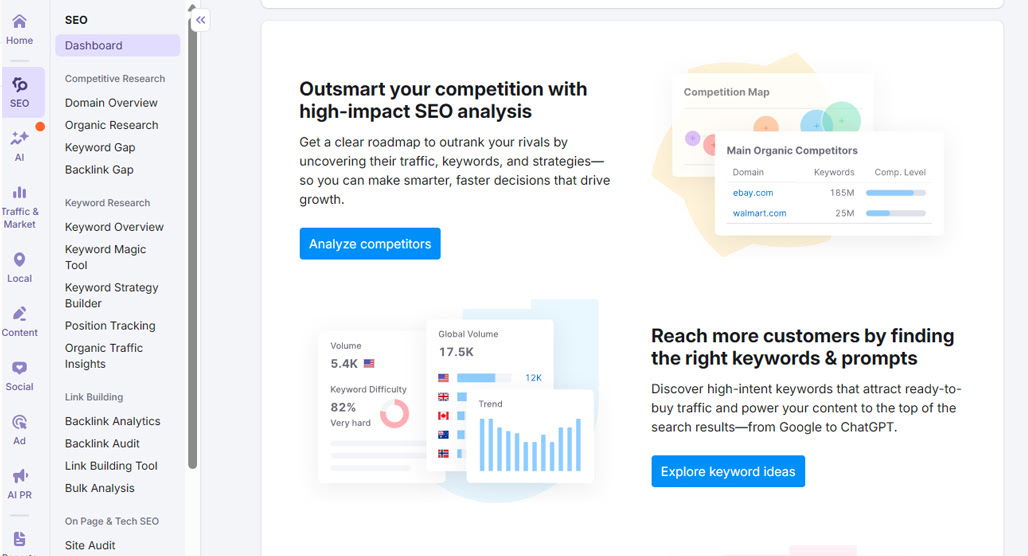
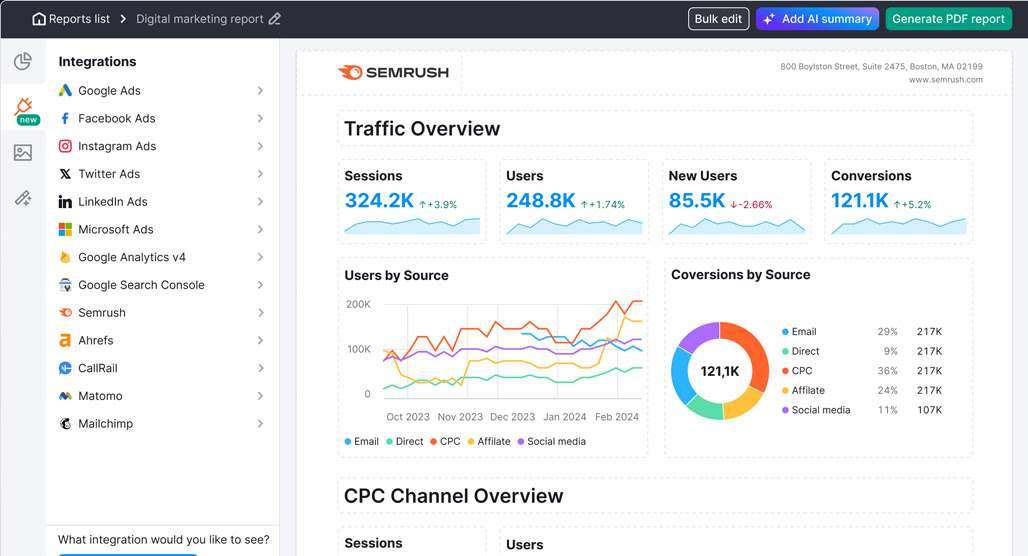
This is a common problem I see with marketers who are fairly new to the world of business. Tools like Semrush offer hundreds, if not thousands, of individual features, reports, data points, and more. Most of it goes way over your head or remains generally unused.
Maybe you don't know how to use the features. Maybe you don't know why you'd need them. Maybe your business isn't at the stage of growth or in the kind of niche where they'd be useful.
The way I see it, you have two choices, both of which are valid.
The first is to find a similar does-everything platform that is, nevertheless, a little pared down (and cheaper) than Semrush. There are a few of these out there, and they're what I'm focusing the bulk of this post on today.
The second option is the build-your-own Semrush option. This is where you identify the various tools, features, and reports from Semrush that you want to use, and find cheap or free tools that can provide that specific use case for you. Since mono-function tools are generally quite cheap (and some can be completely free), you can build your own pile of tools that replicates the functionality you want, for a fraction of the price.
The downside there is that you have to find and trust a dozen or more tools, hope they don't change their functionality or crank up pricing, and manage all of the different accounts, logins, dashboards, and data that comes with it all. It gets very tedious export-importing data between platforms multiple times per day just to have it all up to spec.
Today, I mostly want to talk about the Semrush-like platforms you can use instead of Semrush itself. There are a handful of platforms for general SEO functionality that I like, which can be a better option when you're on a tight budget.
The Most Affordable Semrush Alternatives I Recommend
Over my years of working in the SEO and marketing space, I've encountered probably thousands of different tools to accomplish all of the various tasks you need handled. Some of them have stood the test of time. Some have grown into major powerhouses. Others have stayed niche but functional. Many have disappeared entirely, bought and merged or simply shuttered.
What I'm getting at is that I've tried, tested, and used a lot of different tools over the years, so I have a pretty good idea for what's comparable, what's decent, and what you might as well skip.
Below, I've put together the list of affordable Semrush-like tools I recommend the most to marketers on a budget. Obviously, if you can afford Semrush, I still think it's one of the best platforms out there, but if it's out of reach, you aren't left with no alternative.
Which one should you use? That depends on what you want most out of an SEO platform. The recommendation changes depending on whether you're more focused on keyword and link analysis, technical SEO, general rank tracking and competitive awareness, or some mixture of all of that and more.
SE Ranking
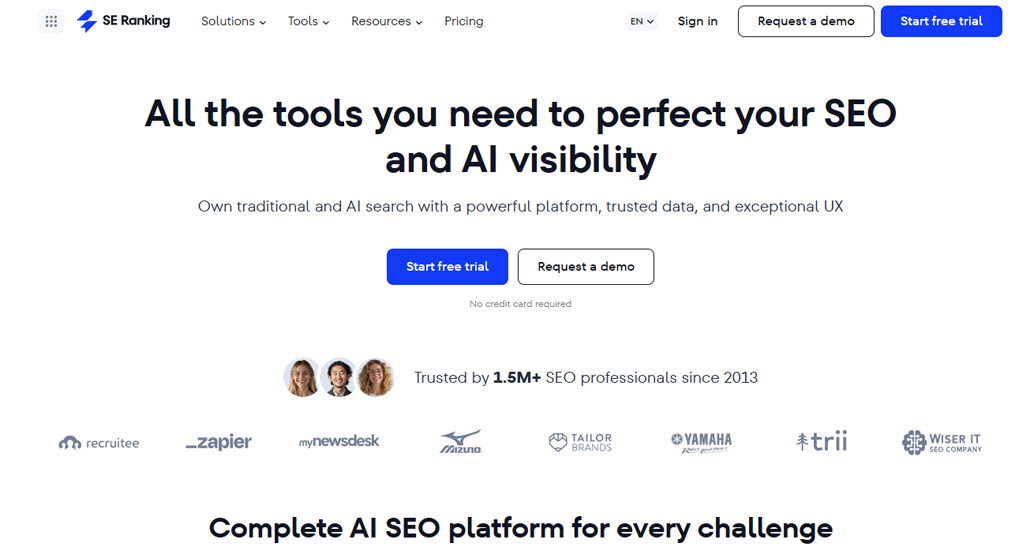
SE Ranking is an SEO tool that is somewhat focused on content marketing alongside more traditional SEO tools and features. It's probably not a surprise that I like it, then. They have the core tools you would expect, like on-page SEO analysis, rank tracking, website auditing, competitive analysis, backlink checking, and local SEO analysis. They have a keyword tool that is pretty good, including a dedicated keyword grouper for clustering.
They also have a bunch of AI-focused tools. These range from AI writers (which I don't recommend) to "rank" tracking in ChatGPT, Gemini, and Perplexity, to the AI Overview tracking.
When it comes to pricing, the most expensive plan you can get from SE Ranking is a bit more expensive than the cheapest (non-introductory) price you can get for Semrush. That gives you thousands of daily keywords tracked, tons of rank tracking, and pretty much all of their features.
The cheapest SE Ranking plan is still quite powerful, with 500 daily tracked keywords, rank tracking, site auditing, backlink checking, and more. You can also get some of the higher-tier features as dedicated add-ons instead, which can work out cheaper than a whole plan upgrade if you aren't looking for all of the higher-plan features.
There are a few ways that SE Ranking falls short of what Semrush offers. For one thing, while it has a decent amount of linking data that can be quite valuable, Semrush has a lot more actionable recommendations and data for active link building.
Mangools
The second affordable Semrush alternative I highly recommend is Mangools. Mangools started life as a keyword research tool, and they're still really good at it. A lot of people will still rank Semrush ahead, but I think Mangools gives them a run for their money, with the one major downside being a cap on results. If the sheer volume of keywords is part of what you want, Semrush wins.
Mangools also has other features, of course, otherwise it wouldn't be a Semrush alternative. One of the big ones is backlink analysis. This one is hard to give to anyone but Semrush, but Mangools is at least acceptable enough to use. You miss out on some useful data, but sometimes, less is more, right? Okay, well, it depends on whether or not you actually find meaning in the data, which depends on the individual marketer.
Other features are pretty comparable. Rank tracking is hard to do in a way that adds serious value, so both are basically the same, for example.
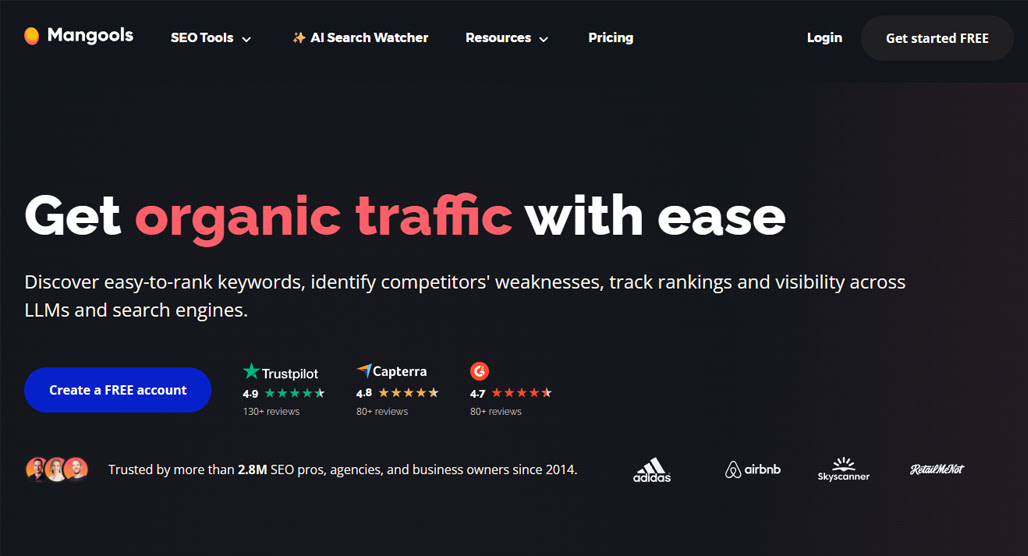
Pricing is where Mangools comes out far ahead. The top-tier Mangools plan is still less than half of the lowest-tier Semrush plan. Mangools' introductory plan is just $30 per month, too. Sure, it's pretty limited in what it can do for you, but it's meant for growth hackers, individual entrepreneurs, and similar low-budget businesses.
One note here is that this is the price without Mangools' AI add-ons. Things like prompt monitoring and LLM tracking are an add-on that bumps up the pricing, though not actually by much. The bundle takes the $30 plan to $38, for example.
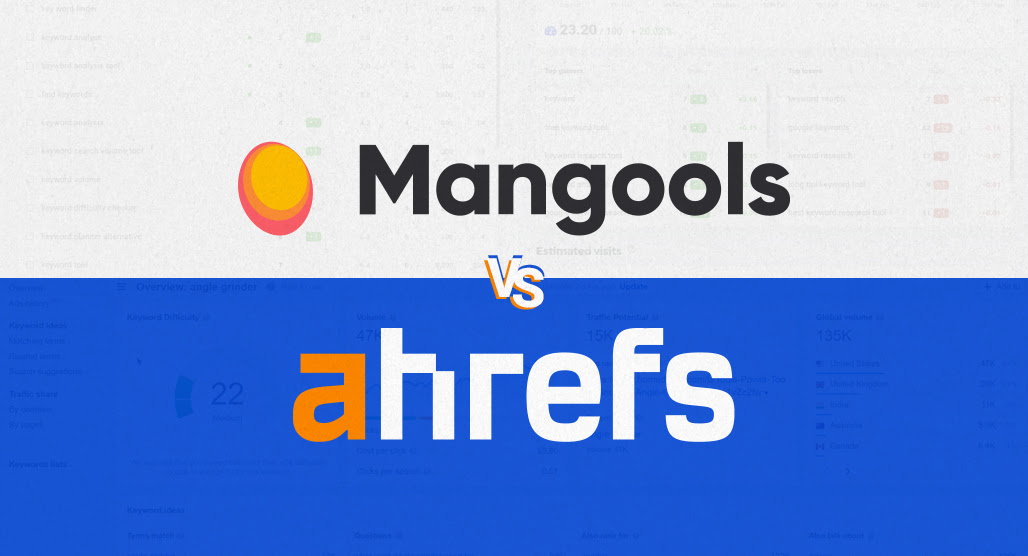
Overall, I think you can get a lot done with Mangools for a pretty reasonable price, and it's only when you're starting to outgrow it that it's worth looking higher at things like Semrush. If you want a deeper look, check out this Mangools vs Ahrefs comparison to see how it stacks up against another major platform.
Ubersuggest
Ubersuggest is perhaps one tool that has gone through the most evolution in the industry without changing names. At one time, it was little more than a keyword suggestion engine. Eventually, Neil Patel bought it and rolled it into his service offerings, adding more and more features, changing more and more about it, and will likely continue to do so.
Honestly, I'm a little surprised that he's kept the name as long as he has.
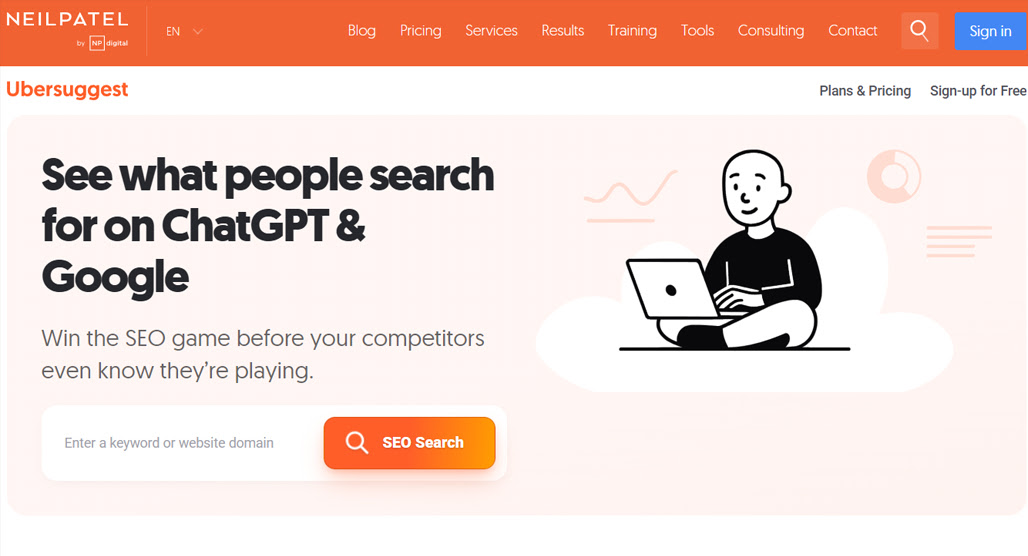
The primary focus of Ubersuggest is still on keywords. In fact, you can even get a taste using the free search. Keyword research through Ubersuggest starts with up to 20,000 suggested keywords per month, and that's pretty significant. I know I'm not going to be using 20,000 keywords in a month. Or a year, most of the time.
Beyond keywords, you also get rank tracking, site auditing, competitive analysis, backlink analysis, and more. There are also a bunch of add-ons for expanded limits, added users, and other packages for just $5 each.
Pricing for Ubersuggest is pretty similar to Mangools; $30 per month for the starter plan, up to $100 per month for the enterprise plan.
Of the three I'm recommending here, I'd put Ubersuggest at the bottom, but that doesn't mean it's bad. It's definitely worth a look if it's up your alley.
Other Tools Worth a Mention
To round things out here at the end, I have a couple of other tools I wanted to mention, with a bit of reasoning for why they aren't on the main list above.
The first is Ahrefs. I love Ahrefs, don't get me wrong. It's probably one of the top marketing tools ever produced, and their big data index is one of the biggest in the world. That gives them access to some of the best data to analyze, which means the best metrics this side of Google themselves.
So why aren't they on the list? Pricing. Ahrefs is cheaper than Semrush, but only by a tiny amount. The one plus side is that they have a starter plan, but that starter plan is pretty limited and has relatively little access to tools and data, so it's not really comparable to Semrush out the gate. I definitely recommend Ahrefs if you can swing it, but when I'm talking purely about affordable alternatives, it doesn't clear the bar.
The second one to mention is Moz. Moz is one of the oldest still-extant SEO companies around. They have a decent number of tools and some pretty good data at their disposal. They also have a starter plan that clocks in at less than a third of the price of Semrush's starter plan.
Why doesn't it make the list? There's no one reason, really. I feel like Moz has slightly stagnated over the years. Their data hasn't really kept up, and while some of their tools are good, a few feel like afterthoughts, and you occasionally run into friction doing things you're used to having done easily on other platforms. A handful of their tools fall short in terms of data or utility, as well.
I definitely recommend Moz for their blog and expertise, and their Keyword Suggestions tool is solid, but there are too many little points of friction for me to fully recommend them as a Semrush alternative.
Third up is SEO PowerSuite. SEO PowerSuite is what I would classify as an "old-school" platform. That is, it's not SaaS like everything else on this list. It's a program, that you download, to your computer. Remember those?
While the program does have a lot of very powerful features and access to some great data, it also requires you to have a powerful computer and a solid internet connection to really make use of it. Moreover, there's the slim risk that a surge of activity can get your connection throttled or your IP penalized by certain websites, which can be a huge hassle.
If you have the ability to run it effectively, it's great. If you don't, it'll be nothing but hassles.
Beyond this, you have a lot of tools that are good, but narrow. If you're trying to build your own replica of Semrush out of individual tools, these can be great options, but it's also quite easy to go over-budget through nickel-and-diming yourself, and still be left with something worse.
- Majestic. Majestic is fantastic for what it does, but what it does is quite narrow. For backlink checking, it's incredible. For anything else, it's not.
- Raven Tools. There was a time when I thought Raven might have a chance of becoming the #2 analytics platform after Google Analytics, but then it didn't happen. Still, their service offers some very powerful technical SEO auditing and competitive analysis features, which can be a great part of an overall SEO setup.
- Keyword Surfer. This is a fairly useful keyword tool that is mostly focused on fast and convenient utility over depth of data. That's why it's a browser extension rather than a whole platform.
- Greenflare. Technical SEO auditing and data scraping are usually the domain of Screaming Frog alternatives and similar tools, but Greenflare is a strong contender, particularly as a cloud-based alternative.
Overall, though, I would rather go with one of the three platforms I outlined above rather than a hodgepodge of individual tools. Unless you can rig up an elaborate dashboard with data fed in through Zapier or something, the convenience of having everything in one place is just too important, at least to me. All the time you waste shuttling data around and tabbing between dashboards adds up.
This is where I ask for your opinions. If you've used Semrush, do you have any alternatives you would recommend? Remember the goal here, though. You want options that are comparable in terms of features, but more affordable to small businesses. If you come in here suggesting something that costs $5 less than Semrush, I'm gonna frown in your direction.

Related Posts
Leave a Comment


Fine-tuned for competitive creators
Topicfinder is designed by a content marketing agency that writes hundreds of longform articles every month and competes at the highest level. It’s tailor-built for competitive content teams, marketers, and businesses.
Get Started