What Is "Topic Fatigue" and How to Identify It Before You Write
 Written by James Parsons • Updated June 29, 2026

Most writers chalk this up to burnout or a bad week. But the problem is that it lives in the topic itself, or more, in the relationship between the writer, the audience, and a subject that has quietly been worn down to its bones. That phenomenon has a name, and it's the difference between pushing through mediocre content and actually fixing the source of the problem.
Topic fatigue does not announce itself loudly - it tends to creep in slowly, hiding behind metrics that look fine on the surface while slowly eroding the thing that makes content worth reading: genuine perspective, original thought, and the sense that a human being cared enough to say something worth hearing. When readers start to feel it, they don't complain. They just stop showing up.
The good news is that topic fatigue is identifiable before you write a single word of a piece that's doomed to disappoint. Knowing what to look for changes how you review your content pipeline. That is what this post will talk about.
Key Takeaways
- Topic fatigue occurs when a subject is covered so heavily and uniformly that new content struggles to add genuine value.
- Saturated topics differ from dead ones; fatigued topics can reopen when something new happens or audiences change.
- Early warning signs include identical top-ranking articles, declining Google Trends data, and weak engagement on similar content.
- A quick 20-minute pre-writing audit helps identify fatigue before committing to a piece that's unlikely to perform.
- Reviving fatigued topics requires narrowing the audience, connecting to fresh triggers, or covering underrepresented angles in depth.
Table of Contents
What Topic Fatigue Actually Means (and What It Doesn't)

Topic fatigue happens when a subject has been covered so heavily, so uniformly, or so repetitively that new content on it struggles to add value. The topic itself isn't bad. The content ecosystem around it has become so dense that there's little room left to say something that hasn't already been said better elsewhere.
There's an important line to draw between a topic being saturated and a topic being dead. Saturated means the space is crowded and the bar to add something worthwhile is high. Dead means no one cares anymore. These are not the same thing, and mixing them up gives you unnecessarily abandoned content ideas.
Topic fatigue is a content quality problem as much as it's a volume problem. When too many pieces cover the same ground in the same way, readers start to lose trust in new content before they've even read it. They've seen the same post under twelve different headlines, and they know it.
What topic fatigue is not is a permanent ban. A topic that feels exhausted can open back up when something new happens in that space, when audience needs change, or when someone takes a different angle. The fatigue belongs to the latest wave of content, not to the subject itself.
Think of it as a signal, not a sentence. When most content on a topic reads the same way, makes the same points, and targets the same questions, that's the indicator that the topic has fatigue. It doesn't mean walking away forever - it means the standard approach to that topic has run its course. That doing what everyone else has done won't get you far.
This distinction matters because it changes how you respond to it, and it's what the rest of this gets into.
Why Some Topics Burn Out Faster Than Others
Not every subject gets exhausted at the same rate. A lot can depend on how you are writing about it, how fast the publishing cycle moves, and if the topic has any staying power past a news spike.
Trending topics are the fastest to burn. When something takes off in the news or on social media, hundreds of pieces get published within days. The relevance window is short, and by the time most writers finish drafting, the conversation has already moved on.
Algorithm-chasing makes this worse. When writers see a topic performing well in search or on social platforms, they pile in to write near-identical pieces. That gives you a feedback loop where the same ground gets covered repeatedly, and readers stop engaging because there's nothing new to take away.
Evergreen content is not immune. A how-to post on a classic subject can still hit fatigue if dozens of sites are republishing thin updates every six months just to stay current in search rankings. The topic stays relevant. But the content pool can become stagnant.
Niche educational content holds up better because fewer people are writing it. There's less competition, and readers in that space are usually hungry for depth. Opinion and thought leadership pieces are harder to predict because they live or die on the originality of the angle - not the topic alone.
The table below maps out how different topic types tend to compare.
| Topic Type | Fatigue Risk | Key Contributing Factor |
|---|---|---|
| Trending/News-based | High | Short relevance window, mass coverage |
| Evergreen how-to | Medium | Republishing cycles, thin updates |
| Niche educational | Low | Smaller publishing volume |
| Opinion/thought leadership | Variable | Depends on angle originality |
The pattern here is about volume and velocity. The more writers chase the same signal at the same time, the faster a topic gets used up. Keyword velocity plays a real role in how quickly that saturation sets in.
The Early Warning Signs You Can Spot Before Writing
There are a few reliable tells that a topic has run its course, and you can read them before you write a single word. Most of these tells are right in front of you.
The most telling sign is when the top-ranking articles on a topic all look the same. If you search your intended topic and the first page returns five articles with near-identical headings, the same structure, and the same advice, that sameness is telling you something. There is nothing new to add, and search engines have already decided who wins that conversation.
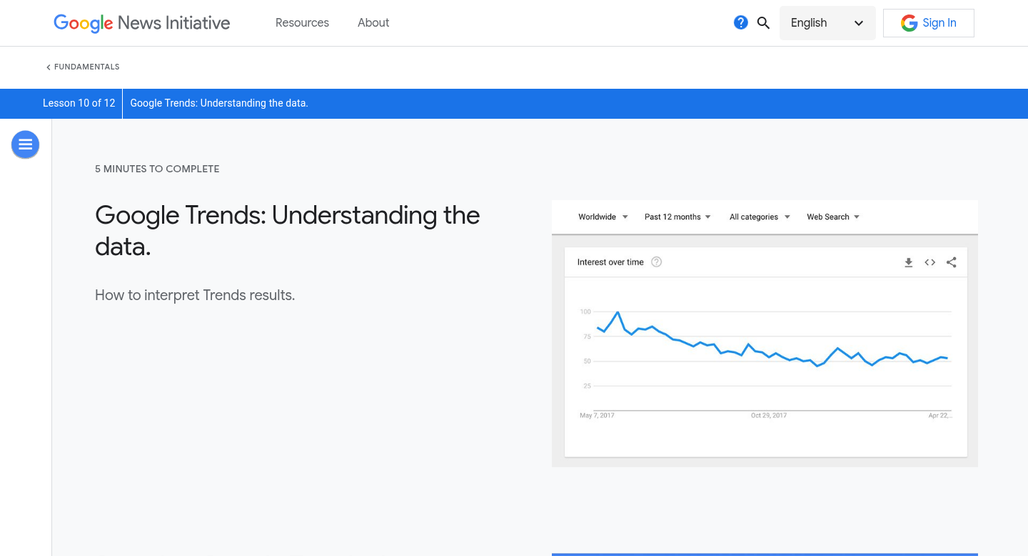
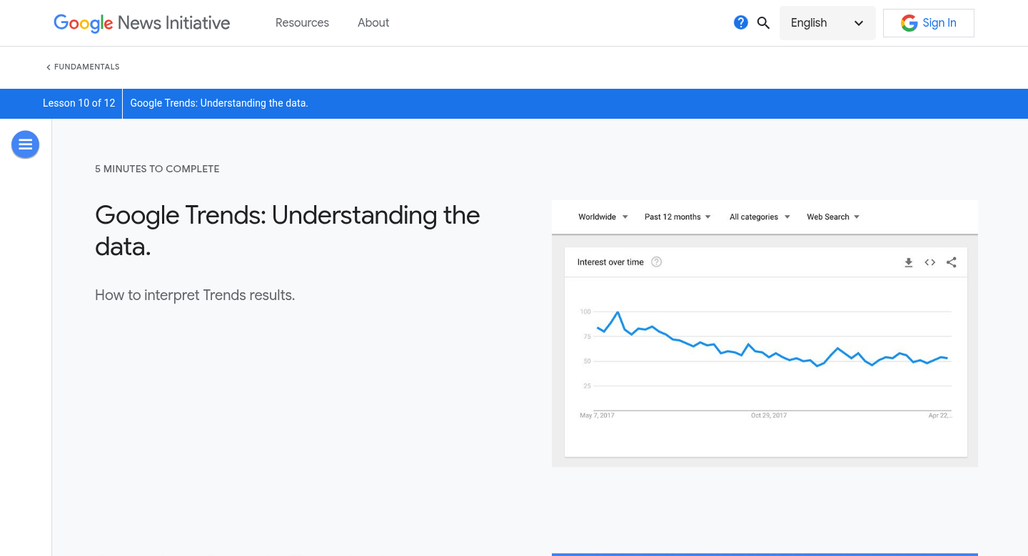
Google Trends is another tool worth checking early. A topic with a steady downward slope in search interest over the past 12 months is losing its audience, not gaining one. You can also use Google Trends comparisons to validate topic ideas before you commit to writing. A topic that spiked once and never recovered is a similar story.
Engagement data on already-published content is also worth looking at. If articles on a similar topic from the past year have low comment counts, weak social sharing, and short average read times, that pattern speaks to how readers are responding to the subject - not just to one writer's execution of it.
Then there's editorial overlap. If your content calendar already has two pieces that touch on the same territory and you are thinking about a third, that's a signal worth taking. It is also worth asking which types of blog posts aren't ranking after the Google HCU - some content categories have become structurally harder to compete in.
A lot of writers and editors sense this instinctively. You look at a topic quickly and feel a flatness - a sense that you have read this before. That reaction is worth trusting. It does not necessarily mean you are wrong to write the piece. But it does mean you should stop and look at the data before you commit.
The tells are not hidden. They are just easy to dismiss when you are working to fill a calendar or meet a deadline.
How to Run a Quick Pre-Writing Topic Audit

Once you find these warning signs, the next step is to build a short check into your process before you write a single word - it does not have to take long - twenty minutes is usually enough to get a read on where a topic stands.
Work through these five steps in order.
1. Search the topic as a reader would. Type your intended title or a close version of it into a search engine and look at what comes back. You are not doing keyword research here - you are just getting a feel for how much already exists and how uniform it looks.
2. Scan the top results for sameness. Open the first five or six pages and skim the headings. If the structure, subheadings, and are nearly identical across them, that's a strong signal the topic has been written to a formula.
3. Check trend data. A quick look at Google Trends will tell you if interest in the topic is growing, flat, or declining. A declining trend does not automatically mean you should walk away. But it's helpful context to have before you commit.
4. Review your own archive. Search your existing content for anything that covers the same ground. Overlap with your own work is as much a problem as overlap with competitors - and it's easy to miss when you are close to your own output. A scan for keyword cannibalization can help surface issues you might otherwise overlook.
5. Ask what your version can add. This is the most important question. Write one sentence that finishes the phrase "my piece is different because..." and see how easy or hard that is to do. If you have a hard time finishing it, that tells you something worth noting.
Keep this audit short and focused on fatigue detection. You are not building a full content strategy here - you are just making a more well-educated choice about whether to move forward.
Angles That Can Revive a Fatigued Topic
A fatigued topic is not necessarily a dead topic. Sometimes the problem is not the subject itself but the angle everyone is taking to write about it.
The most reliable way to breathe life into a worn topic is to get specific about who you are writing for. A general post about "how to manage stress" has been written thousands of times. A post about how night-shift nurses manage stress between back-to-back shifts is a different thing entirely. Narrowing your audience usually forces you to narrow your angle too, and that specificity is what makes a piece feel helpful instead of recycled.
Another strategy is to pair the topic with something that has legitimately changed. New research, a recent event, or a change in the tools used can reopen a conversation that felt closed. The angle is the topic as it relates to something new, and that connection is what gives a reader a reason to engage with familiar material again.
You can also look for the perspective that has been left out. Most high-traffic content on any given topic tends to go along with the same point of view. A stakeholder, a role, or a circumstance that's underrepresented in existing content is a helpful way to stake out space that's legitimately uncrowded.
Here is an easy way to remember it:
| Strategy | What It Looks Like in Practice |
|---|---|
| Audience specificity | Rewrite the topic for one narrow group rather than everyone |
| Fresh trigger | Connect the topic to new data, a tool change, or a recent event |
| Underrepresented angle | Find the voice or perspective that existing content ignores |
| Go narrower | Cover one small part of the topic in real depth instead of all of it |
The narrower strategy deserves a little extra attention. Broad topics attract broad content. If you pick one small part of a well-worn subject and go deep on it, you are less likely to step on what already exists. This is also where finding pain point topics can give you a real edge - specific frustrations tend to be underloved by existing content.
Stop Before You Start - Your Content Will Thank You
If you've published a piece that quietly disappeared into the void - no shares, no comments, just the sound of online crickets - you're in good company. Most writers have. The difference going forward is that you now have a way to find these warning signs early, so what you publish actually earns its place in your reader's limited time and attention.
The goal was never to write less - it's to write with more intention. When you filter for fatigue before following a topic, you put no wall between yourself and your creativity - you find a better path through it. Your readers will see the difference - even if they never quite know why. Content diversification is one way to keep your publishing strategy fresh and resilient, so you're never overly reliant on a single topic or format.
FAQs
What is topic fatigue in content writing?
Topic fatigue occurs when a subject has been covered so heavily and uniformly that new content struggles to add genuine value. The content ecosystem becomes too dense, leaving little room to say something that hasn't already been said better elsewhere.
How is a saturated topic different from a dead one?
A saturated topic means the space is crowded and the bar to contribute something worthwhile is high. A dead topic means no one cares anymore. Fatigued topics can reopen when new events occur or audience needs shift.
What are early warning signs of topic fatigue?
Key signs include top-ranking articles with near-identical structures, declining Google Trends data, and weak engagement on similar published content. If existing articles all make the same points, the topic has likely been written to exhaustion.
How do you audit a topic for fatigue before writing?
Search the topic as a reader, scan top results for sameness, check Google Trends, review your own archive for overlap, and ask what your piece adds that others don't. This process takes roughly 20 minutes.
Can a fatigued topic be revived?
Yes. Narrowing your audience, connecting the topic to recent events or new data, or covering an underrepresented angle can reopen worn subjects. The fatigue belongs to the existing wave of content, not the subject itself.

Related Posts

Leave a Comment


Fine-tuned for competitive creators
Topicfinder is designed by a content marketing agency that writes hundreds of longform articles every month and competes at the highest level. It’s tailor-built for competitive content teams, marketers, and businesses.
Get Started