How to Build a Content Moat Using Keyword Research in 2026
 Written by James Parsons • Updated June 12, 2026

This is not a reason to panic. But it's a reason to think differently. The old playbook - publish, target decent keywords, wait for compounding traffic - still has value. But it's no longer enough on its own. When AI can synthesize a basic answer to almost any informational query in seconds, the content that survives is the content that can't be absorbed or replicated. That is a much higher bar than most editorial calendars are built around.
A content moat is what sits on the other side of that bar. The term comes from competitive strategy - a moat is whatever makes your position legitimately hard to erode. In content terms, it means building a body of work so well-matched to your audience, expertise and perspective that no algorithm update or AI summary can flatten it into a commodity - it's less about volume and more about depth, differentiation and deliberate keyword strategy working together.
What follows is a helpful look at how to build that advantage in 2026 - starting with the keyword research decisions that set the entire foundation.
What a Content Moat Actually Means in the Age of AI Search
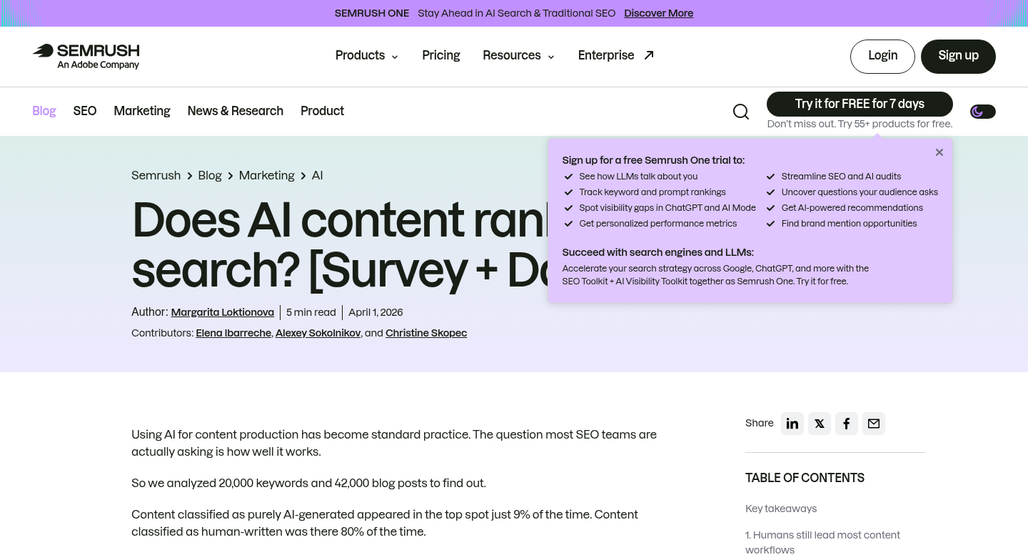
A content moat is the depth of authority your site builds around a subject so competitors and AI-generated pages have a hard time replacing you - it has nothing to do with how many articles you publish; it has everything to do with how well those articles work together to signal that your site is the favorite source on a topic.
That distinction matters more now than it did a few years ago. AI tools can produce generic content at scale, and search engines have had to get better at picking which sources actually deserve to rank. The sites that hold their ground tend to own a topic through interconnected content instead of large coverage of loosely related keywords.
That is why the old "just target keywords" strategy has a ceiling. A single post optimized for a search term is easy to replicate. But a cluster of content that builds entity relationships - linking places, products, and concepts in ways that reinforce each other - is much harder to displace. One study found that entity-based optimization caused 61% organic growth over eight months, which tells you something about how search engines now reward depth over breadth.
A helpful way to remember it is to ask what would be lost if your content disappeared. If the answer is "not much, because ten other sites cover the same ground," that's a sign you have a content library but not a moat.
The difference comes down to what makes your content hard to copy or replace. That can be first-hand expertise, a perspective no one else brings, or the structured depth that answers follow-up questions before a reader thinks to ask them. Generic content, no matter how well it ticks keyword boxes, does not build that.
One common mistake is treating volume as a proxy for authority. Publishing hundreds of short, surface-level posts can look like a content strategy from the outside. But search engines and readers can tell when a site is wide but shallow. Blogs with zero organic visitors often fall into exactly this trap.
The next section gets into how to find the keywords that help you do that.
How to Find Keywords That Defend Territory, Not Just Chase Traffic
Most keyword strategies are built around volume. The goal can become to find a big number and write toward it. That strategy works fine for traffic spikes. But it does very little to build the depth that keeps readers coming back or signals authority to search engines over time.
The better move is to think in terms of topic ownership instead of chasing rankings. One post ranking for one keyword is a foothold. A cluster of 15 to 20 interconnected pieces covering every angle of a subject is territory. There is a difference between the two.
Start with long-tail keywords and work outward
Long-tail keywords make up around 91.8% of all searches and they convert at roughly 2.5 times the rate of shorter, wider terms. They also tend to face less competition, which makes them a more practical place to build momentum. You want to find a set of related ones that together cover a topic from multiple directions, not to target one long-tail phrase in isolation.
Instead of targeting "content marketing," just to give you an example, build around "how to create a content calendar for a small business" and ten variations just like it, where each piece supports the others and signals to search engines that your site legitimately covers this space.
Map intent, then find the gaps
Once you have a keyword list, group terms by what the person searching them actually wants. Some want a quick answer, some want to compare options, and some are ready to act. Mixing these up in a single piece of content is one of the most common reasons articles underperform.
After you map intent, look at what your competitors are ranking for and then look harder at what they are not covering. Topical gaps are where moats get built. If everyone in your space is writing the same five articles, the opportunity is in the questions those articles leave unanswered.
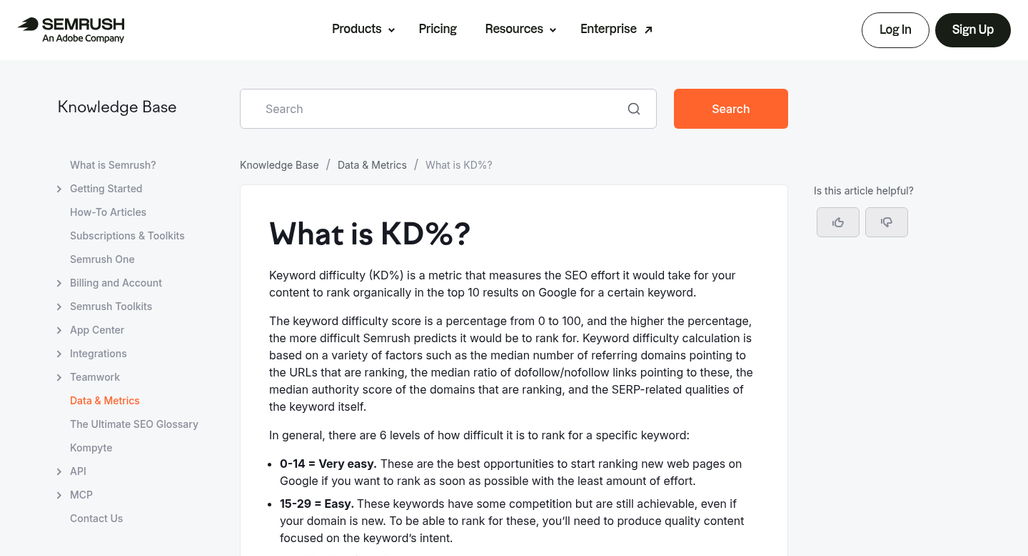
One thing to watch for is the pull toward high-volume terms with no realistic path to rank for them. A keyword with a difficulty score your domain can't support wastes time and produces content that sits on page four indefinitely. Relevance and reachability is the combination that actually compounds.
Building Topic Clusters That AI Overviews Can't Ignore
Once you have the right keywords, the next question is how to arrange them. There is a difference between writing person articles and building a connected body of content that signals genuine authority across a whole topic area. The second strategy is what gets you into AI Overviews.
BrightEdge data shows that pages sitting at position one have a 33.07% chance of being cited in an AI Overview; at position ten, that drops to 13.04%. It's not a small gap - it means the structural work you do to earn top rankings directly feeds into AI visibility too.
Topic clusters are the main way to push pages toward those top positions. The idea is to build a main pillar page that covers a large subject in depth and then support it with more focused pages that each go deep on an angle. Those supporting pages link back to the pillar and to each other where it makes sense.
A pillar page only works if the content around it is legitimate. A thin pillar linking to equally thin supporting articles doesn't signal authority to Google or to the AI systems pulling citations - it just looks like pages about the same thing.

Entity relationships matter here as well. Search engines don't read words anymore - they map the relationships between concepts, places, and things. Understanding parent topics is one part of getting that structure right.
Consider what that looks like in practice. A pillar page on "home loan refinancing" should link to supporting pages that cover credit score thresholds, break-even timelines, lender comparison frameworks, and rate lock strategies, and each page earns its place by adding something the pillar can't cover in full.
The internal linking between those pages also helps distribute authority across the cluster so strong pages lift weaker ones over time. A group of pages can start to work as a unit instead of a bunch of separate articles. Tools like Ahrefs' content gap analysis can help you spot missing pieces in that structure.
Building this architecture takes more planning than writing to a keyword list. But it's what turns a content library into something that holds its ground.
Using Original Data and Publishing Cadence to Widen the Moat

Topic clusters give you structure. But original data gives you something no one else can replicate. When you publish research that comes from your own surveys, internal metrics, or aggregated client patterns, other sites have to link to you to talk about it. That is a different authority than writing well about a subject.
The data supports this. Publishers who use original data see 64% higher conversion rates and 61% stronger SEO performance compared to those who don't. And yet most content teams still skip it, usually because it's a big lift or something reserved for larger budgets.
It doesn't have to be a large study. A survey of 200 customers, an overview of anonymized client results, or internal data you've been sitting on - these count. The point is to publish something that only you could have written, because it came from your world.
Frequency Matters More Than Most Teams Admit
Publishing cadence is the other side of this. Teams that publish nine or more times per month see 35.8% traffic growth. But low-frequency publishers land closer to 16.5%. That gap compounds over time, which is what a content moat is supposed to do.
The trap here is publishing fast but thin. Volume without substance does more damage than a slower schedule with stronger pieces. You want to find a pace you can hold, then protect the quality at that pace.
A piece that ranks, earns links, and gets cited in other content does more work than five pieces that disappear. One strong data-led post per month beats a steady output of recycled takes. Understanding which types of blog posts get the most traffic can help you prioritize what's worth building out.
Why 86% of Marketers Are Increasing Research Budgets
That stat tells you something about where the market is heading. More teams are investing in original research because they've seen what it does for reach and credibility - it also feeds into AI-generated overviews, which frequently cite named studies and original data sources over generic explainers.
If you can produce data that journalists, bloggers, and AI tools want to reference, your content starts to pull in attention from places you never directly targeted; it's the compounding effect that makes a moat hard to close once it's open. Targeting low-competition topics in oversaturated niches is one way to give that data a foothold where it can actually rank.
Your Moat Won't Build Itself - Here's Where to Start

If you're ready to stop browsing and start building, here's where to focus this week:
- Pick one topic cluster where you have a genuine angle - real experience, access to data, or a perspective the top-ranking pages are missing.
- Audit your existing content for keyword depth - find the gaps where you rank for a head term but haven't covered the supporting long-tail questions that signal true authority.
- Plan one original data piece - a survey, an internal study, a curated dataset - that gives other sites a reason to reference you instead of your competitors.
None of these steps need a big team or a big budget. They need a choice about where you want to be impossible to ignore. The businesses building content moats aren't waiting for the algorithm to hand them a benefit - they're engineering one. The one question worth sitting with is: which corner of your space are you going to make yours?

Related Posts


Leave a Comment


Fine-tuned for competitive creators
Topicfinder is designed by a content marketing agency that writes hundreds of longform articles every month and competes at the highest level. It’s tailor-built for competitive content teams, marketers, and businesses.
Get Started