Does It Hurt SEO to Have Two Different Topics on One Website?
 Written by James Parsons • Updated April 15, 2026

Many people who get into running websites do so because they have a passion for the topic. They want to share what they know, find avenues to grow and learn, and expand their presence in their industry or hobby niche.
The thing about people with passion, though, is that they don't just have one thing they focus on. Some have two or three. Some have dozens. Some bounce from one to another like a ping-pong ball.
This brings with it a question. If you have two different topics you want to cover (or more, even), do you spin up additional websites for each, or do you lump them all into one website? Will it hurt your SEO if you put them all together, or will you be fine?
There's not necessarily a clear answer here, which is why it's worth discussing.
Key Takeaways
- Covering multiple topics on one site isn't an automatic SEO penalty; it creates unclear signals that make ranking harder.
- Multiple separate sites offer focused authority and easier monetization but multiply workload and risk neglecting individual sites.
- A multi-topic site works best with strong personal branding, clear niche organization using subfolders, and topic clusters.
- Technical, content-agnostic SEO-speed, schema, backlinks, mobile design-becomes especially critical when content spans multiple niches.
- A proven growth strategy is mastering one niche first, then gradually expanding into related topics once momentum is established.
Table of Contents
Reviewing the Options
First, let's do a top-level overview of the options.

The first option is to spin up a new site for each primary topic you want to talk about. Let's say you're a marketer, but you're also passionate about world travel, and you really like your cycling hobby. So, you spin up three websites:
- Mark's Marketing Blog
- Mark's Bicycle Blog
- Mark's Travel Blog
Each of the three can be tightly focused on their topic. They can grow and build authority in their niche, attract users interested in that topic, and sell ads relevant to the topic.
The second option is to just have one site. Think of it more like one big personal site, where you can post anything about a topic that comes to mind. You see these a lot as personal blogs or personal accounts on sites like Substack or Medium.
As a consequence, there's some dilution going on. On one hand, you have the potential to capture traffic from any of the topics you cover. On the other hand, you have a harder time building authority as an expert in any of those subjects, since you're all over the place.
It seems like the first option is better, right? But that's not necessarily true.
The Pros and Cons of Multiple Sites
Having multiple websites on different domains allows you to focus and grow each one of them as an authority site in their space.
This has a lot of benefits, but a few drawbacks.
- The narrow, tight focus helps you capture interest. You get good metrics and demographic information for your audience, and you know what works best for capturing their traffic.
- You have an easier time running relevant advertising, selling sponsored content slots, or otherwise monetizing your site, as you have a focused niche and audience with more value to advertisers.
- You can, if you want, sell a site without selling your whole brand and all of your interests. If you decide you haven't really had that passion anymore and just want to be done with it, but you don't want to let the site die, selling it can be effective.
On the other hand, there can be some real drawbacks.
- The more sites you run, the more time, effort, and energy you're spending on administering them. Tools with volume licenses cost more, you spend more time on individual research and marketing, you have to keep multiple data sets and content plans in mind, and so on.
- It's very easy to let one of the sites slip and falter, and without those continual updates, you start to lose momentum. A "dead" site can be worse than a dead section on a larger, more active site.
- Each site has a sort of "cap" on how much interest it can develop, whereas a multi-topic site can pull in more audiences and more traffic, even if it's less focused.
You end up with clear branding across all of your sites, but multiply the amount of work you need to do for each one.
The Pros and Cons of Multiple Niches on One Site
What about the focus of today's topic, having multiple niches on one website?
Now, you do actually see this all the time, in two ways.
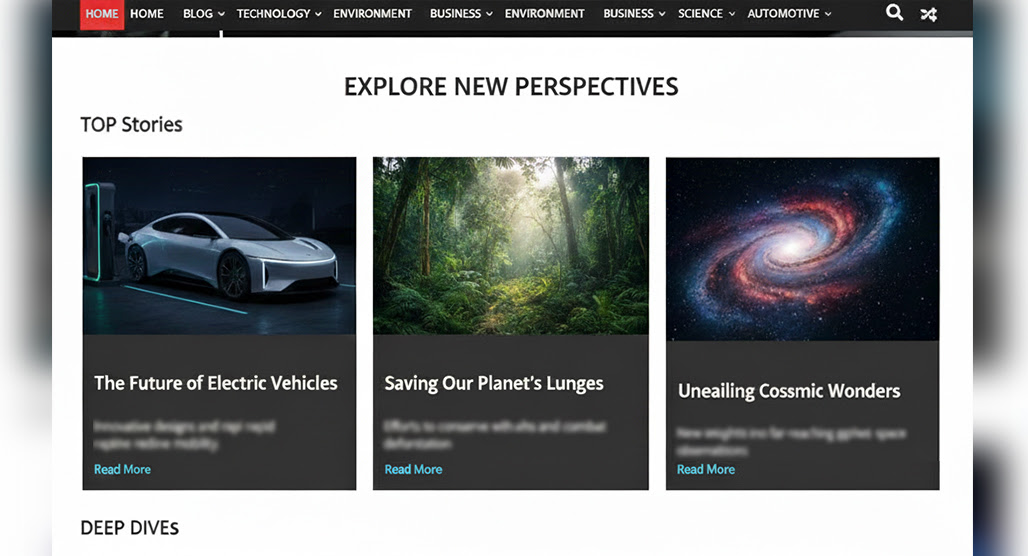
One is when the niches are related. A website that covers video games, PC peripherals, and IT security topics is technically covering three different niches. But, since all of them are closely related to one core interest (computer stuff, broadly), they count as related enough to be one overall topic.
The other is when the site is just huge. Reddit covers every possible niche under the sun, and it certainly doesn't hurt their SEO to do it. But a site like Reddit is very different from a personal blog site.
But these do demonstrate one key fact: it's not an automatic penalty to cover multiple niches on the same domain.
To actually enumerate some benefits and drawbacks:
- You only have one domain, so only one set of tools, one set of analytics, and so on. While you can do some subdivision for added data accuracy per niche, you only have one dashboard and control panel, and all the rest. It's thoroughly cheaper to run.
- No matter which niche you're covering, new posts are new posts on the domain, so your site is continually kept active. Even if you lose interest in a niche, you still keep it "alive" through activity elsewhere on the site.
- You have the potential to build authority and thought leadership as a person rather than as a more anonymous brand. People follow more for who you are than for the specific topics you cover.
On the flip side:
- It can be a lot harder to get off the ground and build up steam. It's already a long and slow process to use organic SEO to grow, but it's even harder when you aren't tightly focused and targeting a topic thoroughly.
- It's a lot harder to divest yourself of a section of the site. There's no way to just sell a chunk of it, and archiving it can alienate some users who were most interested in those topics.
- Google will have a harder time determining what your site is "about" and how to rank you when there's a bunch of content that doesn't fit the pattern on your site.
That last one is where a lot of people think an SEO penalty comes from. It's not actually a penalty, though, just a lack of clarity.
Doing a Multi-Topic Site the Right Way
To be clear, there's not a defined SEO penalty or damage you do to your site if you write about topics that aren't part of your core niche. But it's easy to waste time and publish content that doesn't actually benefit you, which is why it can feel like a penalty.
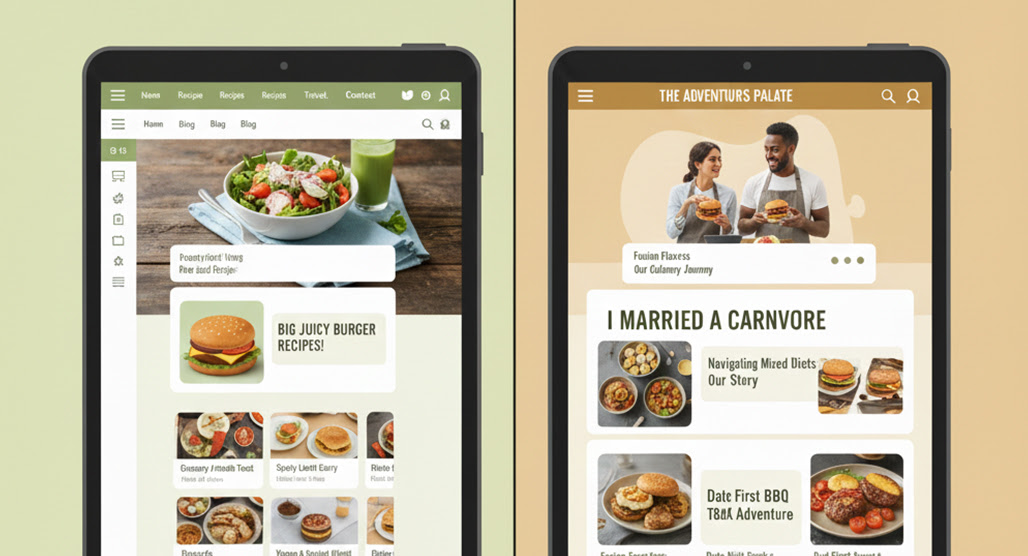
Think about it this way. If a vegan lifestyle blog suddenly starts publishing burger recipes, it's going to feel out of place and alienate existing readers, even if it's all technically still under a lifestyle, food, nutrition, or other related niche.
But that doesn't mean it can't be done right. Even framing that same content differently can help; converting it into a "recovering vegan" story-pitch, or "I married a carnivore" style, or what have you. It's a pivot, but it's not one that falls too far out of place.
It's a little harder if you're running a dedicated food blog and you suddenly want to start talking about small engine repair, or something of the sort. You can still pivot into a lifestyle blog, but it's a bigger jump.
So, how do you go about doing a multi-niche or multi-topic site the right way?
Focus on Content-Agnostic SEO
A lot of SEO centers on the content you create, but since your content is going to be all over the place (at least initially), it's harder to rely on focused domination of a topic. So, instead, you need to put every ounce of effort you can into forms of SEO that don't rely on the content to be relevant.
That means:
- Use SSL
- Use a good mobile-first design
- Optimize for page speed and core web vitals
- Use Schema markup when possible
- Use of structure and formatting in your content
- Robust internal and external linking strategies
- Aggressive backlink building and networking
- Expansive social media presence
- Detailed use of metadata
- Intuitive and useful navigation and site design
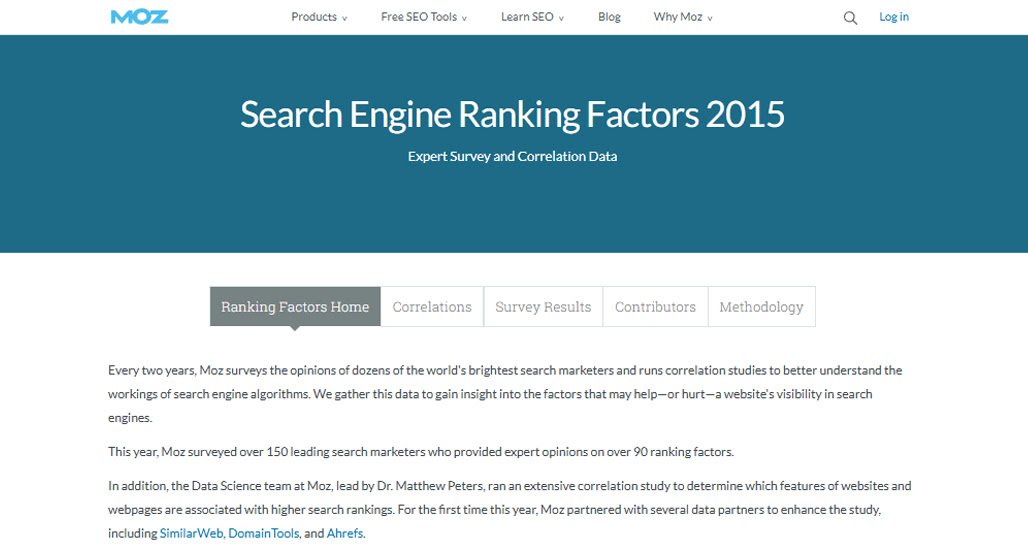
There are a million little things to tweak along the way, as well. Look into every technical SEO, site-wide SEO, and ranking factor guide you can find and implement everything you can.
Emphasize a Personal Brand
One through-line for just about every successful multi-niche site (that isn't social media, anyway) is emphasis on a personal brand. It's about you, who you are, and what you're into, rather than just about the topic. You aren't building a corporate brand here; you're building your own brand and reputation.
Consider people like Dan Koe or Jef Quin, people who build a presence based on who they are and what they love, not just one topic that interests them.
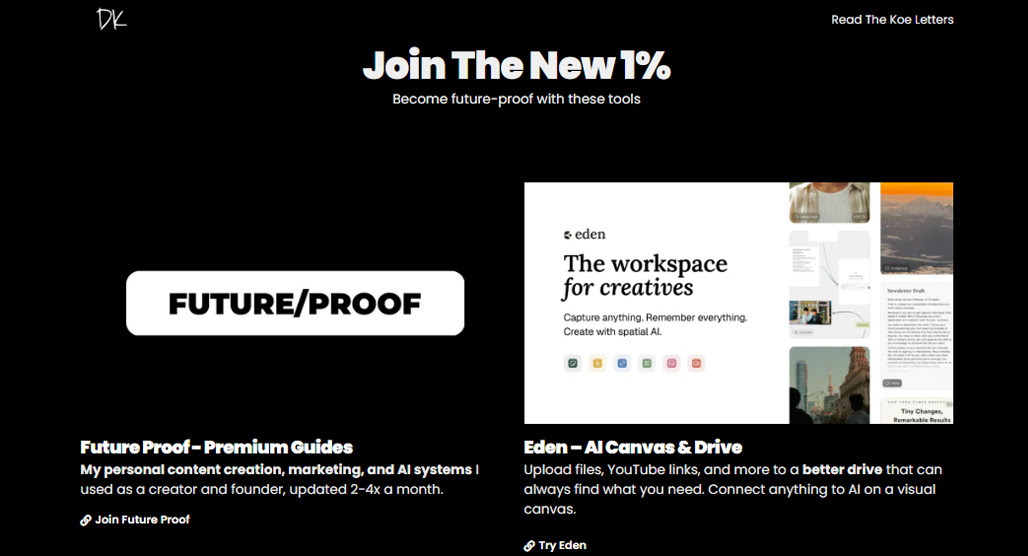
You might notice that a lot of multi-topic sites like this have very eclectic designs. That's another way you can express your personality outside of your content, and make it memorable. Just make sure you aren't sacrificing usability in exchange.
Speaking of usability, organization, navigation, and segmentation are critical here. That's because, even though your site is a multi-topic site, you still want to have clear areas for each topic. If all you have is one main feed where any given post is a slot machine with any number of possible topics, people aren't going to be hooked or engaged.
Basically, you'll want to build multiple microsites in a trenchcoat. I know some sites use subdomains for this (bikes.marksite.com, marketing.marksite.com, etc.), but subfolders are usually the better option. Subfolders leave more room for flexibility and require less administration, in my experience.
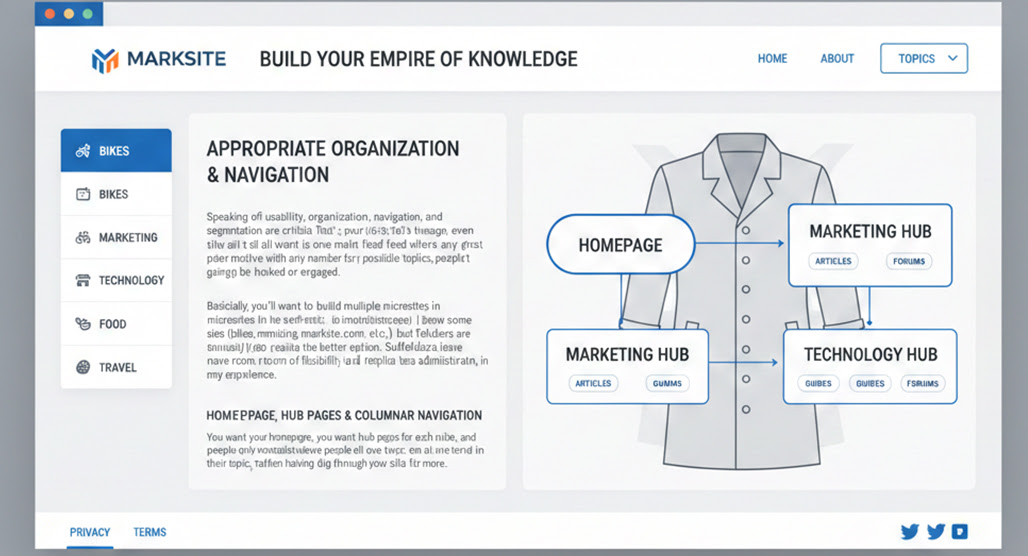
You want your homepage, you want hub pages for each niche, and you want columnar navigation where people who are only interested in one topic can spend all of their time on that topic, rather than having to dig through your site for more. Topic clusters can be a great way to organize each niche section effectively.
Find Through-Lines to Expand Your Topics
Another key to being successful with a multi-topic site is finding ways that the topics you choose intersect and covering those.

A few examples:
- A travel site that has a niche for affiliate product recommendations. They can focus on gear that is explicitly helpful for travel first, for the cross-over benefit.
- A food site that builds a section for marketing or photography. Successful food sites need marketing, and they need good photography, so they can be an authority there and roll it together.
- A lifestyle site that can expand into any number of adjacent topics, from activism to sustainability to education.
The trick, really, is to think about "leveling up" rather than keeping your segments too divided. The structure is important, but so is the overarching narrative that connects them all, which is where you, as a person, come in.
Put Incredible Effort Into Every Piece of Content
It takes a long time for a blog to succeed without a lot of monetary investment. Each piece of content you create builds toward the overall snowball that can eventually become self-sustaining, but it takes quite a while.
When you're trying to sustain multiple niches, you can't half-ass any of them. You need a thorough rotation going through each niche and topic, with fresh content on a regular basis. You might even need a high frequency in posting; a one-topic blog can get away with weekly posts, but you might need 2-3 per week at minimum.

Since each topic gets posts less frequently, each post needs to be exceptional. You need to 10x every post you write, otherwise you aren't likely contributing as much as you need to for the niche to succeed. It's also worth making sure you're avoiding topics that are simply too hard to rank for, especially when you're spreading your efforts across multiple areas.
Be Prepared for a Long, Slow Growth Rate
As I said, growing a site is a long, slow process. When you're splitting your efforts across a variety of topics, you're going to have an even longer time of it. Now, you can get around that by investing a lot of time and money to ramp up volume and trying to run it as if you're running several sites, but that's also a very good way to burn yourself out, so I caution you to be careful if you do.
Just be prepared to spend several years before you catch on, is all. In the meantime, growing your blog without relying on social media can be a worthwhile strategy to explore.
Consider Expansion Instead
Another option is to consider looking at it another way.
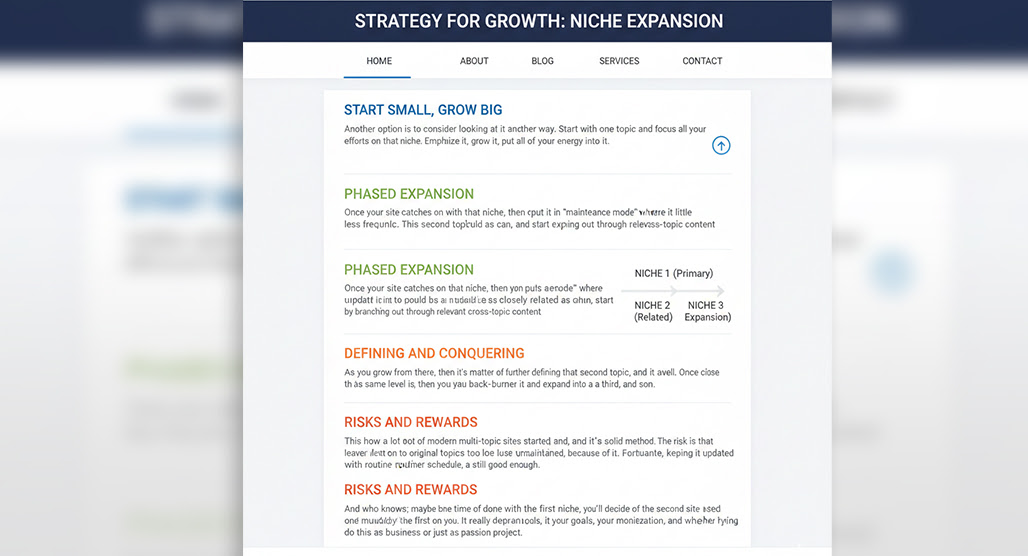
Start with one topic and focus all of your efforts on that niche. Emphasize it, grow it, put all of your energy into it.
Once your site catches on with that niche, then you can put it in "maintenance mode," where you update it a little less frequently and start expanding into another topic. This second topic should be as closely related as you can, and you start by branching out through relevant cross-topic content.
As you grow from there, then it's a matter of further defining that second topic and growing into it as well. Once it has caught on to the same level as the first one, then you can back-burner it and expand into a third, and so on.
This is how a lot of modern multi-topic sites started and grew, and it's a solid method. The risk is that you leave the original topics too far unmaintained, and lose your audience because of it. Fortunately, keeping it updated with routine content, at a lower schedule, is still good enough.
And who knows, maybe by the time you're done with the first niche, you'll decide that having a second site instead of muddying the first one will be better for you. It really depends on your goals, your monetization, and whether you're trying to do this as a business or just as a passion project.

Related Posts


Leave a Comment


Fine-tuned for competitive creators
Topicfinder is designed by a content marketing agency that writes hundreds of longform articles every month and competes at the highest level. It’s tailor-built for competitive content teams, marketers, and businesses.
Get Started