How to Find Zero-Click Keywords Worth Targeting
 Written by James Parsons • Updated April 15, 2026
One of the biggest KPIs in marketing is clicks, and the derived metrics like click-through rates. So why is it that marketers are increasingly talking about zero-click searches and keywords as if they're valuable?
Zero-click searches (and the related zero-click keywords) can still be very valuable to your business, but they require a specific kind of marketing that many business owners aren't used to. So, let's go through what they are, how you can benefit from them, and how to identify what zero-click keywords are worth targeting.
Key Takeaways
- Zero-click searches still provide value through brand awareness, local foot traffic, and reputation building without requiring website visits.
- Three main zero-click result types worth targeting are Local Pack results, enhanced search results, and SGE/AI Overview results.
- Local Pack success requires a complete Google Business Profile, consistent NAP data, and actively encouraging customer reviews.
- Schema markup can help your site become Google's source for enhanced search results on answerable, structured queries.
- For SGE results, no special keyword strategy exists-producing authoritative, accurate content remains the most effective approach.
Table of Contents
What Are Zero-Click Searches?
The short answer is that zero-click searches are searches where the user gets their answer from the search results page, rather than from a website.
These have existed for many years. Google has been slowly building up a roster of various enhanced searches, which provide information to users without those users needing to go to any particular website to get those answers.
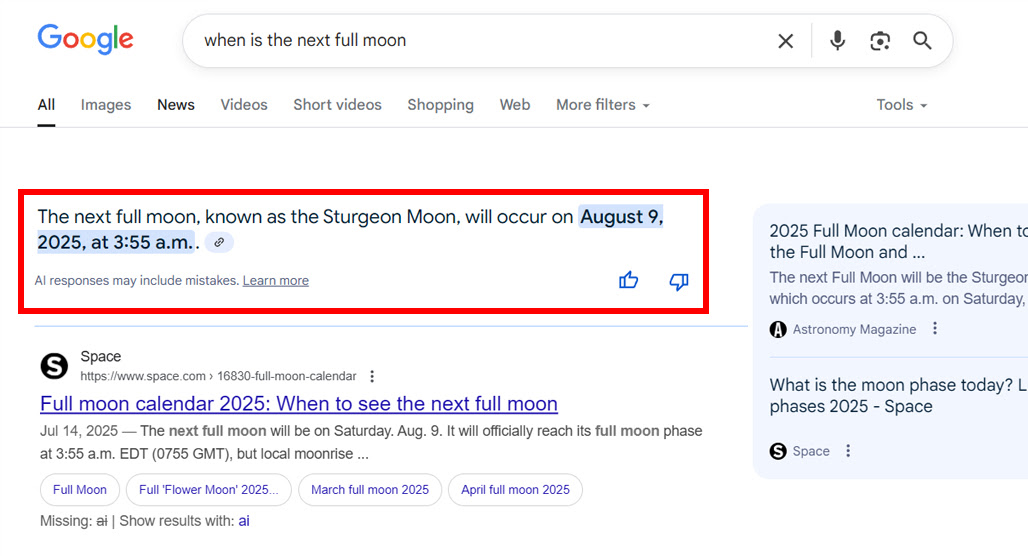
When thinking about user search intent, these tend to be commercial or transactional queries, but they can also be informational. They're generally not navigational (since those explicitly focus on visiting a site) or tutorial (since Google doesn't include that much information in their info boxes).
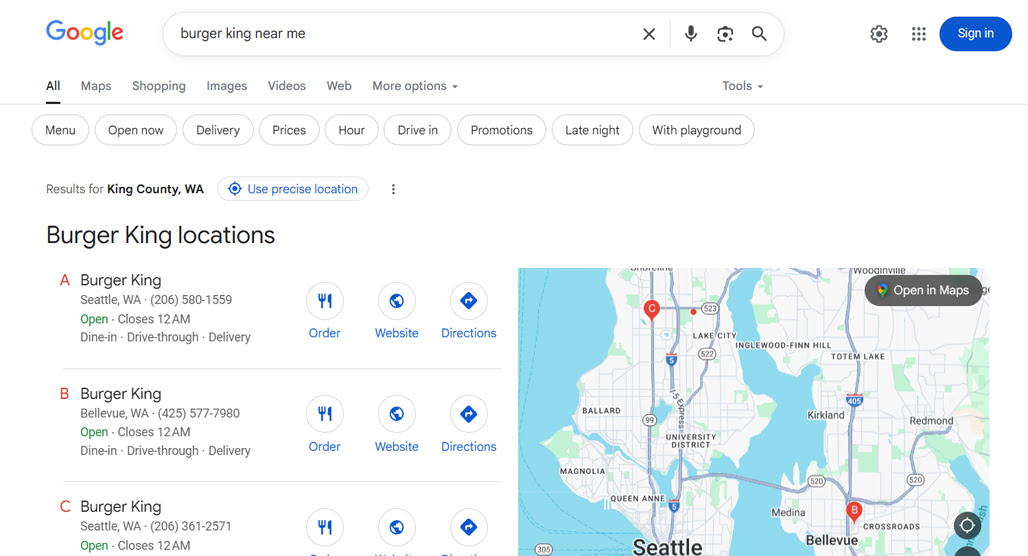
One of the prime examples of a zero-click search is any sort of food "near me" query. People who are hungry and want to see what restaurants are around them might type in a category of food and "near me" or "restaurant" to get business results, as opposed to recipes and food blogs.
Restaurant queries like these in Google show the enhanced search box with a map laying out nearby restaurants that meet the criteria. A user can decide which place to visit, navigate to it, and enjoy their meal, all because of their Google search… but the business owner might never know because there was no click or visit to that restaurant's website.
Google isn't the only search engine to do this, of course. Bing makes their map smaller and formats their restaurant results as a carousel, but they have a similar slate of information. DuckDuckGo has a setup very similar to Google's, though they have more hurdles to jump through to give away your location since they're a more privacy-focused search engine.
Google's AI overviews are also expanding what ends up being a zero-click search to more informational intent queries. While Google cites its sources in its AI overviews, many people just read the summary and stop there. This is one of the common reasons blogs struggle to get organic visitors.
Are Zero-Click Searches Valuable?
Normally, when your goal is to funnel people to your website, zero-click searches are the opposite of what you want. If people are stopping at the SERPs, they aren't clicking through to your page, and consequently, they aren't interacting with your sales funnel.
As with the restaurant example above, though, that doesn't mean you're not getting value out of it. You just might be getting value in a way that's harder to track and attribute.
- You can get direct benefits like the restaurant example, if you have a physical location people can find nearby.
- You can gain some reputation; people asking questions and consistently seeing your logo next to reliable answers can be a big win for awareness and trust.
- You can potentially convert zero-click searches into non-zero-click searches through the right kind of compelling presentation.
You only lose out in a zero-click search if the user clicks on a competitor instead of you, because that's not actually a zero-click search. If the user isn't clicking through to anywhere, or only clicking through to another Google property like Maps, you aren't actually losing out on anything, and have the potential to win from it.
All of this begins with figuring out what keywords to target for those zero-click searches.
Understand the Types of Results
Different kinds of keywords have different kinds of results. Google's search results page looks very different when you search for burgers near you than when you search for a product name, instructions on growing tomatoes, or who that guy was in that one movie.
Broadly speaking, there are three main kinds of enhanced search pages with zero-click searches worth targeting.
The first is Local Pack results. Local Pack results are the restaurant example I keep coming back to. The top of the results is dominated by a map and a few entries from the map given information, including a star rating, price range, address, and snippet from a review.
The second is search enhancement. Search enhancements are things like a bar with movie showtimes, or a set of images in a pack, or a set of reviews, or other enhanced information. A lot of times, these are dominated by big sites like IMDB or Wikipedia, but some of them can be reached.
The third is SGE results. Google's Search Generative Experience is their AI Overviews box, which uses their LLM to extract information from anywhere between one and a dozen websites to generate an answer.
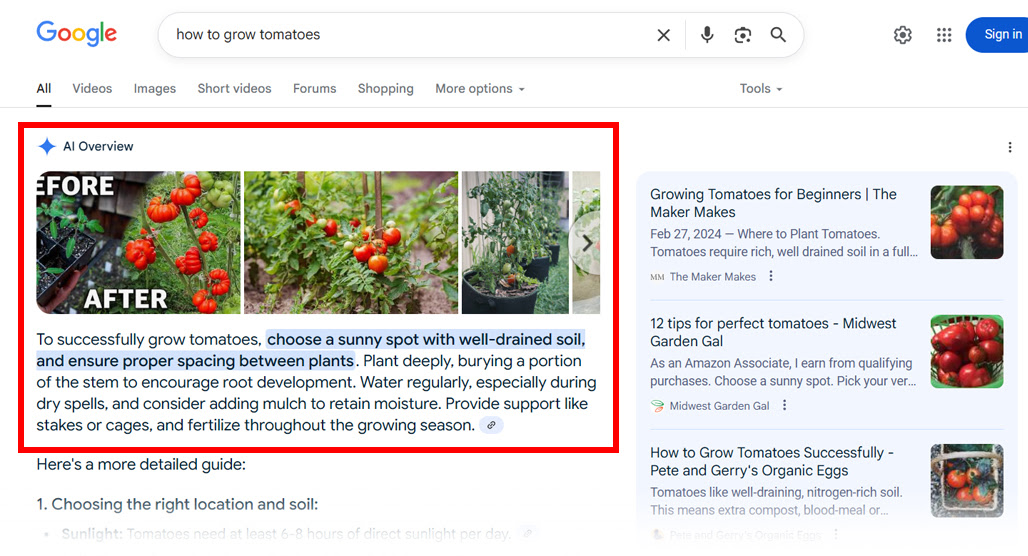
Many people are mad about these, but they generally replace Google's previous "position zero" featured snippet, but put more than one site's information in that position, along with those links. For example, if you search "how to grow tomatoes," you'll get an AI overview that generates around 500 words of content, embeds half a dozen videos, and cites a whopping 35 different resources. It's like a secondary SERP within the SERPs.
All three of these can be targeted, but they need to be targeted in different ways, which means aiming for different keywords.
There are also a couple of other kinds of zero-click searches that you're generally not going to be able to target. The biggest example is the widgets category. If you search for "calculator," maybe you're looking for a product or a specific kind of calculator, but if all you're actually looking for is calculator functionality, Google has it embedded at the top. You aren't going to beat them giving you a calculator, and it's not worth trying.
Finding and Evaluating Keywords for Zero-Click Searches
There's good news and bad news when it comes to finding and using the keywords from zero-click searches.
The good news is that finding the keywords is essentially the same process as any keyword research you do. You just have to change the kinds of metrics you look at to evaluate those keywords. Since the CTR is going to be low or non-existent, you can't use the same process you normally do to find high-value keywords for your site.
The bad news is, you have to change the way you think about your keywords and view them from another perspective, and that can take some time. You can use some tools for some keywords, but they aren't always going to be as effective as they are normally, but I'll get to that.
Keywords for Local Pack Results
Local pack results are some of the easiest to identify. They're also not applicable at all if you don't have a physical location for your business. A food blogger doesn't want someone coming to their house because someone else searched for burgers and they had a burger recipe posted, after all.
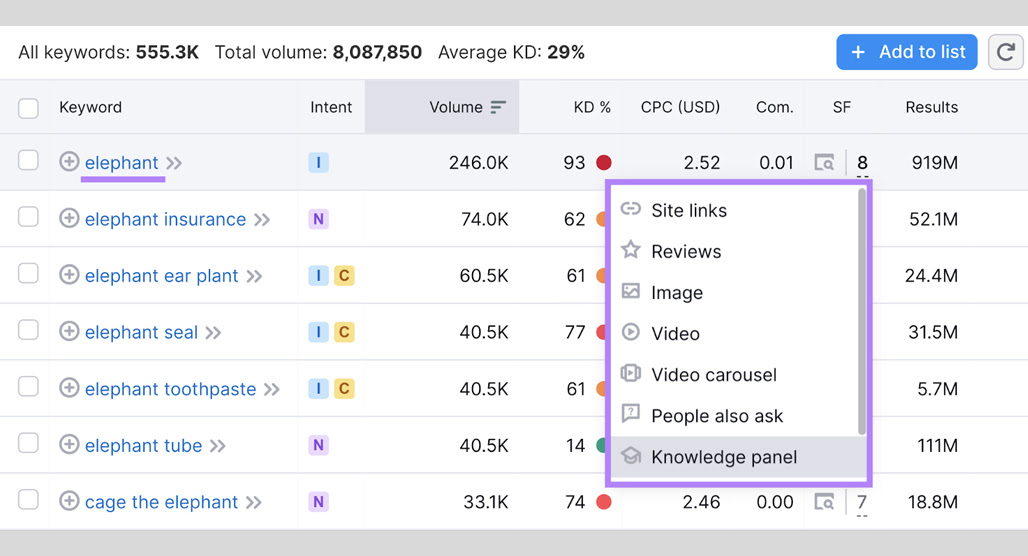
Local pack results are generally a "near me" or a location-based query. The keywords tend to be fairly obvious. If you use a tool like Semrush, you can use filters in the Keyword Magic tool to filter for local pack keywords, even.
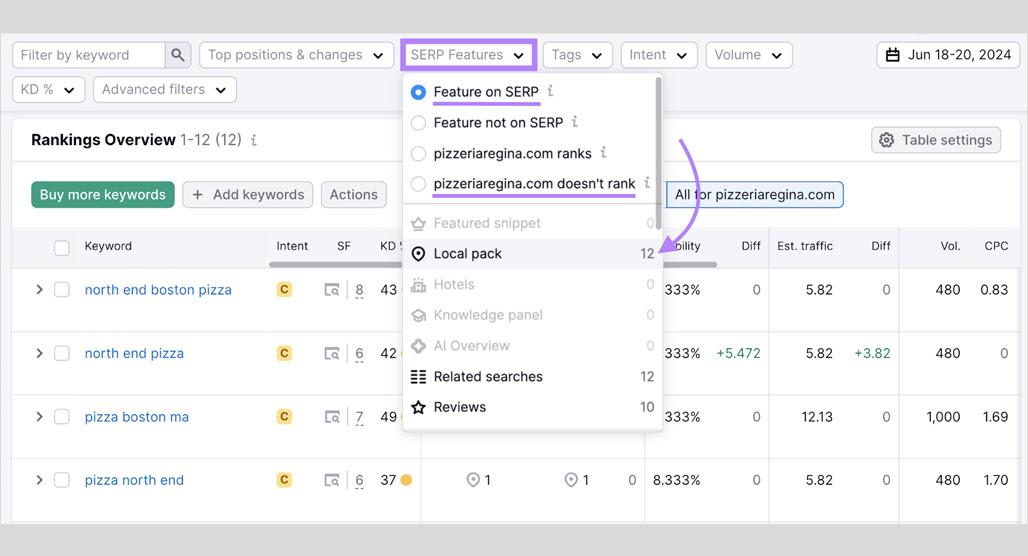
The primary downside with these keywords is that you often don't have much you can do to target them through content marketing. Blog posts don't rank and aren't relevant for this kind of search. Instead, you need to do three things.
- Make sure you have relevant NAP and business information on your site, complete with your own embedded map or a location search if you have multiple locations. This helps Google confirm your locations with its own data.
- Use as many business platforms as possible. The Google Business Profile is the #1 most important, but you also generally want profiles on sites like Yelp as well, since Google can pull from these to prioritize the sites that appear in the local pack.
- Emphasize tactics and communication that get people to leave reviews. Positive reviews and testimonials, especially on the Google Business Profile and similar sites, help you stand at the top of the rankings in the local pack and make you more likely to be the business being visited.
There are a few ways you can attribute zero-click search traffic with traffic to your business. A bi gone is call tracking, though Google has recently removed native call tracking from the Google Business Profile options, you can still use a third-party call tracking service.
Keywords for Enhanced Search Results
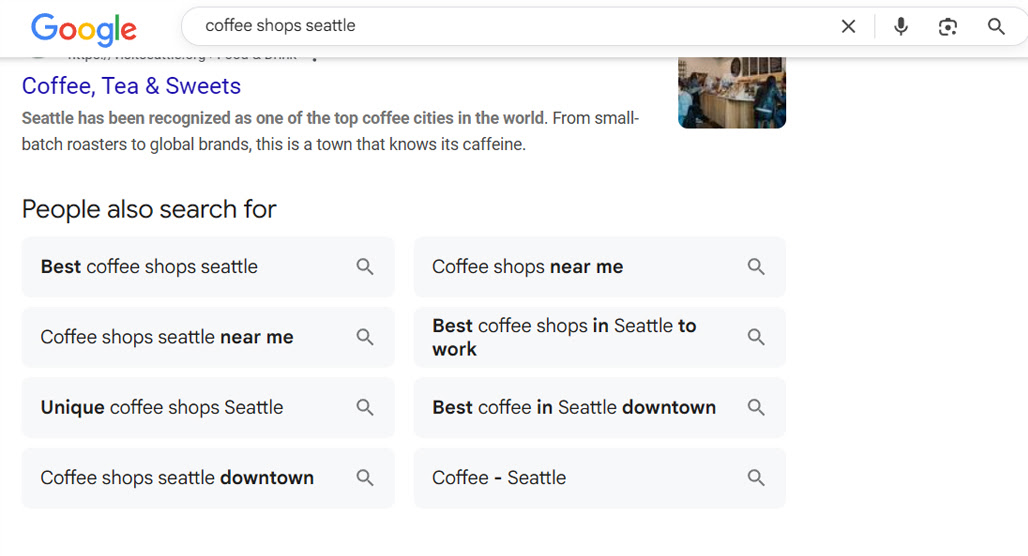
Enhanced search results take on a hundred different forms. You have infoboxes on the site that pull information from sites like Wikipedia. You have dynamic information feeds like stock tickers, movie showtimes, and product information. You have the "people also asked" box with suggestions for other related content.
All of these are some of the hardest keywords to identify when it comes to zero-click searches, because they're so variable and so often dominated by a very specific kind of information. Some of them are impossible to target - you aren't beating IMDB for movie information - but others are easier.
Some rely on you being a specific kind of business. A movie theater can list its showtimes and have that information picked up by Google to show for a zero-click searcher. A non-theater business won't ever appear in that kind of enhanced result.
The "people also ask" box is a tricky one. Some of it is related content, but some of it is just embedded AI overviews for subtopics, and it's impossible to say which is which until you expand one.
Identifying the keywords is mostly the same as normal content marketing, with one twist.
If the keyword is something that can be answered by a bit of Schema data, it's quite possibly a zero-click keyword, and using the relevant Schema markup gives you a chance to be the site Google pulls the information from.
Things like the People Also Ask box are more traditional content marketing, because they just pull related topics, sometimes even from the same posts that rank for the main topic. Understanding what seed keywords are and why they matter can help you build out those topic clusters more effectively.
Keywords for SGE Results
Both the hardest and easiest to target, SGE keywords these days are "any keyword that isn't covered by something else." There are a few exceptions - the AI overview tends to avoid queries with swearing in them, for now - but nearly everything has an SGE overview at this point.
There aren't really specific keywords for this for obvious reasons, so it just comes down to keywords that are related to your topic and that you can cover with enough authority that the AI decides to pull and cite your content, and put you near the top of the list. It's also worth knowing why targeting topics that are too hard to rank can hurt your overall strategy here.
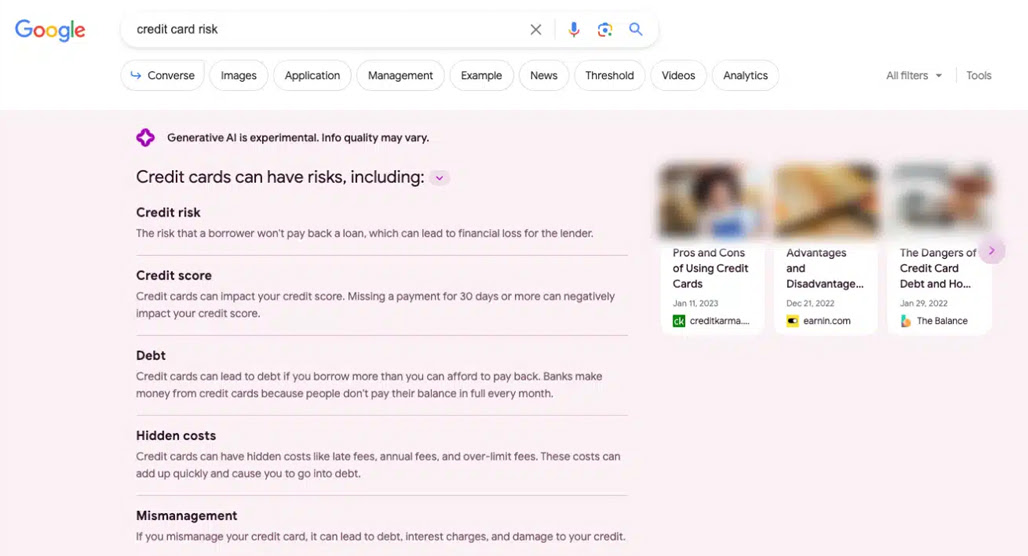
Google has a whole page dedicated to how this impacts site owners and what you can do, which you can find here. The short version is: keep producing great content that accurately targets and answers the questions people search for. The only technical requirements are the usual requirements for being in search: don't have penalties, don't noindex your site, that kind of thing.
Are Zero-Click Searches a Good Thing?
If people aren't clicking through to websites to get their answers, they aren't being exposed to CTAs, they aren't falling down the sales funnel, and they aren't making purchases. They also aren't seeing display ads or otherwise bringing revenue to the website.
Is this going to kill websites? Maybe some, but that's been true of every change made to search for decades. Some studies are even starting to show that AI results are leading to their own traffic patterns, with people who were formerly zero-click searchers now clicking through just to verify the information they're given.
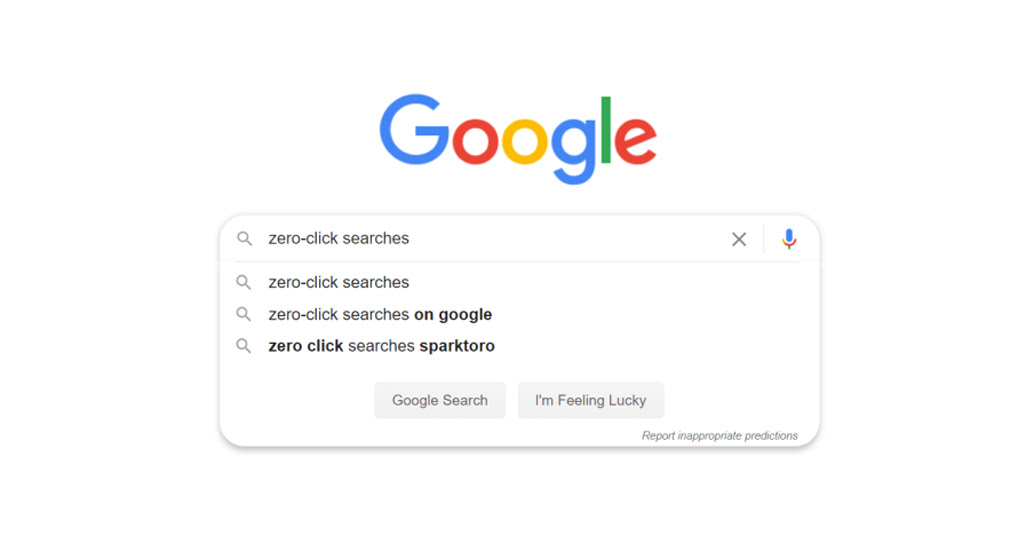
SEO is changing, but as always, the more things change, the more they stay the same. Implement technical elements like Schema, produce great content on great topics, and keep the ball rolling. It's all we've ever been able to do, but it's always good enough.

Related Posts
Leave a Comment


Fine-tuned for competitive creators
Topicfinder is designed by a content marketing agency that writes hundreds of longform articles every month and competes at the highest level. It’s tailor-built for competitive content teams, marketers, and businesses.
Get Started