Press Release Examples That Get Shared (And Rejected)
 Written by James Parsons • Updated April 15, 2026
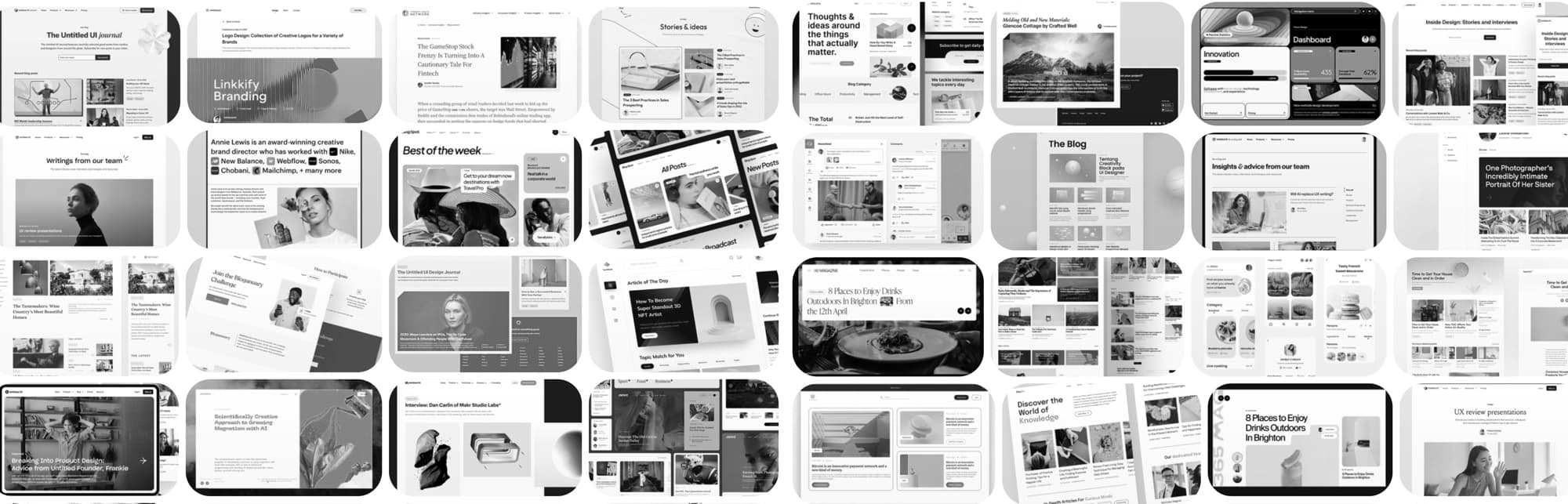

If you're not a journalist or news agency, you might not realize that press releases are absolutely everywhere. They're a kind of marketing background radiation, with hundreds of them flying in and out of inboxes for every journalist every day. The sampling you get on press release submission sites is just a drop in the ocean of what is landing in inboxes… or spam folders.
Only a small fraction of those press releases are ever opened, and the ones that are get a tiny amount of time to hook the reporter before they close it and check the next opportunity. Only the cream of the crop get shared, and the rest are ignored or outright rejected.
How do you make sure your press release is one of the good ones? You can read a million guides on media pitching, you can make a checklist of everything a press release should contain, you can print out a poster with all of the mistakes to avoid, but all of it will eventually come down to one thing: experience.
Fortunately, you can also learn by example. Look at good examples, learn why they're good, and consider how you can use the same techniques. Conversely, look at bad examples, figure out why they're bad, and learn not to do the same things they are.
I've put together a handful of examples of both good and bad press releases, with my analysis, to help you with this learning. It won't make you an expert at press releases, but it will give you a leg up.
Key Takeaways
- Successful press releases get to the point immediately, giving journalists all essential information in the first sentence.
- Press releases fail when they exaggerate claims or lack genuinely newsworthy, substantive content journalists can use.
- Poor targeting is the biggest press release mistake; sending irrelevant pitches wastes everyone's time and damages credibility.
- Press releases must contain actual news; informational guides or basic marketing announcements belong in other formats.
- Crisis press releases should acknowledge wrongdoing, stay humble, and front-load key information using clear formatting like bullet points.
Table of Contents
To Get Rejected: Exaggerate Outlandish Claims
For the first of the worst, let's talk about this press release from Ricoh. This one is shared around a lot, but not for good reasons.
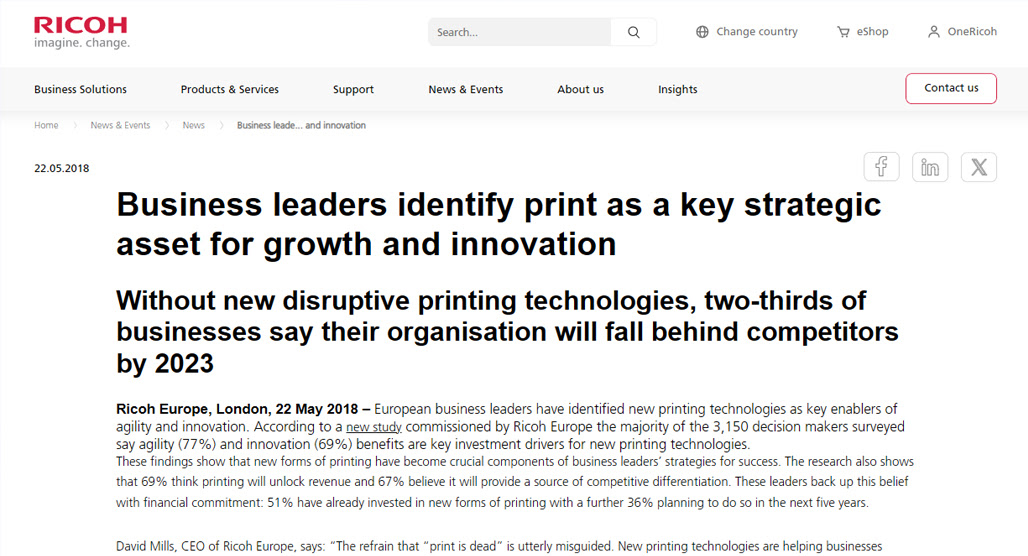
Ricoh is a Japanese electronics company making a variety of products, primarily centered around things like printers, copiers, and fax machines.
When you think about printing, copying, and faxing, what do you think? The stodgy business tedium you have to handle in an office? The hoops you have to jump through because someone has never bothered to learn email? The smell of hot electronics as they run off page after page of meaningless drudgework?
Ricoh thinks that what you think of is growth, innovation, and disruptive technology.
This press release is wild in that it's so wildly off-base for the kinds of people it's likely targeting. It talks about people thinking that new printing technologies are a key driver for innovation, but can you even think of a new printing technology? 3D printing, sure, but that's not what they're talking about, not really. They even make the claim that 3D printing refutes "print is dead," when that's not what the phrase has ever been about.
The press release is only four paragraphs, but when you're done reading, you're left with a question. "What did I just read?"
It's just Ricoh saying, "Hey, people still buy printers." Everything else is meaningless. There's nothing newsworthy or useful here. It's a whole lot of nothing - exactly the kind of content that illustrates the difference between a press release and a guest post.
As a content marketer, I do a lot to keep an eye on the cutting edge of content marketing technology and techniques. I'm always looking for new ways to capture attention, new ways to present information, and new ways to hook an audience.
Press releases don't need to do that. They really do exist in a bubble where their sole purpose is to be an elevator pitch for a story. Critically, you don't need to reinvent the wheel to do that.
This simple press release from Revolv3, a fintech company, shows it. The first sentence (which could be a subject line) tells a reporter all they need to know. If the reporter is interested, they can read on and get more details. If they aren't, they can move on; no time is lost.
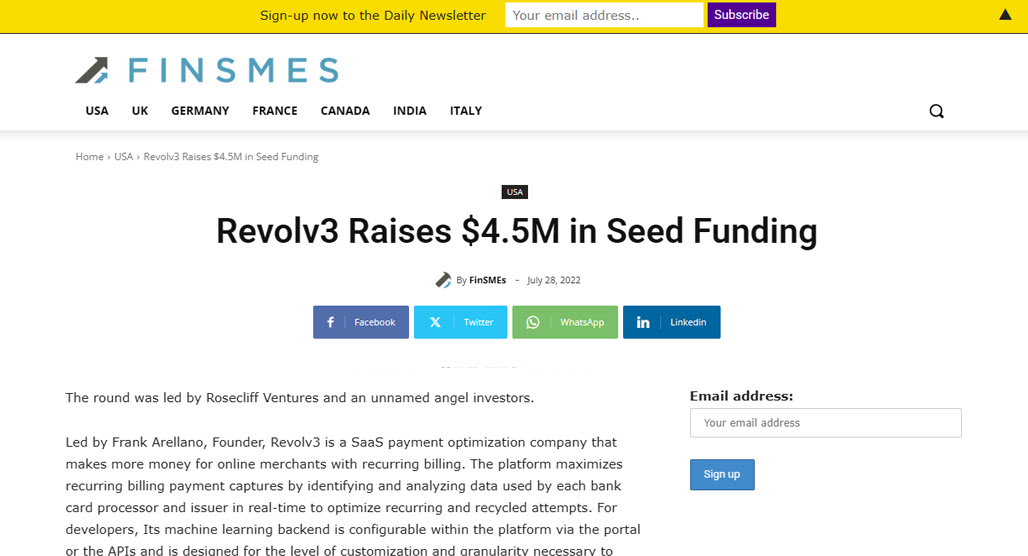
Sometimes the best option is just to be as simple and straightforward as possible. If a journalist is interested in learning more, they can do their research using the right tools (it's their job, after all) and, if necessary, they can reach out for further details.
To Get Rejected: Be Out of Scope and Out of Relevance
Even a good press release can be a bad press release if it doesn't go where it needs to go.
Some press releases are hardly even a press release and are more of an informational guide sent out as a press release, like this one pictured below. And sure, maybe the information is relevant, but your press releases shouldn't do this:
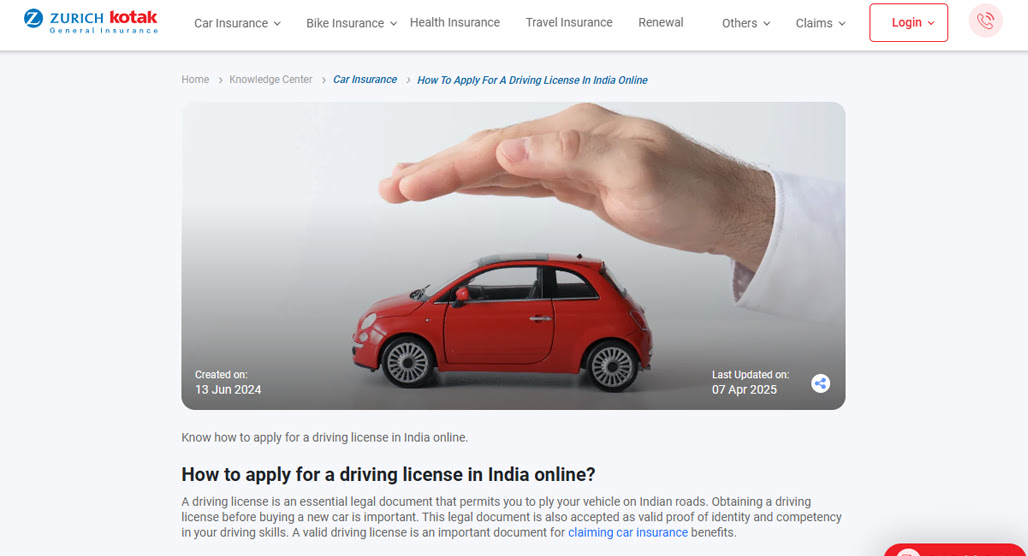
Anything outside of the scope of news just isn't a worthwhile press release.
What actually happened here, as far as I can tell, is that a car insurance company created the guide and tried to promote it using the wrong kind of promotion, treating it like a press release instead of a blog post. Either way, no journalist is going to open that email.
Appropriately communicating in a crisis is a difficult skill to master, and even more so when it's a crisis that only affects your business. This press release from VW is the first major response to the emissions scandal, when news broke that VW had been tampering with emissions reporting in its car software, violating European law.
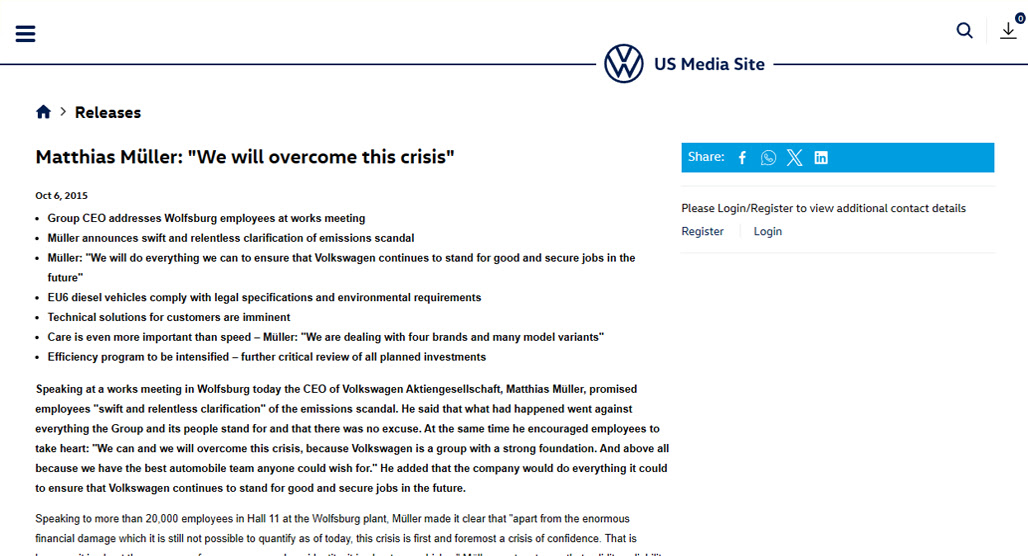
That kind of crisis has the potential to destroy a business, and handling it the wrong way will cement the downward spiral. It's important to acknowledge wrongdoing, stay humble, and take tangible steps to repair the damage.
VW managed to thread the needle with this release. The actual substance of the press release is important, and the formatting, especially the bullet list at the start, does a great job of conveying the meat of the information right up front.
Of course, this press release does also showcase one of the truths of press releases in general: a big company or a big event like a scandal will be covered regardless, and the press release you put out in the wake of such an event matters a lot less than just having one at all. You can bet a lot of journalists were refreshing their inboxes waiting for something like this in the first place.
To Get Rejected: Feel Like a Scam
Check out this press release from a weight loss website. How does it feel to you? Because to me, it feels like something from my spam folder made it into my inbox.
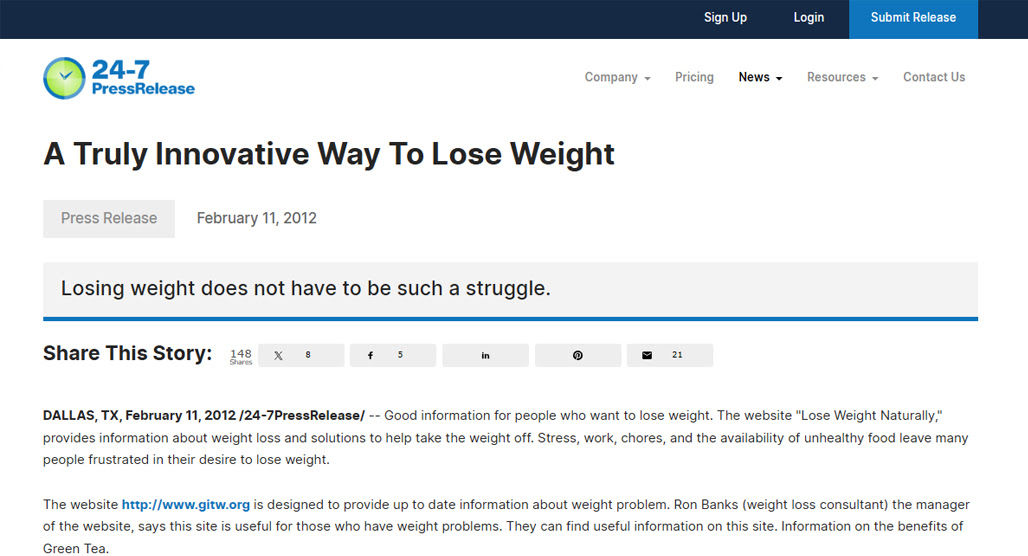
Yes, weight loss is a struggle for millions of people. And yes, finding a novel way to address obesity would be a great niche to have. That's why things like Ozempic are so popular right now.
But a press release like this doesn't do it. It's a platitude with no substance. It has a basically random URL with no weight behind it. It has an endorsement from a supposed authority, who is also the site owner.
Meanwhile, what does it not have? It doesn't have any information about what the product is or what makes it special, how it stands out, or why you should use it. It's vapid and empty, and I'd half expect that if I clicked the link, I'd end up with a computer virus, if not just a scam product.
Answering Common Questions
There are a million different guides out there on writing press releases, and a million templates you can use for different kinds of releases for different purposes.
So why do you need to know anything about press releases? Why not just follow one of those guides?
Really? There's no reason not to. The trouble is, a lot of people still find ways to make mistakes even when they follow guides. So, let's talk about a few of those common mistakes that aren't always clear from the guides and templates.
What's the #1 mistake to avoid?
In my view, the biggest mistake companies make with press releases isn't even related to the content of the release at all; it's in targeting.
Press releases are often viewed as low-value marketing, so the common approach is to shotgun them out to every possible potential interested party. Unfortunately, this means there will be a lot of people who receive your press release who have zero interest in it. You wouldn't send an announcement of the grand opening of your all-new, all-bacon restaurant to a vegan publication, right? But that's exactly what happens.
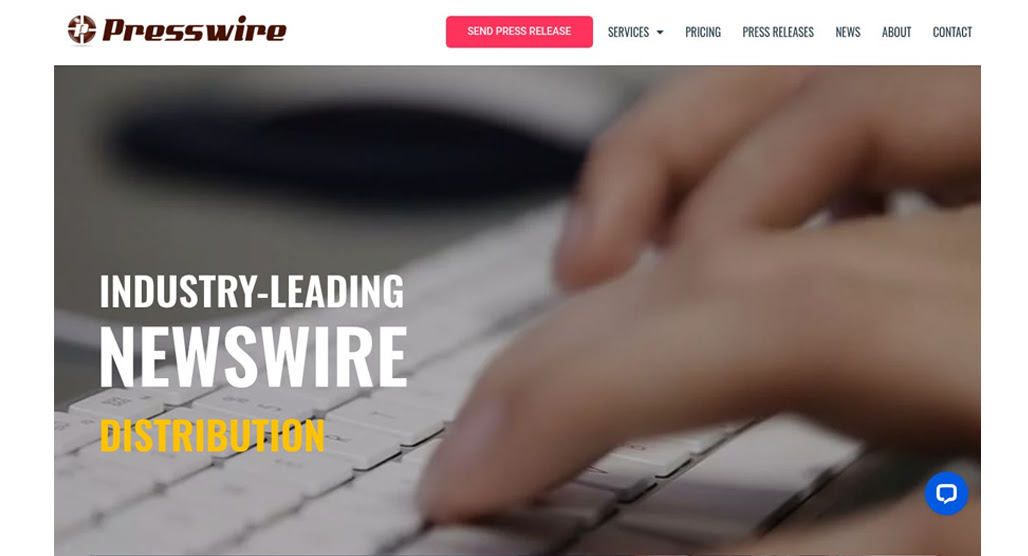
The same goes for press release submission sites. So many of them exist just to have a publicly available backup in case no one bothers to cover your company from the press release, but they don't really bring you much value 99% of the time.
In my view, you're a lot better off following a press release template and then putting all of your effort into finding the right people to send it to.
Should you just use AI to write a press release?
Well, you can. Some of the biggest criticisms of generative LLM content are that it's often very standard, typical, and derivative. So, it's perfect for press releases!
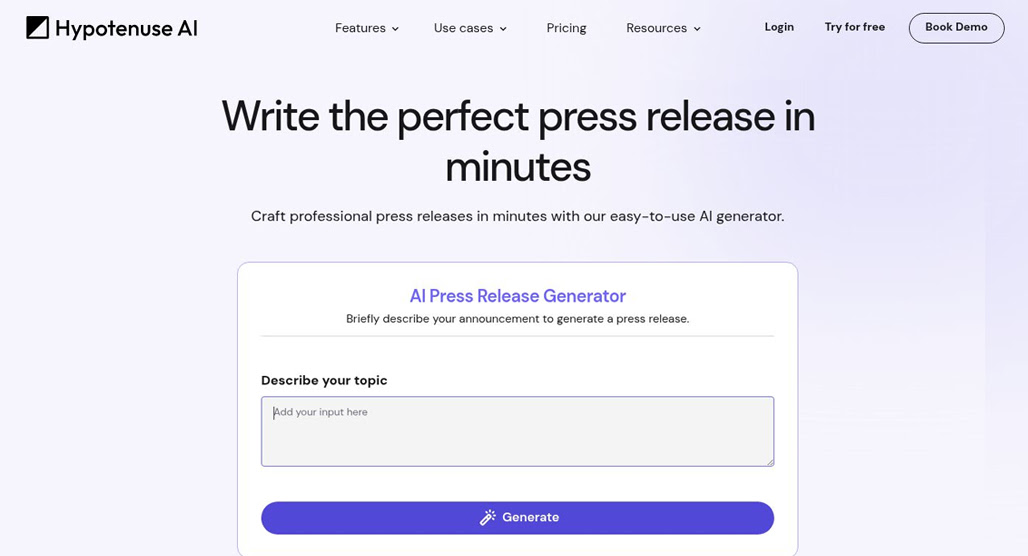
I don't think it's necessarily worth it, though. AI doesn't do anything for you that a template wouldn't, since press releases are so short, and if it makes even a single mistake in the content, you're already spending more time reviewing and fixing it than you saved by using it in the first place.
Are press releases even worthwhile anymore?
Sure, but you really have to use them for the right things.
I think one of the biggest issues with press releases is that companies think they exist just as a vector for basic marketing, and that really isn't the case. Press releases need to convey something truly newsworthy.
Even big companies get this wrong a lot. Personally, I don't think it's ever relevant for a big company to send out a press release for the appointment of a new CEO. They can publish that information on their website, and it's going to be picked up and circulated everywhere; a press release for it is just noise.
Things like truly new product releases, innovative technologies, and unique developments are gold. Things that a reporter might not come across normally, that can be valuable to their audience, are perfect.
There are a lot of reasons why a press release fails, and a lot of them boil down to the reporter just asking, "Okay, and why should I care?" and there being no good answer.
So tell them: why should they care? If you can answer, then a press release can work for you.

Related Posts
Leave a Comment


Fine-tuned for competitive creators
Topicfinder is designed by a content marketing agency that writes hundreds of longform articles every month and competes at the highest level. It’s tailor-built for competitive content teams, marketers, and businesses.
Get Started