Decay-Triggered Ideation: Let Traffic Loss Set the Calendar
 Written by James Parsons • Updated October 17, 2026

The frustrating part is that the data to make better decisions already exists. It's sitting in Google Search Console and analytics dashboards, hiding in plain sight as a list of pages with declining traffic. Most teams look at that data and feel a low-grade panic - things are slipping, we need to fix this - and then they move on without actually doing anything organized about it. The decay gets logged as a problem to revisit later and later never comes.
Here's a different way to read that data: traffic decay isn't a failure signal, it's a scheduling signal. When a page starts losing ground, it's not telling you that you wrote the wrong thing - it's telling you that the topic still has an audience, the competition has shifted and the timing is right to go back in with something stronger. Decay is the calendar building itself - you just have to know how to listen to it.
I'll walk through a helpful system for doing that. You'll come away with a strategy for recognizing which declining pages deserve attention, how to prioritize them and how to turn that list into a content pipeline that generates fresh work without anyone having to sit in a room and guess.
Key Takeaways
- Traffic decay isn't a failure signal - it's a scheduling signal showing when topics need stronger, refreshed content.
- Four distinct decay patterns exist: slow bleed, sudden cliff, plateau erosion, and seasonal dips - each requiring different responses.
- Monthly audits of Google Search Console metrics help prioritize decaying pages by urgency before deciding on action.
- One decaying page can generate three to five new content ideas by analyzing query shifts, backlinks, and reader engagement.
- Always rule out technical causes before content ideation, and track results at 60-90 days to close the feedback loop.
Table of Contents
Why Pages Lose Traffic and What the Data Is Actually Telling You
Traffic loss is not random. When a page starts to slide in the rankings, something has changed - either in Google's systems, in the people doing the searching, or in the page itself relative to everything else competing for that position.
Algorithm updates are the most talked-about cause, and for good reason. A core update can redistribute rankings across entire topic areas, and pages that were fine before can drop without any obvious technical fault. The page didn't get worse - the benchmark for what "good" looks like just moved.
Search intent is a quieter but equally forceful factor. The way people search for a topic can change over time, and if a page was written to match how people searched two years ago, it may no longer match what searchers want. Google picks up on this through engagement signals and adjusts accordingly.
Content aging works differently. Some topics stay stable for years, and others become outdated within months. A page about a fast-moving subject that hasn't been touched since its publish date will slowly lose ground to fresher pages that reflect what's going on now. Certain types of blog posts have struggled especially hard to hold their positions after recent algorithm shifts.
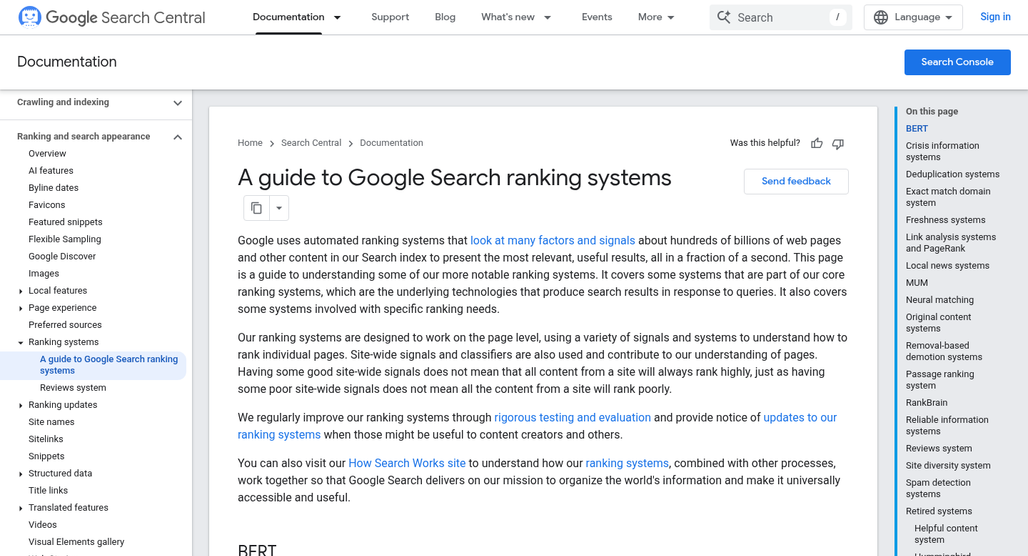
Then there's SERP feature displacement, which doesn't get enough attention. Even when a page holds its ranking position, it can lose clicks because Google has added a featured snippet, a People Also Ask block, or a knowledge panel above the organic results. The ranking stayed - the traffic didn't. Understanding zero-click keywords and how to target them is worth factoring in here.
A drop in traffic is a signal, but not a simple one - it points to a reason, and the reason determines the right response. Updating a page because of intent drift is a different job from refreshing one that's been displaced by SERP features.
Not all decay looks the same in the data either. Some pages drop sharply and fast, others bleed slowly over months. Some lose impressions while clicks stay steady, and some show the opposite pattern. The shape of the decline is worth understanding before deciding what to do about it.
The Four Decay Patterns Worth Paying Attention To

Not all traffic loss looks the same, and that distinction matters quite a bit when picking what to do next. The shape of the decline is a clue about what caused it.
The first pattern is a slow bleed. A page loses traffic slowly over months, with no single dramatic drop to point to - it usually means the content has aged out of relevance or competitors have published something more comprehensive on the same topic.
The second is a sudden cliff. Traffic drops fast over a short window, usually tied to an algorithm update or a structural change on the page itself - it tends to feel more urgent, and it usually is.
Then there's plateau erosion, which is subtler. The page isn't declining sharply but it's also not recovering from an earlier dip - it just sits there, slowly losing ground to pages that are earning more links or more engagement over time. In some cases, the right move is to consolidate overlapping content rather than refresh individual pages.
Finally, seasonal dips are the most misread pattern of the four. A page loses traffic in a predictable cycle tied to the time of year, and it looks like decay when it's actually normal behavior for that topic. The mistake is to treat it as a problem that should have a fix.
The table below helps you tell them apart before picking a next step.
| Pattern | What It Looks Like | Typical Cause | Response Type |
|---|---|---|---|
| Slow Bleed | Gradual decline over months | Content aging, stronger competition | Refresh and expand |
| Sudden Cliff | Sharp drop in a short window | Algorithm update, technical change | Investigate before acting |
| Plateau Erosion | Flat but slowly declining | Low authority, weak engagement signals | Build links or consolidate |
| Seasonal Dip | Predictable low period each year | Topic demand follows a cycle | Monitor, don't overreact |
Getting this diagnosis right is the difference between fixing a problem and spending time on something that was never broken.
Turning a Decay Audit Into a Content Trigger System

Knowing what decay looks like is one thing. But having a repeatable process to catch it and act on it is another. You want to build an easy audit rhythm that does more than flag pages for a touch-up - it feeds your content calendar with ideas grounded in performance data.
Start with four metrics inside Google Search Console: impressions, clicks, average position, and click-through rate. Track these over time - not just snapshot them. A page that loses 30% of its impressions over three months while holding position tells a very different story than one that drops in position and clicks together.
Run this audit once a month. That cadence is frequent enough to catch gradual drops before they get out of hand, but not so frequent that you're chasing noise. Pull your top 50 to 100 pages by historical traffic and filter for any that show a downward trend across two or more of the four metrics.
Then rank what you find by urgency. A page that was once a strong traffic driver and is now declining fast deserves more immediate attention than one that was always modest and has dipped slightly. An easy high, medium, or low label works fine so you can prioritize without a complex scoring system.
| Urgency Level | Signal | Suggested Action Type |
|---|---|---|
| High | Strong historical traffic, steep recent decline | Ideation review - rewrite or companion piece |
| Medium | Gradual decline across 2+ metrics | Topic cluster expansion or internal link audit |
| Low | Minor dip, stable position | Monitor for another cycle before acting |
A flagged page is not automatically a page to rewrite - it may be a sign that the topic needs more supporting content around it - a related guide, a FAQ page, or a deeper piece that works with a question your original post only touched on. Understanding what a content roadmap is and how to build one can help you structure that supporting content systematically.
That distinction matters because it changes what you create next. If the gap is around related subtopics, tools like a SERP gap analyzer can surface exactly what your post is missing compared to what's currently ranking.
From Flagged Pages to Fresh Content Ideas

Once a page gets flagged in your audit system, it stops being just a problem to fix and can become something more helpful: a research prompt. The data attached to that page tells you quite a bit about what your audience expected to find versus what they actually got.
Start with the original search queries that brought visitors to the page. If those queries have changed in phrasing or focus since the piece was published, that's intent drift in action. Your audience is still searching in that space but asking slightly different questions. The content you wrote answered an older version of the question.
Back-linked pages are worth a close look too. The sites and articles that linked to your flagging page show how others framed the same topic. That framing difference between your content and theirs can point directly to an angle you never covered.
Comments and on-page engagement data do similar work. If readers left questions you never answered, or if they engaged more with one paragraph than the rest, those patterns tell you where the interest lived - it's worth treating those tells as mini briefs for future pieces.
One decaying page can generate three to five topic directions if you break it apart this way. The goal is not just a refresh angle but pulling out sub-topics that deserve their own pages, related questions that got buried, and adjacent ideas the original piece touched on but never developed.
| Signal Source | What It Reveals | Potential Content Direction |
|---|---|---|
| Search query data | How intent has shifted over time | A new piece written for the updated query |
| Inbound backlinks | How others framed the same topic | An alternative angle or counter-perspective |
| Reader comments | Unanswered questions from real users | A deeper explainer or follow-up guide |
| Engagement drop-off points | Where interest faded in the original piece | A focused piece on the section that lost readers |
The goal at this stage is to generate raw ideas without filtering too hard. The next step will manage how to gather and rank what you find.
Building a Decay-Driven Editorial Calendar That Doesn't Fall Apart

Having a list of flagged pages is a start. But a list without structure tends to get ignored. The goal now is to turn those signals into a calendar that actually gets used week to week.
The first thing to get right is the balance between refreshing old content and publishing new pieces- it's easy to fall into a cycle where every month is rewrites with nothing new going out. That gives you a stale content profile over time and limits your ability to target topics you have never covered before. A rule of thumb is to plan for roughly one refresh for every two new pieces, though you can adjust that ratio based on how many flagged pages you have in the queue.
Sequencing matters too. Put your highest-priority refreshes at the start of the month when momentum is easiest to maintain and the team is most focused. Save exploratory new content for the middle of the month when there's a little more breathing room- this gives your calendar a natural rhythm without forcing anyone to make hard decisions under pressure.
A simple planning table goes a long way here.
| Week | Content Type | Source Signal | Priority Level |
|---|---|---|---|
| Week 1 | Content refresh | Traffic drop over 30 days | High |
| Week 2 | New article | Related keyword gap | Medium |
| Week 3 | Content refresh | Declining click-through rate | High |
| Week 4 | New article | Emerging search trend | Medium |
The source signal column is worth mentioning- it keeps the whole team anchored to the data instead of gut instinct and makes it easier to defend why a piece is on the calendar at all.
Keep the calendar visible and editable by everyone who touches content. A calendar that lives in one person's inbox stops being a team content tool very quickly.
Getting Your Team to Trust Traffic Loss as a Creative Prompt
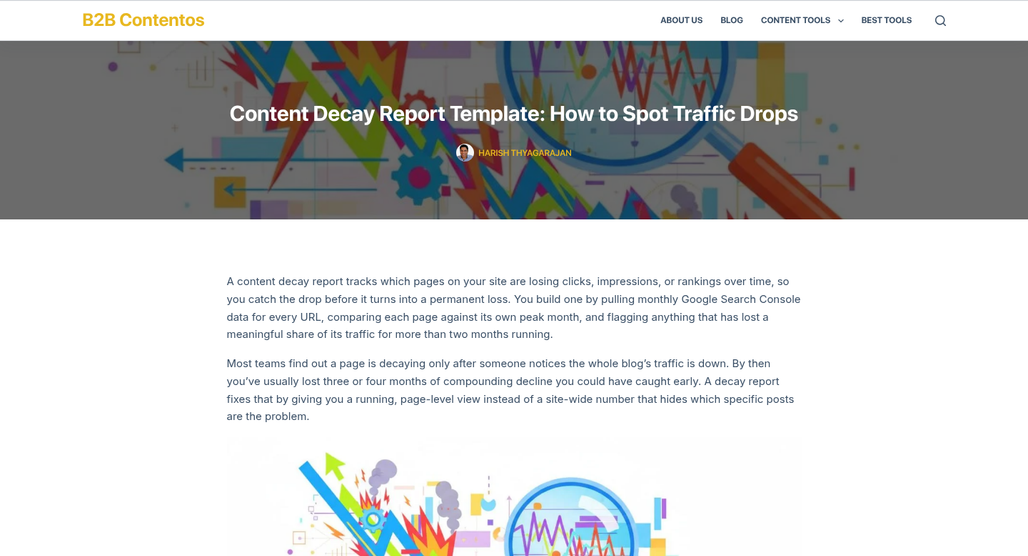
The hardest part of this whole strategy isn't the data or the calendar - it's getting the people around you to see a drop in traffic as something worth exploring instead of something to feel bad about.
Decay can seem like a judgment on someone's work. If a writer or strategist owns a piece of content, watching its numbers fall can seem personal. That reaction is understandable, and it's worth naming it directly in team conversations instead of glossing over it. The goal isn't to point fingers at old content - it's to extend its life.
When you bring decay data into a meeting, the framing matters more than the numbers themselves. Lead with what the content achieved when it was new, then show where it stands now, and let the gap do the talking - this positions the refresh as a response to a changing environment instead of a correction of a past mistake.
Content ownership is where things get tough. People protect their work, and that's not a flaw - it's just human. One way to move past this is to separate the original author from the refresh process. A fresh set of eyes on a decaying piece can cut back on friction and bring a new perspective without anyone feeling overruled.
A few framing strategies tend to land well with teams. You can present decay as a sign that a piece earned enough attention to be worth revisiting. You can frame the refresh queue as a list of assets the team has already proven can perform. Both of these reframe the starting point from "this failed" to "this has potential we haven't fully used yet." Understanding what blog post ideation really involves can help teams see content as an evolving process rather than a one-time deliverable.
It also helps to show early wins. When a refreshed piece recovers or grows its traffic, share that result with the team in a visible way. Momentum builds trust faster than any explanation of the system ever will.
Some resistance will stick around no matter what, and that's fine. The team doesn't need to love the process - they just need to trust that it produces results worth the effort.
Mistakes That Quietly Undermine a Decay-Triggered Content System
Even a well-built system can fall apart in small ways. The traps here are not dramatic - they are the quiet missteps that only become visible months later, when you are wondering why traffic still has not recovered.
One of the most common is refreshing too aggressively. When a page loses traffic, the instinct is to rewrite everything fast and move on to the next one. But if you are updating content without understanding why traffic dropped, you risk replacing things that were working. Slow down and read the data before you touch the page.
Another trap is treating every traffic drop the same way. A page can lose traffic because the content has aged. But it can also lose traffic because of a broken link, a crawl error, or a technical problem. Moving into content ideation when the problem is technical wastes time and leaves the underlying fault unresolved. Always rule out technical causes first.
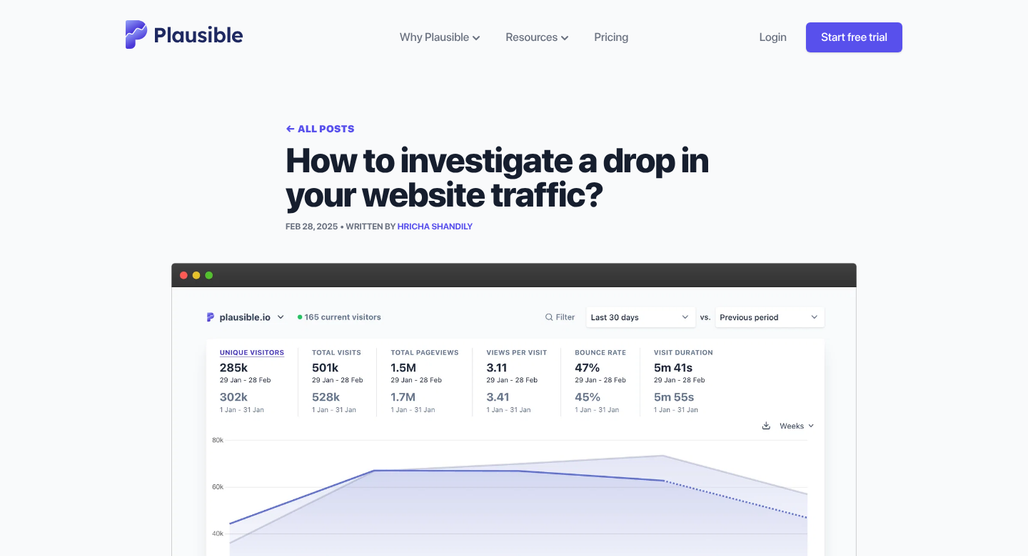
Seasonal decay is easy to miss too. A page about holiday budgeting or summer travel will lose traffic in the off-season - that's not decay, that's a calendar. If your threshold does not account for seasonal patterns, then you'll be reacting to normal fluctuations as though they are content failures. Build in a way to flag recurring seasonal drops as separate from genuine long-term decline.
The biggest gap in most decay-triggered systems is the feedback loop. Teams spend time recognizing decay and creating new content and publishing updates - then move on without ever checking if the traffic came back. That missing step is where the whole system loses its value.
Set a date to revisit every page you update. Check if rankings improved and if the traffic loss actually reversed - this does not have to be tough - an easy tracker that logs the pre-update baseline and a follow-up check at 60 or 90 days will do the job. If you don't have that, you are running a one-way system that produces effort without accountability.
Make Decay Work for You, Not Against You
The loop you've built here - auditing decay, surfacing patterns, generating ideas, scheduling them deliberately, and measuring what comes back - turns a reactive headache into a repeatable creative engine. You're not chasing traffic. You're letting the data tell you where your energy will do the most good, and then showing up there with intention. Tools like buyer intent analysis tools can help you harvest the right data to guide those decisions.
If you want a place to start this week, pull your analytics and find the one page that's lost the most ground over the past six months. Just one. Look at it - not to assign blame, but to get curious. That single page is your first fix. Everything else will follow from that moment of attention. The calendar clears up fast when the content knows why it exists.
Make Decay Work for You, Not Against You
The loop you've built here - auditing decay, surfacing patterns, generating ideas from intent data, scheduling them deliberately, and measuring what comes back - turns a reactive headache into a repeatable creative engine. You're not chasing traffic. You're letting the data tell you where your energy will do the most good, and then showing up there with intention.
If you want a place to start this week, pull your analytics and find the one page that's lost the most ground over the past six months. Just one. Look at it - not to assign blame, but to get curious. That single page is your first fix. Everything else will follow from that moment of attention. The calendar clears up fast when the content knows why it exists.
FAQs
What does traffic decay actually signal for content teams?
Traffic decay signals that a topic still has an audience but competition has shifted, making it the right time to revisit and strengthen your content rather than treat it as a failure.
What are the four main traffic decay patterns?
The four patterns are slow bleed, sudden cliff, plateau erosion, and seasonal dips. Each has a different cause and requires a different response, so identifying the pattern before acting is essential.
How often should you audit pages for traffic decay?
Run a decay audit once a month. This cadence catches gradual drops before they worsen without reacting to short-term noise, focusing on your top 50-100 pages by historical traffic.
Can one decaying page generate multiple new content ideas?
Yes. By analyzing query shifts, inbound backlinks, reader comments, and engagement drop-off points, a single decaying page can generate three to five distinct new content directions.
What mistakes commonly undermine a decay-triggered content system?
Common mistakes include refreshing content without diagnosing the cause, ignoring technical issues, misreading seasonal dips as decay, and failing to track results at 60-90 days after updating.

Related Posts


Leave a Comment


Fine-tuned for competitive creators
Topicfinder is designed by a content marketing agency that writes hundreds of longform articles every month and competes at the highest level. It’s tailor-built for competitive content teams, marketers, and businesses.
Get Started