What Are Some Examples of a High-Intent Blog Post?
 Written by James Parsons • Updated April 15, 2026


I talk a lot about the intent behind the keywords people use to search for something on Google. The different kinds of intent, like navigational and transactional, are an important element for understanding why people are searching for the keyword, so you can understand how to satisfy their needs.
One thing I haven't mentioned as much, at least not directly, is the concept of the scale of that intent. These keywords can be low intent, or they can be high intent, and it's important to target high intent keywords as effectively as possible.
Today, I thought I would go through some examples of what I mean so you can see it in action.
Key Takeaways
- High-intent keywords signal strong purchase intent, but purely transactional keywords are nearly impossible to rank for with blog content.
- Commercial-intent keywords like "best running shoes" are the sweet spot for content marketing targeting high-intent audiences.
- Sites like Wirecutter succeed by combining deep product expertise, transparent testing methodology, and strong EEAT signals.
- Always validate keyword results first; if Google surfaces only product listings, target that keyword with store pages instead.
- High-intent keywords deserve pillar-style, comprehensive content that's regularly updated and supported by related cluster content.
Table of Contents
What Are High-Intent Keywords?
You can generally think of keywords as being part of a spectrum of purpose. Keywords have different kinds of intent behind them and also different levels of intensity to that intent.
A high-intent keyword is a keyword where the intent behind it is strong.
Generally speaking, marketers also limit high-intent keywords to the more commercially focused intent types. A high-intent keyword with a navigational intent is just something like "Netflix login" with the goal of signing into Netflix. That's a completely worthless keyword for anyone else to target because no one searching it is looking for anything other than Netflix.com.
The goal is to find keywords where the subject is generically relevant to you, the intent is transactional or otherwise centered around a conversion, and the intent behind it is high.
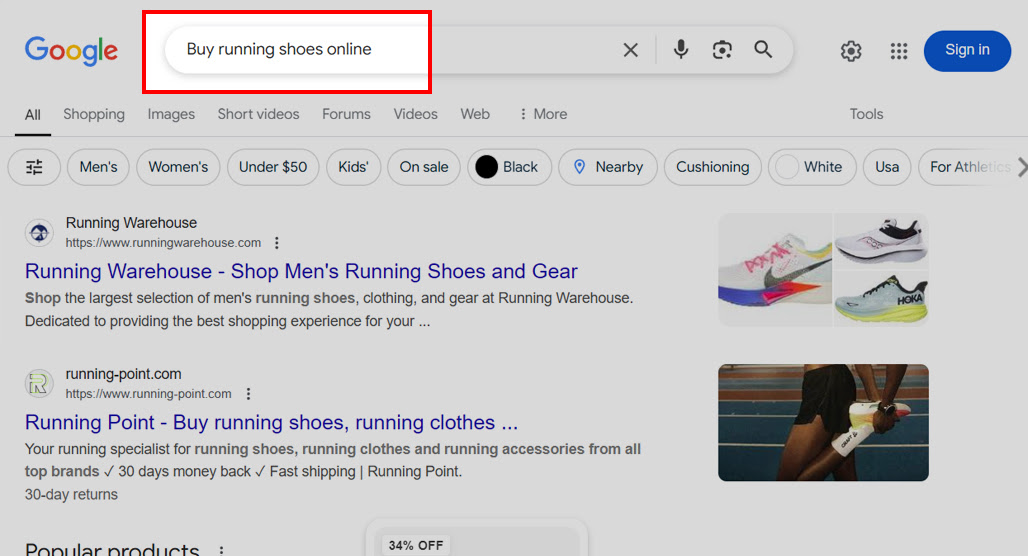
One of the archetypal examples, often used in Google's resources and repeated throughout marketing, is the subject of running shoes. So, consider the different ways a query involving running shoes could go.
- "Running shoes" This is a generic query that doesn't offer much insight into the intent behind it.
- "What are running shoes?" This is an informational query where the user has low intent to do anything but learn about running shoes and what makes them different from other kinds of shoes.
- "Best running shoes" This is a moderate-intent query focused on an informational or commercial intent. The user searching it might not be ready to make a purchase, but they've expressed enough interest that they may be worth adding to a remarketing list later. It's also possible that you could hook them with a low-impact conversion, like signing up for a newsletter to get deals about running shoes in the coming weeks.
- "Buy running shoes online" This is a high-intent keyword. The user is expressing that they're interested in buying running shoes, and are just looking for a place that sells them that they can trust.
If you're an experienced marketer, you're already seeing a problem with high-intent keywords, so let's talk about it.
The Problem with High-Intent Keywords
The biggest issue with high-intent keywords is that they're often occupied, but not in the way you might think.
High-intent transactional keywords often don't work very well for content marketing. To understand why, just search for "buy running shoes online" and look at the results.
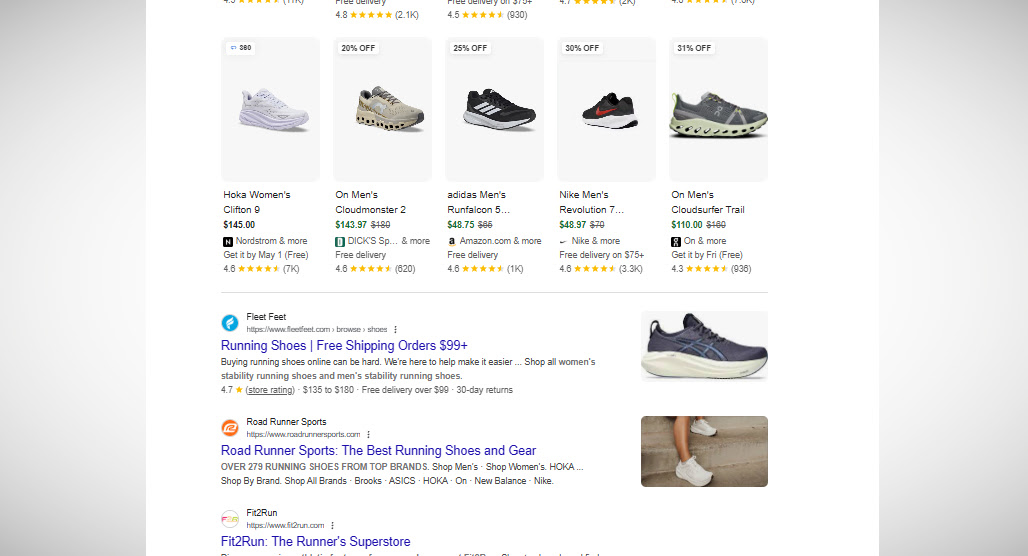
Right now, I see:
- A row of sponsored store product listings.
- One running shoe-focused website's homepage.
- Two more rows of product listings.
- One more running shoe-focused website homepage.
- A running shoe-focused website's product catalog.
- Another homepage.
- Another catalog page.
- The "People also ask" box.
- Two more rows of product listings.
- Three more homepages.
- Two more catalog pages.
- A Google-generated buying guide.
- Three more rows of product listings.
- A Google-generated box of additional store pages.
- The "people also search for" box.
All of this is accompanied by the sidebar for filtering product listings.
What do you not see? Blog posts. Reddit doesn't even show up until the third page. The closest thing to a blog post to show up is the New York Times Wirecutter review page of best running shoes, and that's not until page five of the search results. When the NYT is on page five of the results, it's clearly not something that your average content marketing can reach.
So what's the trick?
The Trick to High-Intent Keywords
The trick to high-intent keywords is that high transactional intent keywords aren't actually targets for content marketing. They're targets for things like store pages, product landing pages, Schema markup for individual products, and single-niche homepages.
The key is to step back one tier to the commercial-intent keywords. These are the keywords that show a user is interested and looking for information about a purchase they want to make, but they aren't quite to the point of pulling the trigger.
Let me show you what I mean.
The aforementioned Wirecutter running shoes review. This site targets a million different keywords, but broadly, the top-level commercial keyword is "best running shoes."
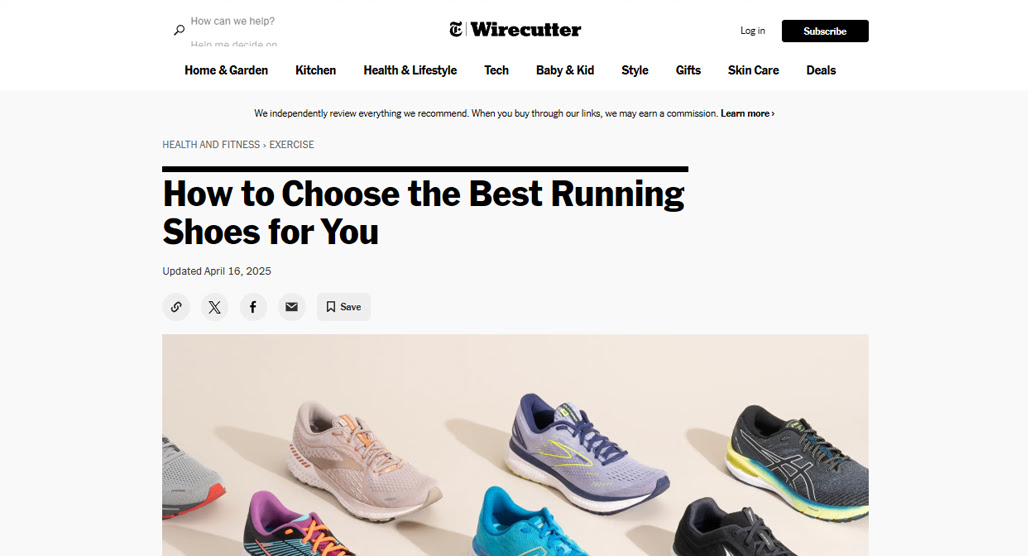
Wirecutter is an archetype for what an affiliate marketing site should be. The site was founded in 2011, quickly became an authority in comparative reviews and product testing, and was purchased by the New York Times in 2016.
It's also a great example of content marketing that targets commercial-intent keywords but not necessarily transactional keywords. People visit Wirecutter when they know they want to buy a particular kind of product, but they aren't sure which of the many options available is the one they want.
That's where content marketing fits the role perfectly. Something with a blog post format is capable of bringing in a lot more useful information alongside product recommendations and, of course, affiliate links.
Wirecutter is also a fantastic example of EEAT in action. They don't just write reviews for products; they go through an intense testing methodology and explain every detail of how they do it and why, and they give you a full list of the experts and authorities involved so you know who is doing the testing. They also go on to explain what all of the key details about a class of product are, and why they're important for the product.
In short, it's a deep, detailed resource guide to a kind of product, with recommendations for products for different people and different needs throughout.
Other sites try to do the same thing. For example, another "best running shoes" post comes from Runner's World. In fact, you can see as you go through the post how it's basically replicating the same formula for success that Wirecutter established.
Runner's World also has another example of a high-intent keyword related to running shoes, "what to look for in running shoes," found here. This is, essentially, just a subsection of the larger guide since the larger guide covers what to look for. However, it serves to bring in people looking for the one specific guide, who might not be as far along in the research process as the group looking for the best running shoes post.
This is also the sort of keyword where competition starts to crop up more easily. Reddit is represented, of course, as are other athletic brands.
These are just a few basic examples of high-intent keywords that you can actually target using content marketing. Similar keywords exist in every niche:
- Best digital marketing courses
- Easy guide to healthy eating
- Best dog food for old dogs
You can also find more directly product-related keywords, such as comparative keywords or review keywords.
- Salesforce review
- Ahrefs versus Semrush 2025
- WordPress competitors
These sorts of keywords have branding associated with them, so if you aren't one of those brands, it can be slightly harder to rank but far from impossible. In fact, many people actually seek out third-party sources for this kind of information while they're deciding what they want to do.
How to Make the Most of High-Intent Keywords
Now that you've seen what high-intent keywords look like in action, let's talk about what you need to do to actually target them and rank for them.
Step 1: Pick the Right Keywords
The first step is, as always, picking the right keywords to target. I've already mentioned how it's effectively impossible to target transactional-intent keywords with content marketing, so you generally want to focus on the one-step-away keywords.
This isn't a universal rule, though. It heavily depends on the niche and the keywords themselves. Smaller niches with less competition, and particularly keywords where Google isn't using things like local pack, map pack, or product listing results, can be valid targets. You don't want to compete with Google - they'll win - but they don't automatically convert every high-intent query.
How do you pick the right keywords? It can, understandably, be pretty hard to divine the intent behind a keyword, especially if it's a short-tail keyword.
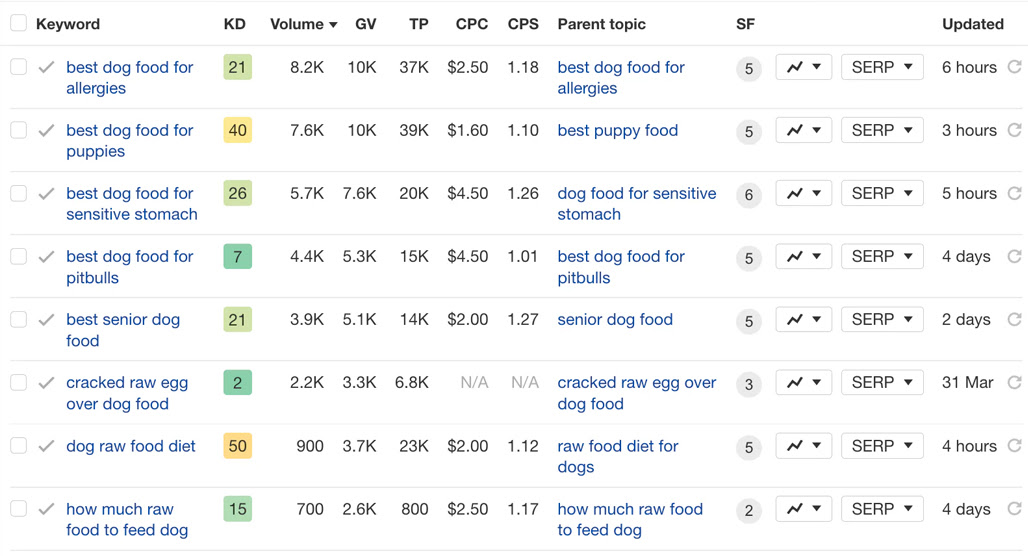
Image source: https://cdn.shopify.com/s/files/1/0070/7032/files/related-keyword-list.png?v=1650031956
Keyword research is critical, of course, but that's just the first step. Once you have a list of keywords, you need to think about what the kind of person searching for those keywords is, and what they're looking for.
Sometimes it's obvious, but sometimes it's not as clear, or there could be multiple options. That's not actually a bad thing; in fact, it can allow you to spin one keyword into multiple pieces of content, covering it from different angles.
Step 2: Don't Confuse Intent with Value
A common mistake I see is people who conflate a high-intent keyword with a high-value keyword. Keywords where the intent is a purchase are obviously valuable to you, but there are many ways to engage and satisfy visitors without a purchase.
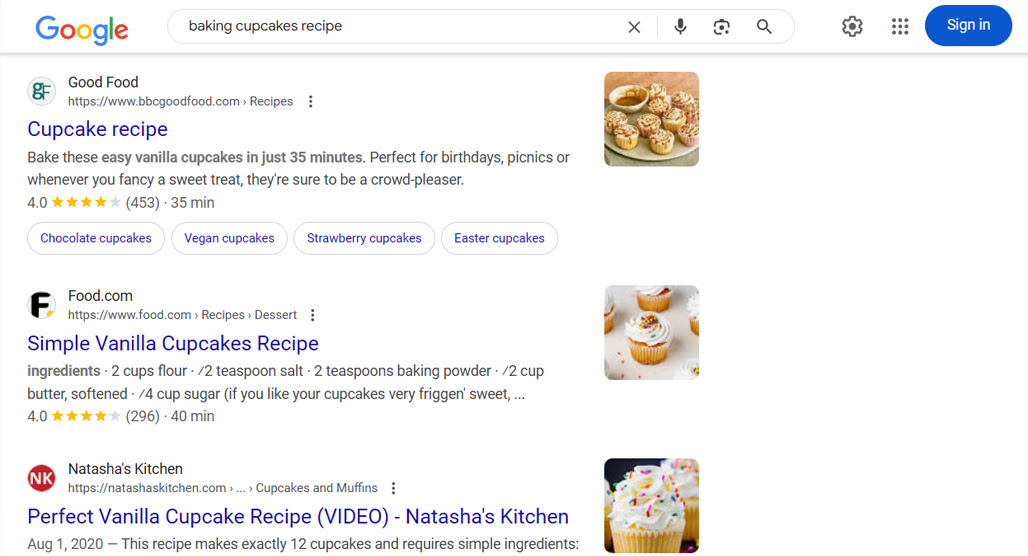
You see this a lot with high-intent informational keywords, particularly in certain niches. Food blogs, for example, have a ton of high-intent keywords, but they're all DIY-focused; people aren't searching them so they can buy the food; they're searching so they can find out how to make it.
But those keywords are still useful. The food blog can put in affiliate links for tools or ingredients, pitch their cookbook with variations on the recipe, or offer video cooking lessons.
Step 3: Validate the Results for the Keywords
Before you consider writing content for a keyword, do a search for it and see what comes up.
If it looks like the list of results for running shoes I listed up above, it's probably not a good keyword to target with a blog post.
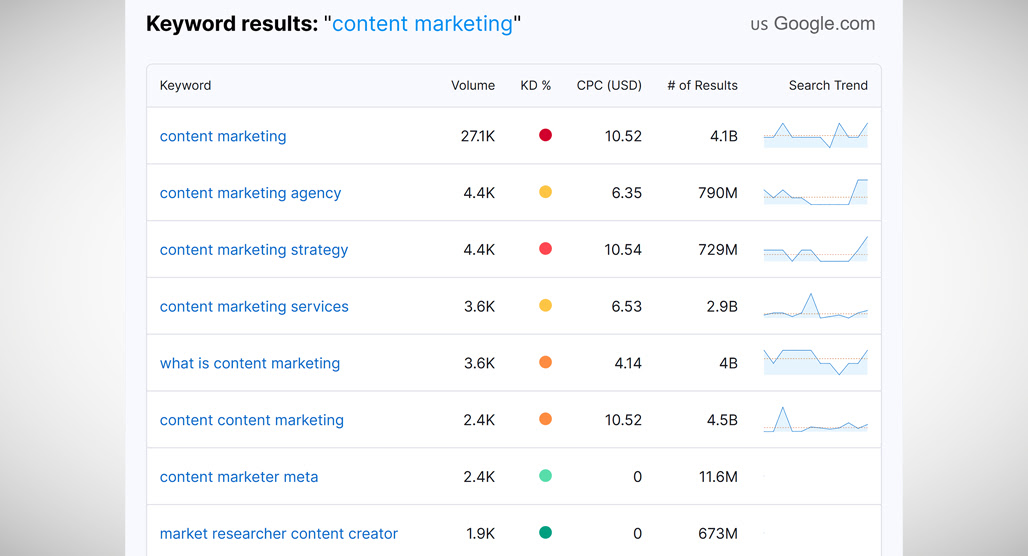
Image source: https://api.backlinko.com/app/uploads/2025/01/backlinko-keyword-tool-content-marketing.png
That's not to say it's a bad keyword! Quite the opposite. It's clearly a great, valuable keyword. You just have to target it in a different way. A store page with schema markup for product details, a dedicated product landing page, and that kind of thing. Set the keyword aside for a different part of your marketing team.
If the keyword is more focused on organic results and less on enhanced results, that's where you can leverage content marketing to rank.
Step 4: Pick the Kind of Content to Produce
Another major decision you need to make is what kind of content you're going to produce for the keyword.

High-intent keywords almost always benefit from pillar-style content. A single large, comprehensive post that covers as many angles as possible, with copious links to and from related guides on sub-topics and longer-tail keywords. These are evergreen and should be kept updated at least annually, if not quarterly, or even monthly, depending on the industry.
The further away from the core topic and keyword you go, the smaller the content needs to be, but the highest-value, highest-intent keywords deserve the best content.
Step 5: Create Great Content
From here, it's just a matter of creating top-tier content.
The goal here is to put yourself in the shoes of a potential customer searching for the keyword. What do they want to know? What do they not know they need to know? How can they know they can trust you?
All of this helps you outline the content. From there, you can build out each section to be as comprehensive as necessary and spin off more comprehensive sub-guides into secondary content as part of the cluster.

You can also enhance content with media. Small infographics and illustrations, pictures of steps to take, diagrams, and even videos can all be great enhancements to the content.
Everything else is all back to the core tenets of content marketing.

Related Posts

Leave a Comment


Fine-tuned for competitive creators
Topicfinder is designed by a content marketing agency that writes hundreds of longform articles every month and competes at the highest level. It’s tailor-built for competitive content teams, marketers, and businesses.
Get Started