Do Long-Tail Keywords Still Matter for Your SEO in 2026?
 Written by James Parsons • Updated April 15, 2026


Keywords are tricky business. Billions of words have been written about how to find them, how to validate and qualify them, how to use them, and how they're misused. At the same time, the way search and advertising work changes, and new developments like AI warp the paradigm.
It's reasonable to periodically return to ground zero and ask: Is this still important?
After all, it's really easy to get deep into the weeds when optimizing something, only to find that a base-level change would have orders of magnitude more impact.
So, do long-tail keywords still matter in 2026?
Key Takeaways
- Long-tail keywords remain essential in 2026 because language-based search fundamentally relies on specific word combinations to convey meaning.
- LLMs reinforce keyword importance; they're statistical engines built on word relationships, requiring specific queries to generate meaningful outputs.
- Conversational and voice search are shifting queries toward longer, intent-rich phrases, making long-tail keyword targeting even more strategically valuable.
- Using keyword variations and related terms within content helps capture broader search coverage, replacing outdated exact-keyword repetition tactics.
- Content clustering-building interlinked, narrowly focused posts around related keywords-is highlighted as one of the best SEO strategies for 2026.
Table of Contents
Solid Fundamentals in Search and Content
First, the simple answer: yes, long-tail keywords still matter in 2026, and they'll matter in 2027, and they'll continue to matter for as long as we use language to search for information. Check back when we get brain chips that read thought-forms and search for complementary thought-patterns across the whole mind, I guess.
It all comes back to how search engines function, but even more than that, it comes back to how language works and how we as a species transfer information to one another.
People create content about topics. In order to find that content, you need to be able to locate it based on some aspect of it that indicates what it's about. We don't really have visual search in a way where you could, say, upload a video of your own interpretive dance and have it identify the key topic to give you. So, we have to use language.
Language is made up of building blocks. A novel is one work, made up of chapters, which are made up of paragraphs, which are made up of sentences, which are made up of words, which are made up of morphemes, which are made up of letters.
Every letter carries meaning, and that meaning compounds, builds, and specifies as more are attached. Words carry meaning, but that meaning can still be broad and generic, and due to the nature of language (and especially English), you end up with one word with multiple meanings.
- Tear: to rip apart.
- Tear: water from the eyes.
Long-tail keywords are strings of words, shorter than a sentence but longer than an individual or compound word. Each additional word adds meaning and narrows down the breadth of possibility until you land on a specific topic.
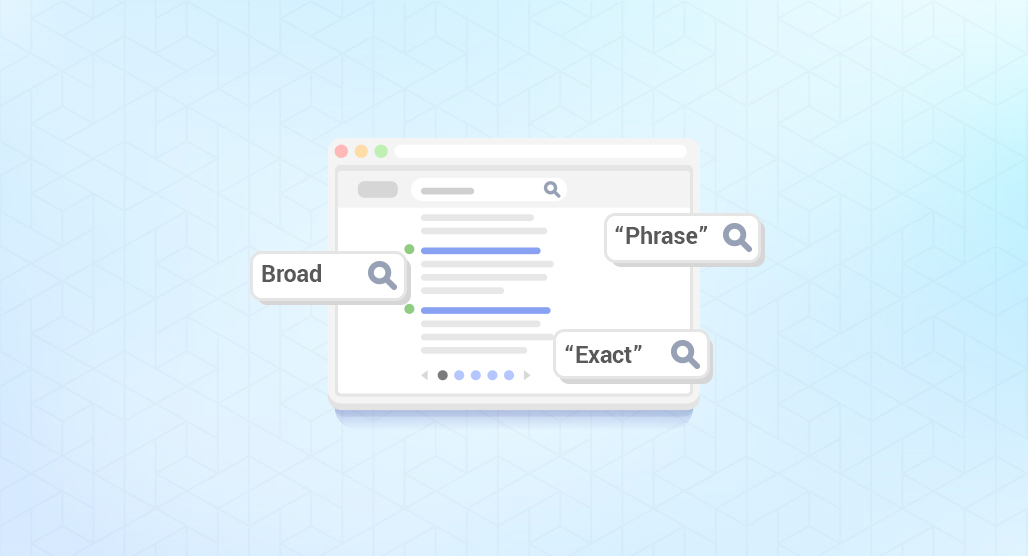
Search engines know this, which is why they're powered by language, and why the most effective queries are the most specific. Sometimes that's one "word" when the word is very specific itself (like a product model number), and sometimes it's a long-tail keyword with two, three, five, or more words. Understanding broad vs phrase vs exact keyword matching can help you get even more out of your targeting.
This is how it has worked for decades.
Adding LLMs to the Mix
Does the introduction of AI and LLMs change this?
If anything, it reinforces it.
LLMs are not a fundamental change to how language works. It's the opposite: they're a mathematical and statistical engine built on the relationships between words. It's a lot of complicated math and theory, but it all comes down to identifying those meanings and relationships, assigning them numerical values, and calculating the statistically likely relationships between them.
A simple-to-the-point-of-uselessness distillation would be taking your input prompt (or search query; same difference, really) and converting it into an equation, calculating the result of that equation, and using that to generate the output.
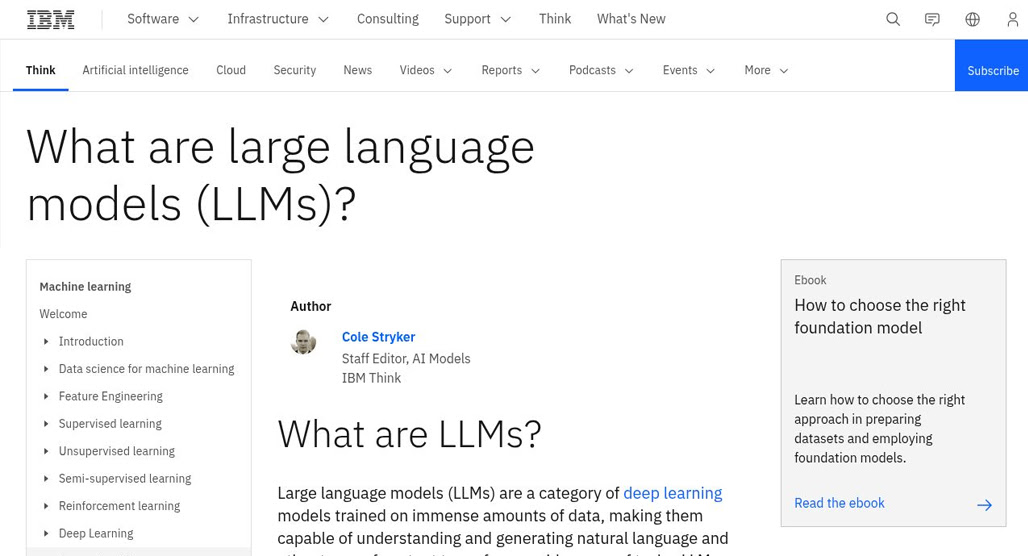
"LLMs work as giant statistical prediction machines that repeatedly predict the next word in a sequence. They learn patterns in their text and generate language that follows those patterns." - IBM.
Question and answer.
You couldn't go to ChatGPT and type in "shoes" and get a meaningful response. But you could type in "what are the best running shoes" and get a meaningful answer.
Would that answer be accurate? Maybe. The LLM answer would provide you with an answer that lists examples of running shoes and why they're the best. But depending on how the specific LLM you're using functions, it could be pulled directly from a shoes-based affiliate site, or it could be completely fictional. You'd have to check to know for sure. There are real pros and cons to using ChatGPT for content that are worth considering.
All of that is beside the point. The key takeaway here is that AI, LLMs, enhanced search, Google's natural language parsing, and topic-centric SEO? It's all the same. It all functions on words, and words are keywords. It all relies on long-tail keywords to convey enough meaning to provide accurate results.
Language Parsing, Understanding, and Keywords vs. Topics
Recently, I wrote another post wholly about the difference between keywords and topics. It's an important distinction for marketing, content creation, and SEO.

To sum up, a basic question is this:
If Google and the LLMs understand language, are specific keywords important anymore?
If you run an affiliate site marketing running shoes for various purposes, is it worthwhile to write individual posts for running shoes for marathons, running shoes for 5ks, running shoes for hiking, durable running shoes, children's running shoes, etc.?
Or is it better to write a larger mega-guide and let the AIs and language parsers understand that your site's topic is running shoes, and that encompasses all of the sub-topics within running shoes? Understanding what parent topics are and why they matter for SEO can help you make this decision.
You've likely experienced this from the user's perspective yourself. You search for a term, and you find a result, and you click through to that result, but your specific search term isn't mentioned at all on the page.
You've also likely experienced the problem here: while that's fine sometimes, other times it means the result isn't actually useful or valuable to you at all. You want running shoes for people with flat feet, you get a mega-page with all sorts of running shoes, and zero mention of flat feet at all.
This is why long-tail keywords are important and will remain important. In fact, there are several reasons Google won't rank your page for your keyword if you're not targeting the right terms.
Why Long-Tail Keywords are Still Important in 2026
You can already see the shape of the answer, but I'll play it out for you.
Long-tail keywords are important because they're the specific indicator of the topic of a piece of content. They serve many roles in that position.
Long-tail keywords help Google understand what your page is about.
I do mean the specific page, here, but also your website as a whole. Your primary long-tail keywords for a given piece of content signify the overall subject matter that the piece covers. The word cloud of long-tail keywords for each piece of content refines Google's understanding of your site as a whole.
You might ask, if people are using ChatGPT and Perplexity and the AI Overviews for their results, is it still worthwhile to target Google?
I have two answers to that. The first is yes, and the second is also yes. First, Google is still a huge amount of market share, but even beyond that, when I say Google here, I mean all of the search engines, including Bing.
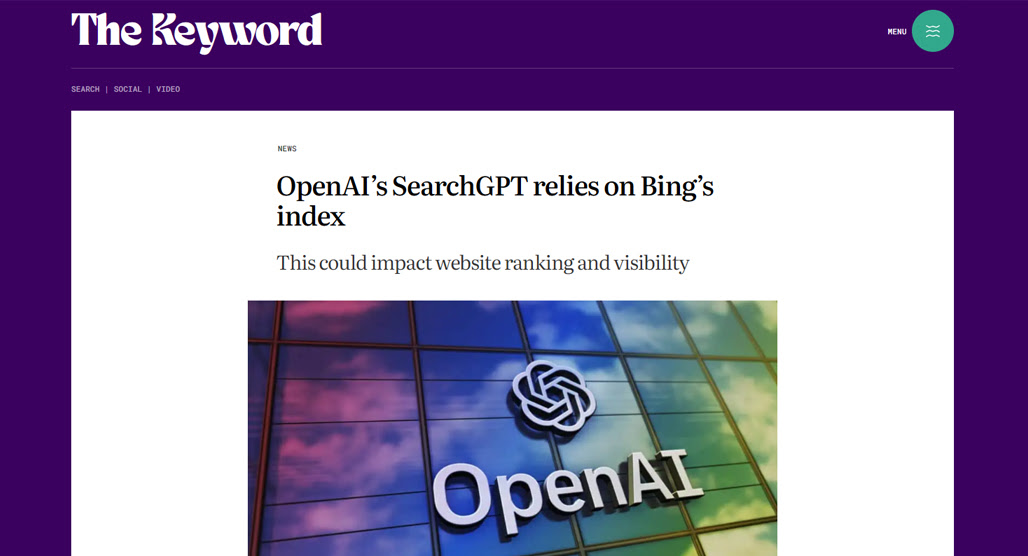
Second, the LLMs pull their understanding and references from somewhere, and they generally use search engines to do it. OpenAI explicitly relies on Bing results, and Bing works more or less the same way as Google. Google's overviews are, obviously, pulled from Google results. None of the LLMs have their own index with any substantive difference from Google's or Bing's.
Long-tail keywords help users find the specific information they're looking for.
Remember, you aren't creating content for Google, or for Bing, or for ChatGPT, or for Perplexity, or whatever. None of those are paying you. You're creating content for people. People just use those channels to reach you.
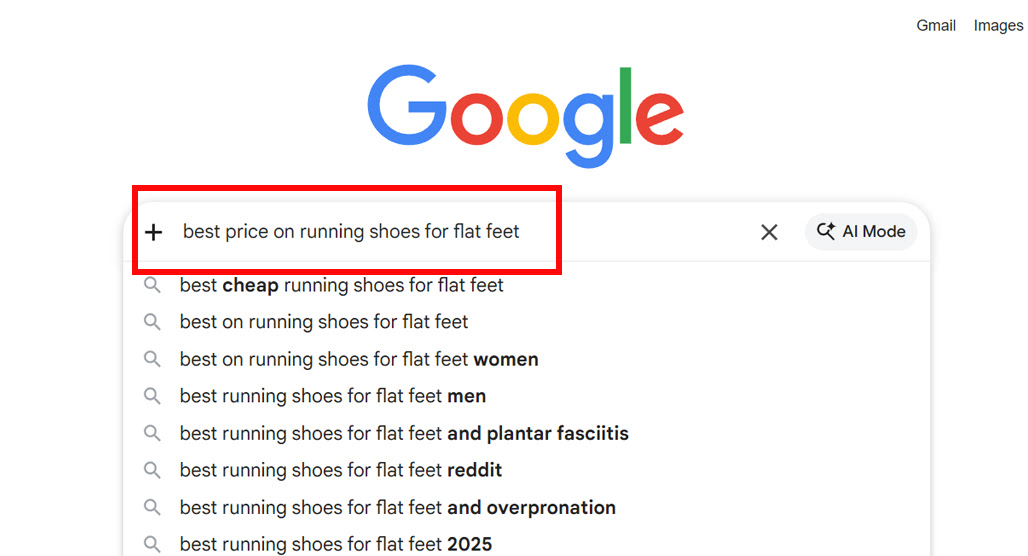
That means you need to match your content and the keywords that represent your content to the things people are looking for. That's wholly driven by long-tail keywords.
Long-tail keywords narrow and refine the output of an associated LLM.
If you've ever used an LLM on a deep enough level, you know that the more care and effort you put into your prompt, the more accurate and better your output will be. In fact, you have to get pretty close to a tipping point where you're putting more effort into the prompt than actually writing the output would be, but I digress.
The use of LLMs isn't a shift in how keywords are used, but it is a shift in user behavior and the results of those keywords. Instead of trying to rank well in the search engines, you also need to try to be the sources cited by the LLMs when they generate output.
There are strategies for this, but they go far beyond keyword usage and into things like specific formulas for responses.
In fact, the topic I'm discussing here is a great example. When you search for it, you get Google's social overview, which cites this Reddit thread as one of its sources.
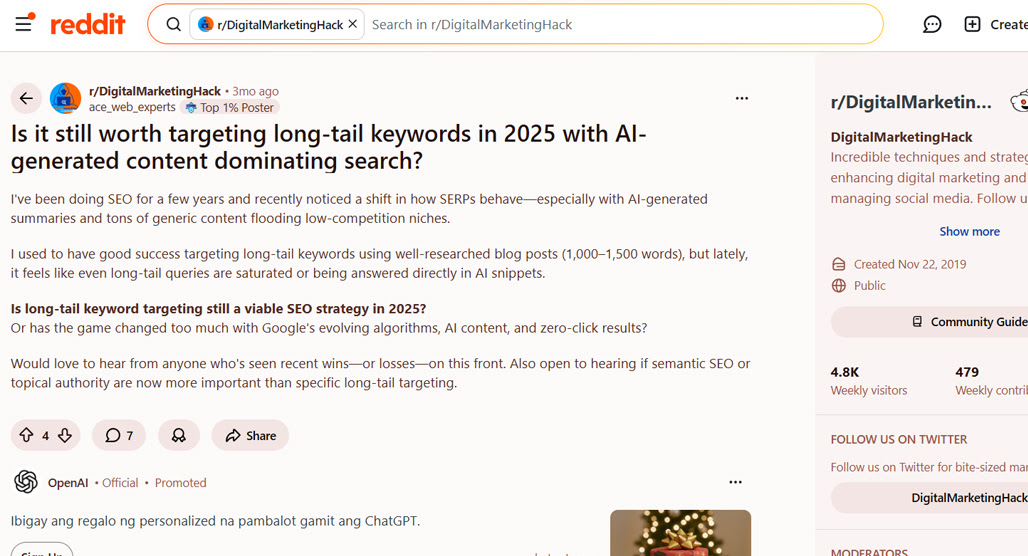
When you read that Reddit thread, you notice a few things.
- It's not very long or even very good, but it is formulated in easy snippets that an LLM can extract.
- The OP is a brand, and they make sure to respond in an AI-friendly way to each comment, rephrasing the responses in agreement to reinforce the topic.
- It's pretty clearly attempting to capture citation from the AI overview, but doesn't because there are better non-social-media results to draw from.
It's an interesting example of how these strategies work in some ways but not in others.
Long-tail keywords more accurately capture conversational search.
An interesting part of all of this is the shift from a more keyword-based search modality to a conversational search with more accessibility.
In the past, to get the most use out of something like Google, you would be best off using keywords and search operators. Arguably, this is still true, especially if you're looking for very niche topics, but for most people's casual usage, it's not anymore.
More and more people are using voice search on their phones or through home devices like Echo. Beyond that, many people have adopted the "treat an AI agent as a sentient entity" model that has some dangerous repercussions, but nevertheless means that AI agents are asked questions in a conversational tone.
Pop quiz: What is the difference between these two search queries?
- "Best marathon running shoes"
- "What are the best running shoes for running a marathon?"
Well, one of them has extra words. But when you get right down to it, they're the same query, right?

Interestingly, the actual search results are slightly different. The AI overview is different, of course, but that's often true between the same query across different days, so it's not noteworthy.
- "Best marathon running shoes" has Runner's World, Sole Review, Reddit, Adidas, Facebook, Run Testers, Run Repeat, Rock n Roll Running, and Six Minute Mile as results.
- "What are the best" has Run Repeat, Runner's World, Reddit, Run Testers, Sole Review, Rock n Roll Running, Runner's World again, and Adidas as results.
While most of the same sites are represented, the order and specific selection are a little different.
This comes down to keywords. The topic is the same, but the specific keywords, the actual words in the actual order, are different.
How to Make Use of Long-Tail Keywords in 2026
Creating content in 2026 is a matter of finding the right balance.
You need to balance narrow topics with broader appeal. You need to balance reaching people through search and through LLMs. You need to balance commercialized content that may be stripped of meaning by the LLMs, with hypertargeted content that makes up for what you lose.
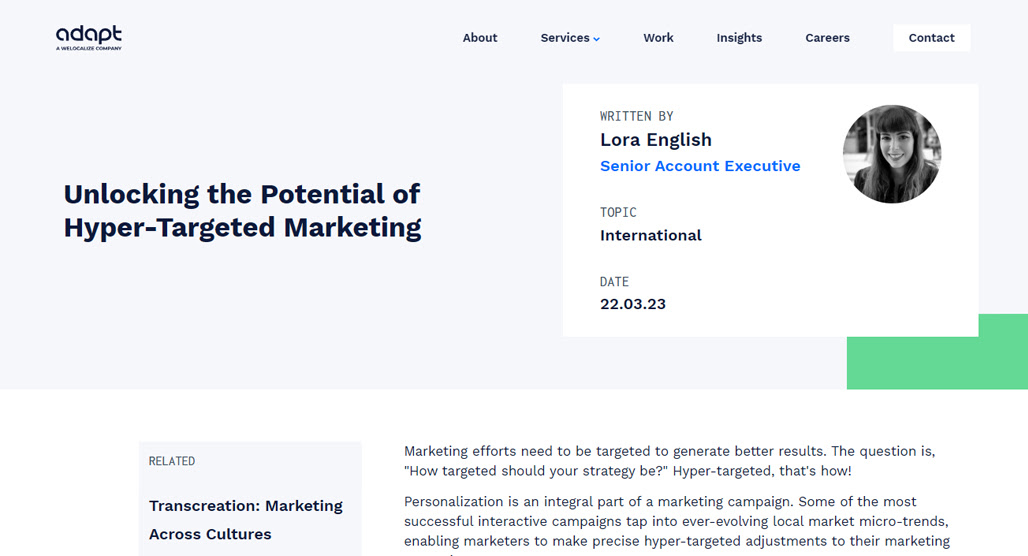
How do you use long-tail keywords in 2026 to accomplish all of this?
Think about search intent in conversational queries.
One benefit of the shift to conversational queries is that the long-tail keywords being used are going to carry more than just the technical details of the information a user wants to find; they'll carry search intent.
You'll see fewer "marathon running shoes" queries where the user clicks to store pages or Google Shopping, and instead you'll see more "where to buy the best marathon running shoes" queries you can answer with a resource. These are the kinds of buyer intent topics that make money.
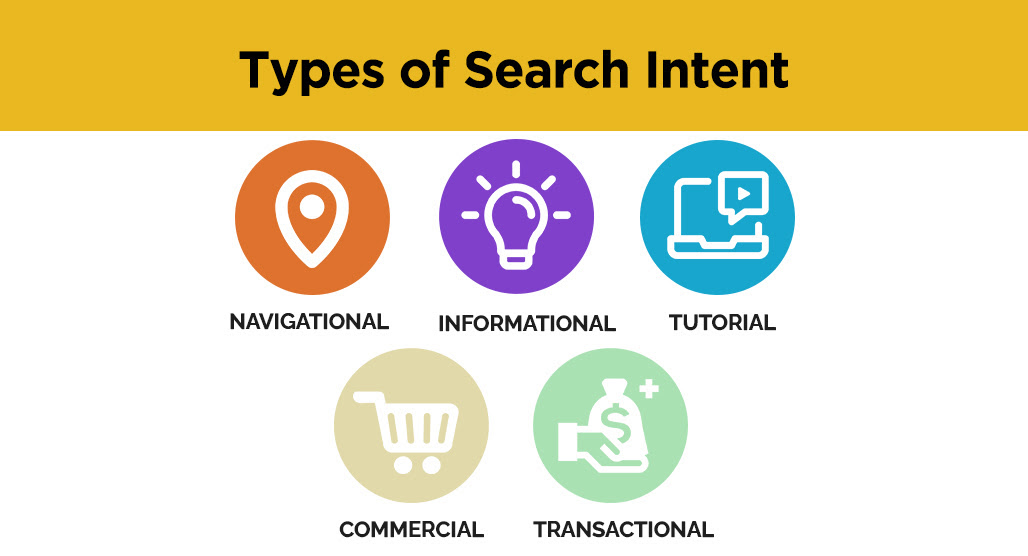
Search intent is a huge part of modern content marketing, and it's not going to get any less important moving forward. Being able to interpret search intent with LLMs is a big part of why they're suffusing everywhere, after all.
So, when you're picking keywords, think beyond the keyword and into search intent as well.
I mention this when I can; pages on the web don't have one keyword. They don't rank for just one phrase. A thousand different queries can find the same page, and that only broadens the more language is parsed and understood in different ways.
That doesn't mean you can use one long-tail keyword and assume you'll rank for hundreds or thousands of queries. It's kind of the opposite; it means you need to think of variations and related industry keywords on the keyword you use within the topic, and use them all.
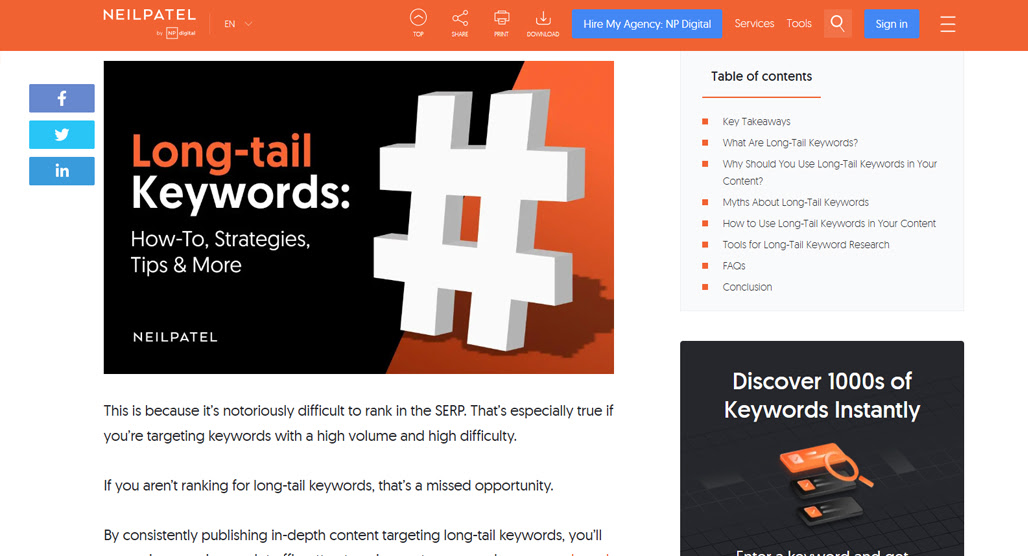
You aren't diluting the keyword, you're covering all your bases. Critically, this allows you greater flexibility. The days of using the same exact long-tail keyword a dozen times in a piece are over; now you want to use numerous variations to get the most out of a piece of content.
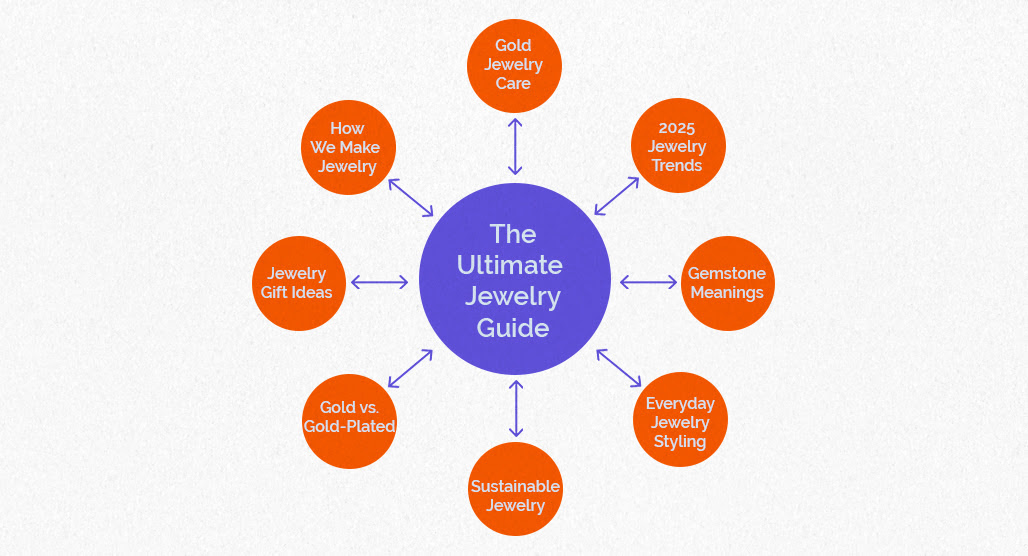
As you brainstorm keyword variations and sub-topics, you'll naturally uncover how these different keywords interrelate, and find topics that don't fit with the post you're writing, but are worth covering on their own. This is the core concept behind content clustering.
Content clustering is quite possibly one of the best SEO strategies for 2026 and beyond. Building robust coverage of a topic, across many different, narrow, focused posts, helps build more awareness and more strength in your site. This kind of content diversification is increasingly important as the search landscape evolves.
Overall, while there are a lot of changes under the hood to how SEO functions, the tangible results (what you do, how you do it, how it gets you results) aren't changing all that much. You still need to create great, focused content, and you need tight and relevant monetization to keep the ball rolling.
So, keep it up.

Related Posts


Leave a Comment


Fine-tuned for competitive creators
Topicfinder is designed by a content marketing agency that writes hundreds of longform articles every month and competes at the highest level. It’s tailor-built for competitive content teams, marketers, and businesses.
Get Started