Stop Guessing: Validate Content Topics Before You Write
 Written by James Parsons • Updated April 15, 2026


Some people think the hardest part of managing a blog is keyword research. Others find actually writing and editing a post to be the most difficult. Yet others find that promoting the post afterward is where they constantly stall out.
I think a lot of people overlook one of the true challenges: validating topics. In fact, I think there are a lot of bloggers out there who don't even know this is a step they should be doing, or do a couple of elements of it and think it's good enough.
I speak from experience: when I was first starting out, I didn't do most of this either.
Don't get me wrong. You can run a successful blog without doing a lot of this. It's just harder, and you'll feel like you're a lot more subject to the whims of fate and luck.
If you take matters into your own hands, though, you can uncover more of the mysteries of why some posts work and others don't, and you have a greater chance at success. Because sometimes, success doesn't look the same as you might think.
So, today, I wanted to dig deep into the validation process. This is everything you should be doing in between basic topic ideation and the point where you start outlining and writing.
Key Takeaways
- Topic validation is a critical but often overlooked step between keyword research and actually writing content.
- Searching your topic first reveals what content already ranks, helping you assess whether you realistically have a chance.
- Your unique perspective, data, or expertise is what separates valuable content from derivative, low-performing posts.
- Metrics like traffic, difficulty, and topic velocity are useful but should never be used alone to make writing decisions.
- Sometimes writing a topic that doesn't "tick the boxes" is still worthwhile for niche authority, coverage, or buyer intent.
Table of Contents
Glossing Over the Beginning: Keyword and Topic Research
I'm going to be glossing over a lot of the very beginning of the topic ideation and research process for today's post. There are two main reasons for that.
The first reason is that I want to talk about validating topics, not identifying topics. Some people do these two steps together, by finding topic ideas and validating them before even writing them down in a spreadsheet. Others do a lot of keyword research all at once, then do the validation step to refine the list. Both are valid methods, and it comes down to which workflow you prefer.
But, I didn't want this post to turn into another "how to keyword research" post.

The second reason is because I've already covered keyword research and topic ideation before, so you can go read posts like:
- 10 Effective Ways to Find Niche Keywords for Your Website
- The Ultimate List of Free Keyword Research Tools
- What Are the Best Keyword Grouping and Clustering Tools?
- What is Blog Post Ideation? Definition, Strategies, and More
So, for the purposes of this post, I'm assuming you've already done two things: come up with a list of keywords, and figured out more or less what kind of topic you want to write about with those keywords. If you need help with this step, there are tools to speed up your research and Topicfinder has you covered.
So, what is a good process for validating a topic, to make sure it has the best chance of success you can possibly give it? Let's jump right in.
Do a Search: What Kinds of Content Show Up?
The first thing I do for any topic is search for it. Specifically, I'll search for:
- The top-end keyword.
- The long-tail keyword.
- The specific title of the post I'm thinking of.
- A couple of variations of the post title.
These searches will give you a decent idea of what's already out there. This step does a few things for you.
The first thing you want to look for is what kinds of pages are showing up in the Google search results. Different kinds of queries have different kinds of results, and I don't just mean all of Google's search enhancements like their AI overviews, their knowledge boxes, and their map results.
Some searches will give you lists of product pages and, maybe, the occasional affiliate site review of the product. Some searches will give you a bunch of news results and very little editorializing. Some will be straight blog posts from top to bottom.
This is your first gut check: if you write a blog post on this subject, do you even have a snowball's chance in hell of showing up? If no blog posts at all are showing up, or if there's only one or two and they're from household name sites, there's really not much reason to write that post.
There can be a good reason to write that post, but I'll get to that later.
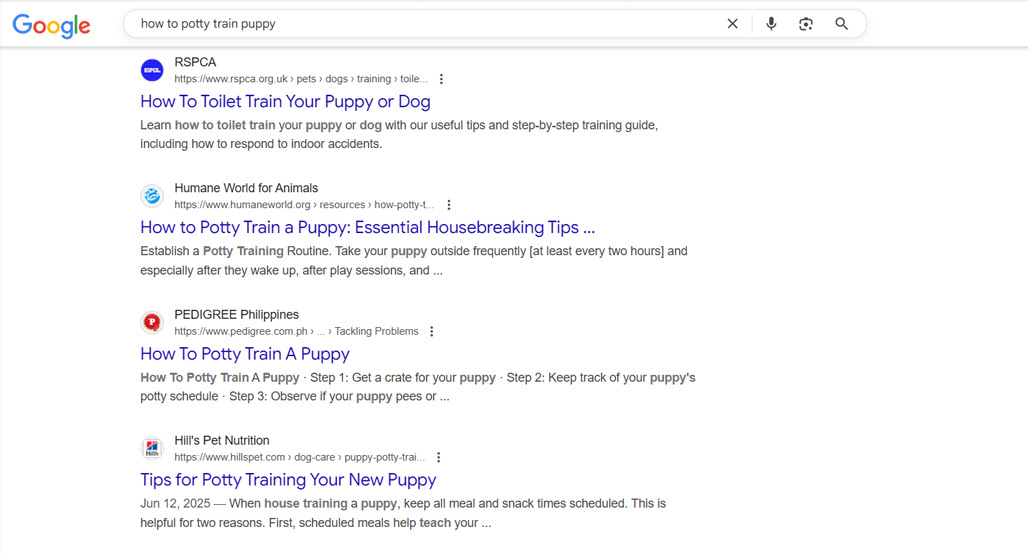
If your first filter passes and you're pretty sure you'll be able to write something with a chance of ranking, it's time to start clicking through to see what else is out there. You can hang onto these links for later (they can be part of your research when writing), but for now, you're just doing a brief overview.
What do these posts contain?
- How long are the posts?
- Do they have enhancements, like video, expert quotes, or compelling graphics?
- Are they broad and shallow or narrow and deep?
- Do they come with name recognition from someone noteworthy?
This is also all a gut check. This is the bar you'll need to meet or exceed if you want to have a decent chance of ranking. I'm not even talking about things like site Domain Authority or backlink profiles here, I'm just thinking purely in terms of the quality of the content itself. Google can and will rank a smaller site with a better post over a larger site with a worse post, if the differential is big enough.
Can you do it?
There are all sorts of tools for things like keyword difficulty and competition, but we're not focusing on that right now. This is currently all about vibes. Can you do at least as good, if not better, than what is already there? If not, maybe it's not the right topic for you, at least right now.
There are ways to circumvent a steep challenge, of course. Link building, clustering, outside promotion, and even syndication can all be ways to rank when you might not otherwise "deserve" it, but that's all secondary. If you don't think you have a chance, set the topic aside.
Categorize the Topic: Evergreen or Timely?
Another thing you should do is categorize the topic. Is it an evergreen topic, or is it an immensely time-sensitive topic?
This isn't specifically binary. There are a handful of categories of time sensitivity in topics.
Basically, this helps you set your expectations for how a topic can perform and how to write it. You don't want to write an evergreen topic with the kind of breathless excitement you would use for a surging trend you're trying to hijack. Likewise, you wouldn't want a sedate and low-urgency post for a trending topic people are hyped up about.

Consider this a sliding scale. On one hand, there are the deeply evergreen, highly stable, long-term-value topics that aren't going to be impressive but will be in it for the long haul. In the middle are the seasonal topics that have interest that waxes and wanes throughout the year. At the other end, you have viral topics and trends that are poised to explode, but likely won't last for long afterward.
Why is this an important part of validation? You need your content to match the scale of the topic. You also need your content to match what you do on your site. I, personally, tend to write 80-90% of my content as evergreen resources, so if a topic is really only suitable for a trend-jack, it might not be right for me. It's all about fitting to the site.
What Do You Add to the Corpus?
The next step in validation is to figure out what you're bringing to the table with this topic.
- Do you have a unique perspective, either because of who you are or the life you've lived?
- Does your business have a unique position that gives you insight others don't have?
- Have you built up an audience and a reputation that makes people trust you more than they might trust a competitor?
- Do you have access to data that is newer or more relevant than what the current posts use?
- Can you be the first one to the table with coverage on an emerging topic?
If all you're doing is taking the current #1 ranked post and rephrasing it in your own words, you aren't likely to amount to much.

This is, by the way, why AI-generated content so often falls flat. AI functions by taking existing content, evaluating the mathematical relationship between words, and, when prompted, outputs something that has the same shape as things in its training data that satisfy the same prompt. It is, by definition of the way LLMs function, derivative work. It can be made to work, but you're setting yourself up for more work than you might think.
Some people call this the unique selling point or the unique value proposition for your blog. I just call it the reason you're writing. What do you bring to the table, and why do you think people should click on your posts instead of someone else's, given the option? If you're still figuring out what blog post ideation really means, that's a good place to start - and thinking about which types of blog posts aren't ranking after the HCU can help you avoid common pitfalls too.
Identify the Purpose of the Content You Create
Next up, you want to determine the purpose of the blog post you're going to write. After all, not all blog posts exist for the same reasons.
Is it for direct traffic generation? Do you want this post to rank highly in the search results, be shared on social media, and bring users directly to your site?
Is it a linkbait post? Do you want people to use it as a source and citation for their own posts down the line, so you build a link profile?
Is it for awareness and saturation of your name and brand name? Do you just want to have some kind of coverage of the topic so people know you're part of that industry too?

Is it for thought leadership? Are you trying to convey your own expertise and build up your authority as someone who knows about this stuff?
Is it for AIO to get your site cited by the AI overviews and LLM search alternatives?
Is it more internal, to become part of a cluster and feed value to a pillar post instead of being something important in and of itself?
There are a lot of different reasons why you might write a blog post, even if the gut check or the metrics tell you it's not a good idea. This is why basic metrics like "keyword competition" aren't all that useful in a vacuum; you really need a good idea of why you're writing a post.
A huge part of this is evaluating user search intent. Knowing why users are searching for the topic, not just why people are writing about the topic, is a huge advantage. More specifically, you need to figure out why your audience is searching for the topic and how you can attract them with your content, even if you're just a subset of the overall audience.
Evaluate the Metrics
Topic validation has to come down to metrics at some point, right? Well, kind of.
A lot of topic validation, I find, is the gut feeling. Certainly, this isn't easy. It takes a lot of experience to develop that gut and learn when to trust it, and when to disregard it. Metrics help.
I just want to caution you against relying solely on the metrics. The basic metrics can be deceptive, and they're difficult to fully contextualize without doing a lot of advanced data analysis that, frankly, none of us have time for.
Generally speaking, I look at three primary metrics when evaluating a topic, and use that data to check against all of the above.
The first is traffic. How much traffic does a keyword or topic search generally get? You'll be getting some percentage of this traffic, depending on how well you can rank for the keyword.
There are two big challenges with traffic analysis. The first is that there's no real authority providing that information. Tools like Semrush can provide traffic data, and you can estimate search volume through tools like Google's Keyword Planner, but nothing gives you the pure traffic amounts for a query, because Google doesn't publish that data, so everything has to be observational and through sampling.
The second challenge is that a blog post doesn't just rank for one keyword. You write in a way that gives you a lot of keywords throughout your content, and each of those has its own metrics. On top of that, Google's semantic indexing and language understanding mean you can rank for keywords you don't even use.
This is why I don't rely on traffic estimates themselves, and just use them to contextualize other information.
The second of the three metrics I look at is the combination of difficulty and competition. These are, technically speaking, different metrics, but they're kind of the same thing when viewed through different lenses. Difficulty is the challenge of ranking for the keyword in aggregate, while competition is the evaluation of how challenging it is to overcome each individual site already ranking for the topic. Long-tail keywords are often considered easier to rank, but that's not always the full picture.
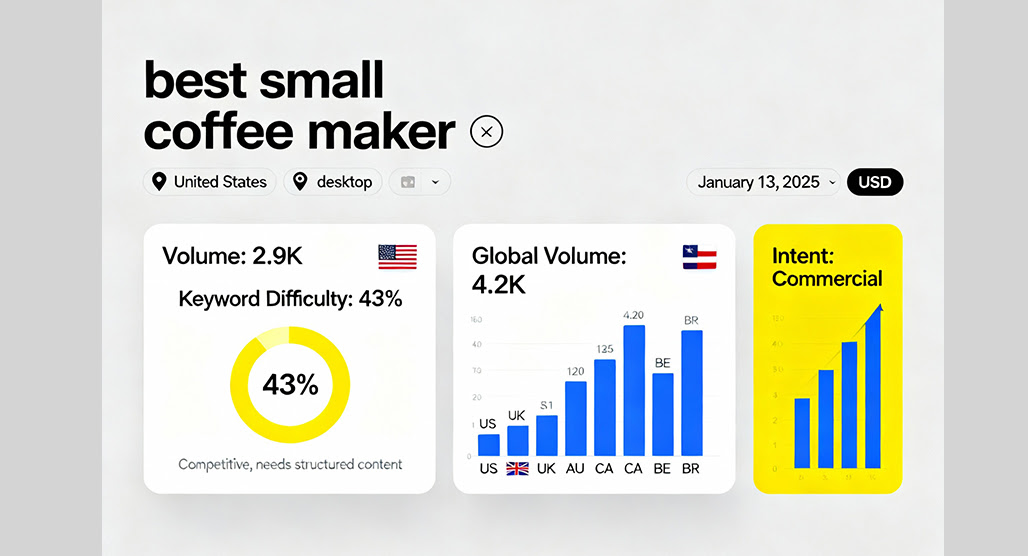
Sometimes, a topic has a high difficulty but moderate competition. You can usually rank somewhere in the #3-5 range for these, because there will be a couple of high-competition posts already there, but a lot of easier-to-surmount challengers.
Again, don't just look at a letter grade or numerical ranking and base your decision on that one data point alone. Use different tools and look at the data in context. It's also worth understanding why Google might not rank your page for your chosen keyword even when metrics look favorable.
The third of the three metrics is direction or velocity. This relates to a previous bit of validation we did, the time-sensitivity of the topic. Is the topic on the rise, on the decline, or generally holding steady?
This helps you determine not just if you're going to write the post, but when. A topic on a long, steady incline is good to write whenever. A topic poised to surge should be written ASAP. A topic on a slow decline might be better to put on the back burner since it might not be valuable long-term. Understanding why some topics are simply too hard to rank can save you from wasting time on posts that won't deliver results.
Tools to Use
There are a lot of possible tools you can use to gather the information I've been discussing above.
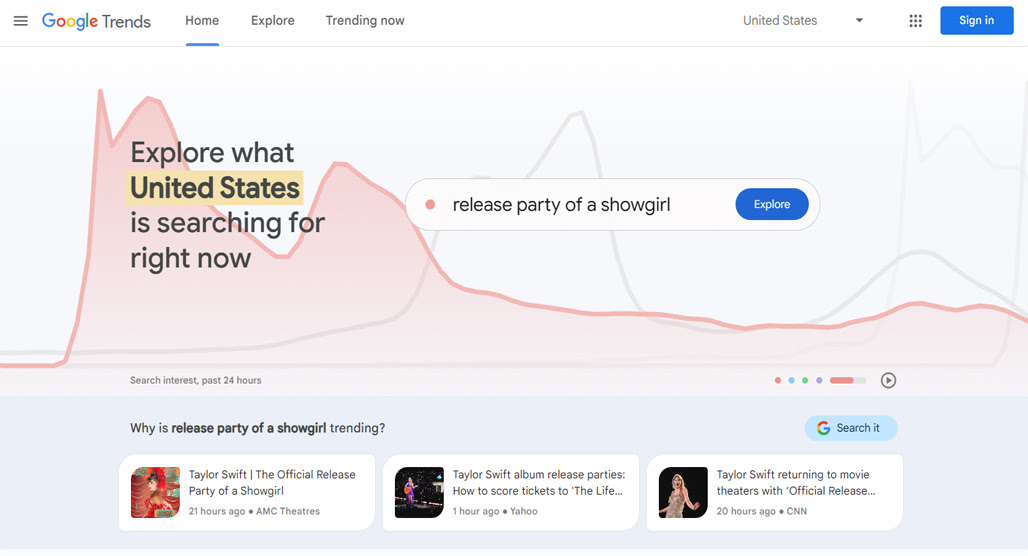
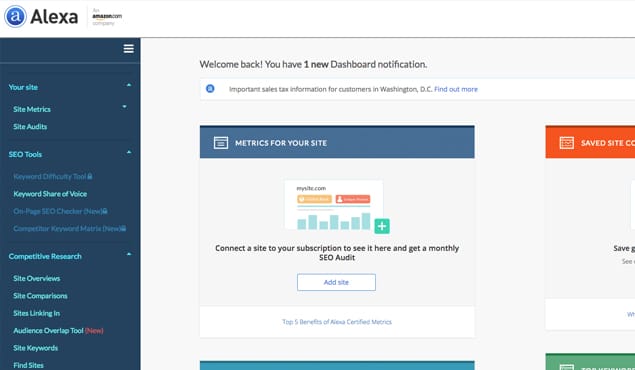
Some of the most notable options include:
- Google Search
- Semrush
- Ahrefs
- Buzzsumo
- Google Trends
- Trend Expanders like Exploding Topics
- Greenflare or Screaming Frog
Truth be told, it doesn't really matter where you get your data from, as long as it's trustworthy data. There are literally thousands of marketing tools out there for every budget, from free to thousands of dollars a month. Use what you like, upgrade when you need to, and again, don't rely just on the data points.
Why You Might Want to Write a Topic that Doesn't Tick the Boxes
I've mentioned this a couple of times before, but there are some very good reasons to write a blog post even if you don't think you'd have a chance at ranking for it.
For example, a topic with a lot of difficulty might not look attractive, but if the volume is high enough that even a tiny percentage of it is valuable, it's still worth it.
It's also good to have coverage of your topic across the board. If you hold off on writing high-challenge topics that are highly relevant to your niche just because other people have already written them, you're losing out on the reputation gain and trust value that comes from having your own resource. People will have their own understanding of a topic and want to know if your view aligns with theirs; if you don't cover it, they won't know.

Some topics might be low on traffic, but you have a uniquely well-aligned perspective to capture the buyer intent from the people searching for it. You can win out even if the topic doesn't look good on paper.
Sometimes you can even find topics that people avoid because they look too good to be true, so people assume there's a catch and don't cover it. By going for it, you capture that value.
All of this is very complex and can't readily be automated, because there are too many different factors and perspectives that rely on who you are and where you are positioned in the industry. And all of this needs to be done before you get to writing your content. But once you internalize this process and incorporate it into your topic ideation process, you'll find that marketing seems a lot less luck-based than it used to.

Related Posts


Leave a Comment


Fine-tuned for competitive creators
Topicfinder is designed by a content marketing agency that writes hundreds of longform articles every month and competes at the highest level. It’s tailor-built for competitive content teams, marketers, and businesses.
Get Started