Patents and Job Postings as Topic Research Sources
 Written by James Parsons • Updated September 15, 2026

Meanwhile, two of the most information-dense sources available are sitting completely in the open, largely ignored by anyone who isn't a lawyer or a recruiter. Patents and job postings don't scream "content goldmine," which is what makes them interesting. One documents what businesses have invented and protected. The other shows what they're building next and who they need to build it. Together they tell what press releases and case studies never will.
The logic is almost uncomfortably easy to see. A company doesn't file a patent for something it has no intention of building. A company doesn't hire a team of machine learning engineers because it wants to stay where it is. These documents are forward-looking by nature, and because most people scroll past them, the signal inside them is remarkably clean compared to the noise that dominates conventional research sources.
Whether you're building a content strategy, scoping out a market, or trying to understand where a competitor is quietly placing its bets, patents and job postings give you a perspective that's rare and fairly underexploited. Let's look at how to actually use them.
Key Takeaways
- Patents and job postings are publicly available, information-dense research sources largely ignored by content creators and marketers.
- Patents are filed before products launch, sometimes years earlier, revealing company intentions before any press release or announcement.
- Job postings reveal real hiring momentum, tool dependencies, and organizational priorities that polished press releases never openly disclose.
- Combining both signals-patent filings alongside related hiring patterns-confirms when a company's new direction is actively funded and staffed.
- A simple tracking spreadsheet logging patent filings and job postings over time can reveal competitive patterns most researchers completely miss.
Table of Contents
Why Patents Are a Surprisingly Useful Research Signal
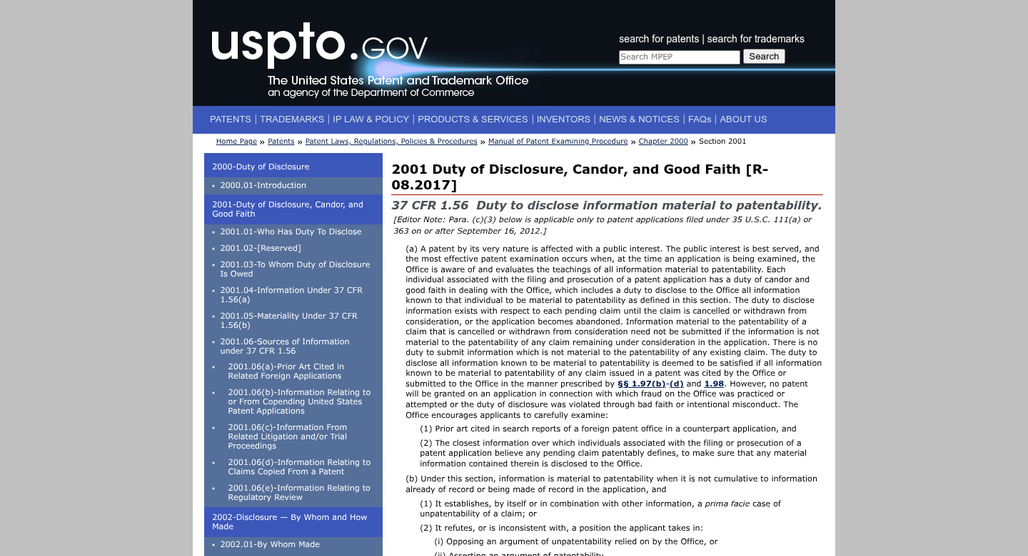
Patents are not just for inventors and lawyers. They are publicly available documents that describe what a company is actively working to protect -- it's a fairly direct window into where an industry is heading.
The timing is what makes them so helpful. A patent is filed before a product ever reaches the market, sometimes years before. That means the technology or process described in a filing might not be out there in any press release, product page, or trade publication yet. You are basically reading a company's intentions before they go public with them.
The USPTO database runs from 1976 to the present and holds over 13 million patent applications. That is not a niche archive - it's one of the largest publicly accessible records of technological development anywhere in the world. Patent data has been treated as a legitimate scholarly source in known work on software history, which is a sign that this research holds up under scrutiny.
For content scientists and writers, this matters because most topic research starts in the same places. You check Google Trends, browse Reddit threads, or look at what competitors published last quarter. That strategy tends to produce topics that feel recycled because they are - everyone is pulling from the same visible layer of the internet.
Patents sit underneath that layer. They document problems that engineers are actively trying to solve and services that have not been named yet in mainstream media. A patent on a new sensor calibration technique could be the earliest indicator of a product category that will dominate a market in two years.
A topic angle you want may already be filed and sitting in a public database right now - it's not buried or hard to access - it's underused, because most writers don't think to look there. If you want to find breakout keywords before they peak, patents are one of the few places to spot signals before they surface anywhere else.
Patents also tend to be very precise about the problem they are solving. That accuracy is helpful even if you never plan to write about the patent itself. The way a filing defines a problem helps you frame a piece, clarify a technical concept, or find a gap in how a subject has been covered so far.
How to Actually Read a Patent Without a Law Degree
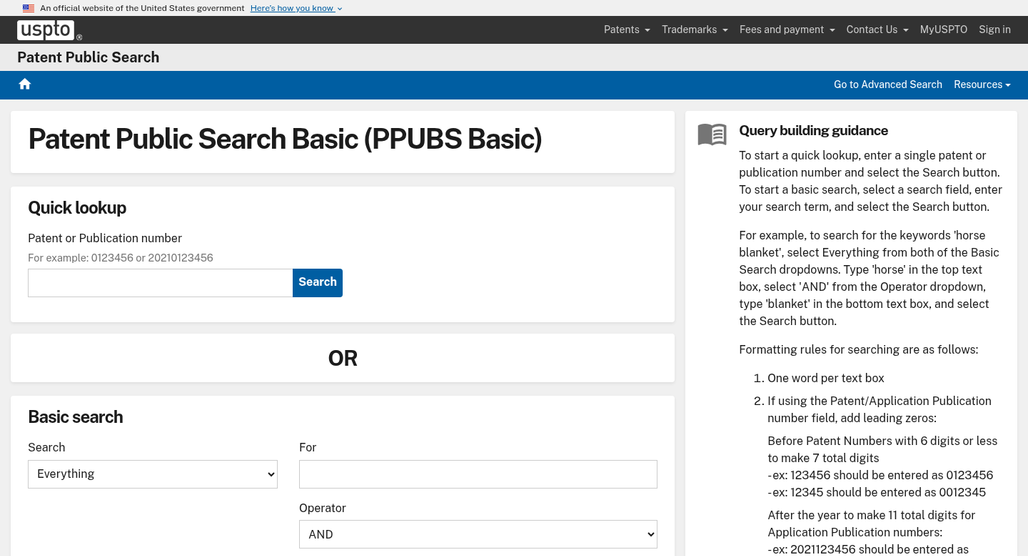
A patent has a predictable structure, and knowing what each part does, you can move through it with ease. The title and abstract sit at the top, the claims section runs through the middle, and the cited references appear near the front or back depending on the database you use.
For topic research, the abstract is your first stop - it gives you a plain-language summary of what the invention does and why it exists, without the dense legal phrasing that fills the rest of the document. Think of it as the part written for humans.
The claims section is a different story - it's written to hold up in court, not to explain anything, so it reads like a very long sentence with nested conditions and careful qualifiers. You don't need to parse this section for research purposes - it's there to define the legal boundaries of the patent, and that's work for attorneys.
The part that most scientists forget is the cited references section - that is where the trail begins. Patent applicants are required to disclose prior work that relates to their invention, and that list can include academic papers, technical standards, and earlier patents. A dataset assembled by Marx and Fuegi found over 44 million non-patent references across patents, with 64.2% of the references appearing in the front section of the document alone. That is a big body of source material hiding in plain sight.
Each reference in that section points you toward a piece of published research or technical documentation that the inventors themselves found relevant enough to name. That gives you a shortcut into the academic and technical conversation surrounding a technology, which is especially useful when you're trying to find low-competition topics in a crowded niche.
Here is an easy way to remember each part and what it gives you as a researcher.
| Patent Section | What It Contains | Research Value |
|---|---|---|
| Title and Abstract | Plain-language summary of the invention | High - good starting point |
| Claims | Legal definition of the invention's scope | Low - written for legal use |
| Cited References | Prior art, papers, and related patents | Very high - a map of the field |
| Background Section | Context for why the invention was needed | Medium - useful for framing topics |
The background section is worth a mention too - it explains the problem the inventors were trying to solve, which helps you understand how a technology fits into a wider conversation without requiring you to read the full document. This kind of contextual framing is also part of what makes effective blog post ideation so valuable when developing content around emerging subjects.
Searching the USPTO and Patent Databases for Topic Clues
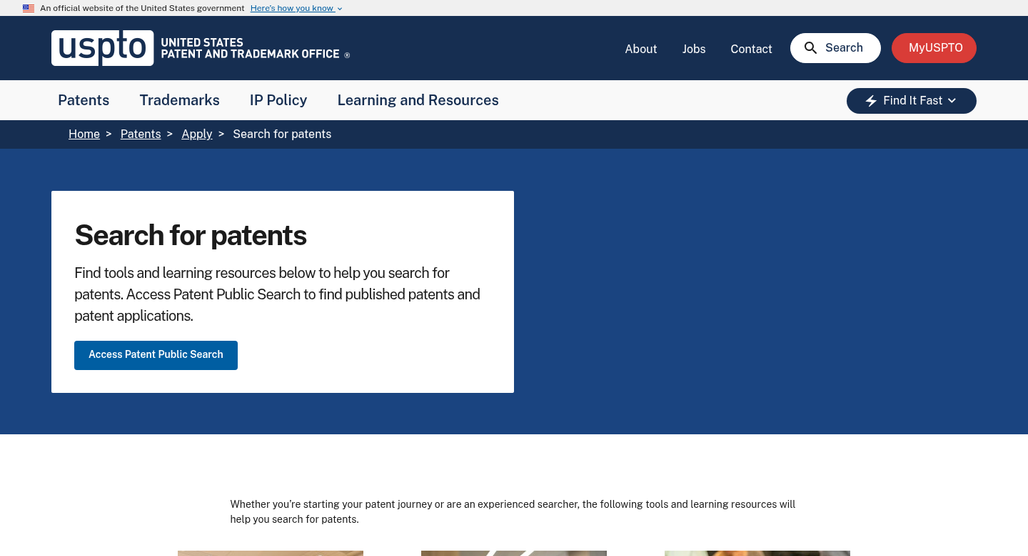
The USPTO website has a free full-text search tool that lets you look into granted patents going back decades. The interface is not the prettiest. But it works. The Patent Application Database is a separate section that covers published applications from 2001 onward, and that one is worth bookmarking separately.
The distinction between granted patents and published applications matters quite a bit for research purposes. A granted patent is the finished product, sometimes years after the original idea was filed. A published application will teach you where a company's thinking was at an earlier stage, before the technology was locked in. To see where a field is heading instead of where it has been, applications are usually the better place to look.
Start with a large search. Drop in a keyword related to your topic and see what categories and assignees show up. From there, you can narrow by filing date to track how activity in a space has grown or slowed over time. You can also filter by assignee, which is the company or person who owns the patent, and it makes it easy to see what an organization has been working on across multiple filings.
That last part is the payoff. A single patent tells you one thing; a cluster of filings from the same assignee over three or four years tells you something more helpful - it will teach you a pattern of investment and intent, not just a one-time filing. If you want to turn that intent signal into content strategy, buyer intent analysis tools can help you harvest that data more systematically.

There's also litigation data worth learning about. USPTO-linked databases cover over 96,000 district court cases from 1963 to 2020. That data helps you see which technology spaces have been actively contested, and contested spaces tend to be high-stakes ones where the underlying topics carry weight. Those are often the same spaces that produce strong high-intent blog post opportunities.
Google Patents is a friendlier alternative if the USPTO interface feels clunky - it pulls from the same underlying data and offers a cleaner search experience with a citation graph that shows how patents connect to each other over time. Either tool works; the thing that matters is to look across multiple documents instead of treating any single filing as the whole picture. Pairing this approach with keyword research to build a content moat can sharpen how you prioritize what you find.
Patent databases reward patience. The more filings you compare across a topic area, the more the patterns start to take shape on their own.
What Job Postings Reveal That Press Releases Never Will

A job posting is a company admitting what it needs right now. There is no spin and no marketing polish - just a list of skills, tools and responsibilities that need to show up and do. That honesty is rare and it makes job postings one of the most underused research sources available.
When a company lists a tool as a hard requirement, that tells you the tool is already embedded in their workflow. When a new job title appears that didn't show up in previous postings, that signals a team restructuring or a new initiative taking shape. Even the reporting structure buried in a job description - who the role reports to - can hint at where leadership is placing its attention.
If a company posts five roles for a niche specialty in a single quarter, that tells you they are building capacity in that area quickly and at pace. No press release would spell that out so plainly.
It is also worth keeping in mind how innovation gets tracked across different industries. One study found that only 19% of academic job applicants had patents on file. That gap matters - patents are not the universal language of innovation. In sectors like education, services, or nonprofit work, job postings may be the only public signal that something new is being built.
Job postings also capture momentum in ways that a single patent filing can't. A patent documents one invention at a point in time. A wave of job postings shows a direction being committed to with budget, headcount and organizational structure behind it. That combination is hard to fake and hard to hide.
The tools listed in postings are especially telling. A company that starts asking for experience with a particular platform or framework in role after role is revealing a technology dependency. Competitors, journalists and scientists can all read that signal the same way a recruiter does.
Job postings expire and get taken down, so timing matters when using them as a research source. Screenshot or archive the ones that are relevant to your work, because the data disappears when the position gets filled. The window to learn from them is shorter than it is with patents. But the information is no less helpful.
Combining Patent Filings and Job Postings for Deeper Insight
Neither source is as helpful on its own as it is when put together. Patent filings tell you what a company has been working on. Job postings tell you what they're actively building right now. When those two things point in the same direction, that's a signal worth mentioning.
When a company files a few patents around a technology and then starts hiring engineers with experience in that exact area, that's active development in motion. The patent protects the idea and the hiring fills the seats needed to execute it. Together they paint a more complete picture than either source would alone.
This combination is especially helpful for building editorial calendars. If you write about technology, finance, healthcare, or any fast-moving industry, you want to get to topics before they become saturated. Cross-referencing patent activity with hiring patterns lets you find what a company is moving toward, sometimes months before any announcement goes public; it's a benefit for content that was built to be first instead of late. Understanding keyword seasonality and how to plan around it can also help you time this kind of content more precisely.
It also works for product positioning. If you're in a market where competitors are quietly filing patents and hiring in a new direction, that tells you something about where they plan to compete. You don't need to guess at their strategy when the data is available in public records and job boards. Tools that help you find a competitor's Google Ads can complement this research by revealing where they're spending money alongside where they're investing in development.
The helpful habit to build here is easy. Set up a spreadsheet to log patent filings and job postings for the businesses or topics you track. Note the date, the technology area, and the job role. Over time, patterns will become visible and you'll start to see when activity clusters together - it's when the signal gets interesting.
| Signal Type | What It Indicates | Combined Insight |
|---|---|---|
| Patent filing spike | New technology area protected | Pair with hiring to confirm active development |
| Engineering job postings | Hands-on build phase underway | Pair with patents to confirm strategic intent |
| Both signals together | Direction is real and funded | Strong indicator for editorial or competitive focus |
You don't need expensive tools for this. Consistency matters more than difficulty here and even a basic tracking habit maintained over a few months will give you more context than most others in your space will have. Pairing this approach with a solid keyword mapping strategy can help you translate those signals into content that's organized and easy to execute on.
Turn Public Data Into Your Private Research Edge
Build the habit, build the content calendar. Before you choose which topics matter, check what businesses are quietly filing for and what roles they are urgently trying to fill. Those two tells, taken together, will tell you more about where an industry is actually heading than any trend report written after the fact.
Start with something small. Run a single keyword search on the USPTO database. Pull up a job board and search for a title you have never heard before. Either action takes less than ten minutes and may point you toward a topic no one in your space is covering yet. The writers who find those gaps first are not better - they just started looking sooner.
FAQs
What makes patents useful for content research?
Patents are filed before products launch, sometimes years earlier, revealing company intentions before any press release or announcement. They document real problems engineers are solving, giving content creators early access to emerging topics before they appear in mainstream media.
How do job postings reveal company strategy?
Job postings show what tools, skills, and roles a company is actively hiring for, revealing real priorities without marketing spin. A cluster of postings in a niche area signals rapid capacity-building that no press release would openly disclose.
Which patent sections matter most for researchers?
The abstract provides a plain-language summary, making it the best starting point. The cited references section is especially valuable, pointing researchers toward related academic papers and technical documents that map the surrounding field.
Where can I search patents for free?
The USPTO website offers a free full-text search tool covering granted patents and published applications. Google Patents is a cleaner alternative that pulls from the same data and includes a citation graph showing how patents connect over time.
Why combine patent filings and job postings together?
Patents reveal what a company is protecting, while job postings confirm active development is funded and staffed. When both signals point in the same direction, it strongly indicates a company is committing to a new technology or market direction.

Related Posts


Leave a Comment


Fine-tuned for competitive creators
Topicfinder is designed by a content marketing agency that writes hundreds of longform articles every month and competes at the highest level. It’s tailor-built for competitive content teams, marketers, and businesses.
Get Started