How to Find Breakout Keywords Before They Peak in 2026
 Written by James Parsons • Updated May 24, 2026

Breakout keywords - those spiking over 5,000% in search volume within a compressed window - are no longer a niche obsession. SEO planners are actively hunting them 40% more than they were just a year ago, which tells you two things at once: the opportunity is actual and the competition to claim it early is intensifying fast. When more strategists are chasing the same tells, the window between "emerging trend" and "oversaturated topic" collapses in ways that would have seemed extreme even in 2023.
The good news is that breakout keywords don't appear without warning. They leave traces - in forums, in social chatter, in adjacent search behavior - before they ever register on mainstream platforms. The planners ahead of patterns are not better or luckier. They have simply built a system for reading early tells that most teams are not watching yet.
This is about building that system. Not the tools themselves. But the strategic logic behind finding breakout keywords before they peak - where momentum starts, how to separate a genuine trend from noise, and how to move fast enough to matter when the curve finally steepens.
What Makes a Keyword a "Breakout" Keyword in the First Place
A breakout keyword is a search term that has grown so fast in a short window that standard search volume data can't keep up with it. Google Trends uses the label "Breakout" when a keyword's search interest grows by 5,000% or more compared to the previous period. That number sounds extreme. But it's worth understanding what it means in practice.
A 5,000% increase doesn't always start from a massive base. A term that went from 10 searches a week to 500 can technically hit that threshold. The percentage is a signal of acceleration, not total size. It's an important distinction because it means a breakout keyword is usually a fast-moving idea that hasn't reached the mainstream yet.
What causes a keyword to take off? A news story breaks and people rush to search for context. A product gets announced and curiosity pulls people to learn more. A piece of content goes viral on a platform like TikTok or Reddit and sends a wave of new queries to Google. These triggers can happen in hours and they don't wait for monthly keyword reports to catch up.
Not every spike leads somewhere worth following, and that distinction matters for content creators and marketers. Some breakout keywords are pure reaction - search once, get an answer, and move on. The term fades in days. Others represent something deeper: a genuine change in what people care about, a new category of product, or an idea that's slowly moving from niche communities into the wider public.
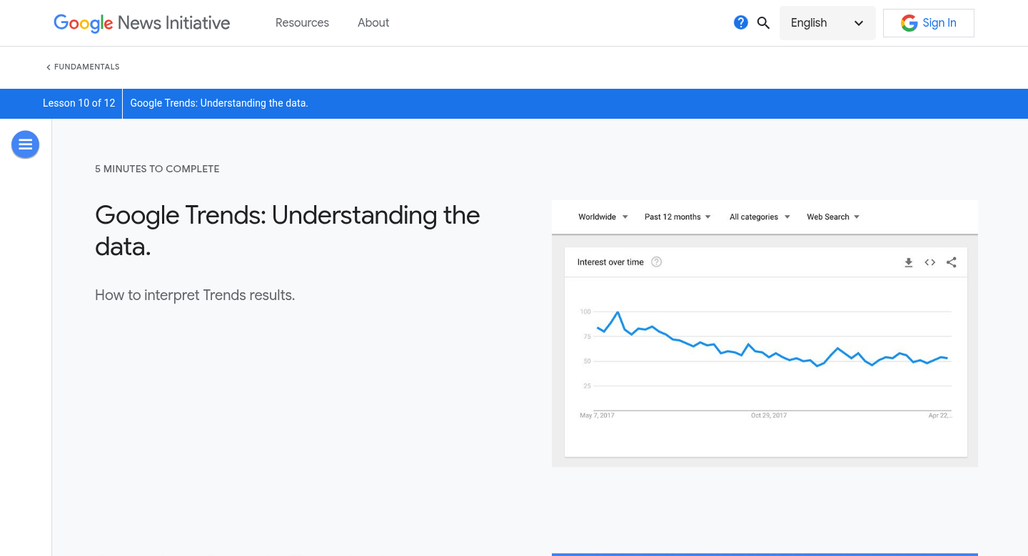
The difference between a flash-in-the-pan keyword and a sustainable early signal can depend on context. A search spike tied to a one-day news story usually collapses just as fast. A spike tied to a new habit, an upcoming technology, or a growing cultural conversation tends to flatten out at a higher baseline than where it started. That floor is what you're looking for.
Reading that difference is the whole game. A raw percentage doesn't tell you if a keyword has legs - you have to look at what's driving the demand and ask if that driver is temporary or has room to grow.
The Timing Problem Traditional Keyword Tools Can't Solve

Most keyword research tools pull their data from clickstream sources - aggregated browsing and search behavior grabbed over a rolling window of 30 to 90 days. That data then gets processed, packaged, and delivered to you as a clean volume estimate. By the time you see a keyword trending upward in a tool like Ahrefs or Semrush, that momentum may have started two months ago.
If you're looking at data that's 60 days old, you're not planning ahead - you're catching up.
This lag isn't a flaw in how these tools are built - it's just the nature of the data they use. Clickstream data takes time to collect at scale, and it takes more time to normalize and publish. The result is a picture of what people were looking for - not what they're looking for right now.
The difference between "was trending" and "is trending" is where most content teams lose their window. A keyword that looked like a rising star in the data last month may already be at its peak or on the way down. Publishing a well-optimized piece into that environment can still earn traffic. But you won't get the compounding benefit that comes from being early.
| Tool Type | Data Refresh Rate | Best Use Case |
|---|---|---|
| Traditional SEO tools (Ahrefs, Semrush) | 30-90 days | Established keyword research and competitor analysis |
| Google Trends | Near real-time (updates frequently) | Early-signal detection and trend direction |
| Google Trending Now | Every 10 minutes | Immediate breakout detection |
Google's Trending Now engine sits at the opposite end of that spectrum - it refreshes every 10 minutes and pulls directly from live search activity across Google's network. It's not a slight difference in speed - it's a fundamentally different category of data.
The goal here isn't to replace traditional tools entirely. Volume estimates, difficulty scores, and competitive data still matter when you're ready to build a content strategy around a term. But those tools can't tell you what's starting to move right now, and that's the problem this section is about.
How to Use Google Trends and Gemini AI Suggestions to Spot Early Signals
Google Trends has always been helpful. But the Gemini AI integration launched in January 2026 makes it a very different tool. Instead of just showing you what's already trending, it now auto-suggests related search terms that are starting to gain traction - before they show up on anyone's radar.
The place to start is the Explore" tab in Google Trends. Type in a broad seed keyword from your niche and then look at the "Related queries" section at the bottom. Set the filter to "Rising" instead of "Top." That's where the early movement lives.
At Google Search Central Live Canada in Toronto on April 21, 2026, Trends Analyst Annanya Raghavan walked through how breakout signals work in practice. She said that a query labeled "Breakout" in the Rising section has grown by more than 5,000% in a short window, and that this label tends to appear weeks before the keyword shows up in third-party tools. That gap is what you want to work with.

The Gemini suggestions appear as a small panel alongside your Explore results. They pull in semantically connected terms that are trending in adjacent searches.
What to look for when you run this process
A few tells are worth mentioning. First, look for keywords labeled "Breakout" with no prior search history - a flat line that turns upward. Second, check if the Gemini panel is suggesting terms you haven't seen in your keyword tools yet. Third, cross-reference the interest-over-time graph against a 90-day window to see if the rise is sustained or a single-day spike.
It also helps to run the same seed keyword across a few geographic regions. A term gaining traction in one country sometimes spreads to others within four to six weeks, so you can get ahead of that wave by publishing early.
One more thing worth doing: save your Trends comparisons. Google lets you add as many as five terms at once, and comparing a known seasonal keyword against a new rising one gives you a helpful baseline to judge how fast the new term is actually growing.
Publishing Windows and the 6-8 Week Rule for Seasonal Keywords
Once you find a keyword that looks like it's starting to climb, your next move is to publish fast - but not without a plan. For seasonal keywords in competitive niches, you usually need 6 to 8 weeks of lead time before the peak search period. That window gives your content time to get indexed, earn a few links, and build enough ranking signals to be competitive when demand hits its highest point.
Think about a keyword like "best Christmas gifts for teens." Searches for that phrase start to rise in mid-October and peak around late November. If you publish on November 10th, you've likely missed most of the window. Publishing in late September gives the page a chance to rank when it matters.
A quick rule of thumb: find last year's peak date on Google Trends and count back 7 weeks; it's your target publish date for this year.
Not Every Keyword Is Worth the Race
There's something worth factoring in after a content push. Informational queries - the "what is," "how to," and "best X for Y" style searches - are losing organic clicks at a rate in Google's AI Overview results. One study found a 61% drop in click-through rates on informational SERPs where AI Overviews appear. That means ranking on page one for some of these queries might not deliver the traffic it once did.
This doesn't mean informational content is a waste - it means you want to prioritize breakout keywords where the searcher has intent past a quick answer. Commercial and transactional queries - where the searcher is ready to compare, buy, or book - tend to hold their click-through rates much better in AI Overview environments. If you're unsure which queries still drive clicks, it helps to understand which zero-click keywords are worth targeting before investing heavily in a content push.
A Few Timing Tips That Actually Help
Use Google Search Console to check how long your previous seasonal posts took to rank. You should also update older seasonal pages instead of creating new ones each year. An established URL with existing links ranks faster than a fresh one. If a keyword is trending in another English-speaking country before it patterns domestically, treat that as a 2 to 4 week early warning to get your content live.
Stop Chasing Peaks - Start Reading the Signals
The good news is that most SEO teams have not made this change yet. Changing when you look for keywords - before the data is obvious - puts you meaningfully ahead of the majority of planners still optimizing for yesterday's searches. Early movers earn the backlinks, the authority, and the rankings that latecomers will spend months trying to claw back.

To put this into practice this week, take these quick actions:
- Audit one content category using social listening or community forums to surface questions that have no strong search volume yet.
- Set up trend alerts for three to five emerging topics in your niche using Google Trends, Reddit, or a dedicated listening tool.
- Review your content pipeline and identify at least one piece that can be repositioned around a rising term before it peaks.
- Schedule a monthly "early signal" review so anticipatory research becomes a habit, not a one-time exercise.
- Share your findings with your broader team - the best breakout keyword opportunities are often spotted by people outside the SEO function entirely.
Getting ahead of keyword patterns is easy with the right habits in place. A bigger budget or a more refined stack is not required - what matters is a willingness to act on tells before the crowd does. That choice alone is what separates the planners who lead in 2026 from those who are still catching up.

Related Posts



Leave a Comment


Fine-tuned for competitive creators
Topicfinder is designed by a content marketing agency that writes hundreds of longform articles every month and competes at the highest level. It’s tailor-built for competitive content teams, marketers, and businesses.
Get Started