What Are the Best Tools to Find a Competitor's Google Ads?
 Written by James Parsons • Updated April 15, 2026

There are a lot of different ways you can perform competitive research.
You can watch competitor social media sites to see what kinds of topics they're covering and what trends they're chasing, as well as the kinds of posts they re-share from their evergreen catalog.
You can scrape and index the content your competitors have on their blogs to analyze keywords, topics, and SEO elements like content length, depth, and interlinking.
One of the most effective options, though, is spying on their PPC advertising. It's one thing to decide a keyword has enough potential to write a blog post about, but it's quite another to put money behind it for an ongoing campaign. Generally, if a business is willing to put money into ads, they have a good reason to do so, and that's going to be at the top of their keyword list.
There are a ton of different tools to use for keyword research, most of which have at least some element of PPC spying involved. The question is, what are the best options to use? Let's dig in.
Key Takeaways
- Competitor PPC ads reveal high-priority keywords since businesses only fund campaigns they have strong reasons to pursue.
- Ahrefs is the top recommended tool, offering deep competitive data including competitor ad keywords via its Site Explorer.
- SpyFu specializes in competitive intelligence and shows organic vs. paid traffic breakdowns, but lacks broader SEO capabilities.
- Semrush is a powerful all-in-one alternative to Ahrefs but is expensive, making it a tough sell for smaller budgets.
- Competitor ad data can inform organic strategy by revealing where rivals focus efforts and uncovering untapped keyword opportunities.
Table of Contents
Starting with the Source: Google's Keyword Planner
The first and perhaps most obvious tool to give a look at is Google itself. The Keyword Planner is their ads-focused keyword research tool, so by definition, the data you get from it comes from keyword usage in Google Ads.
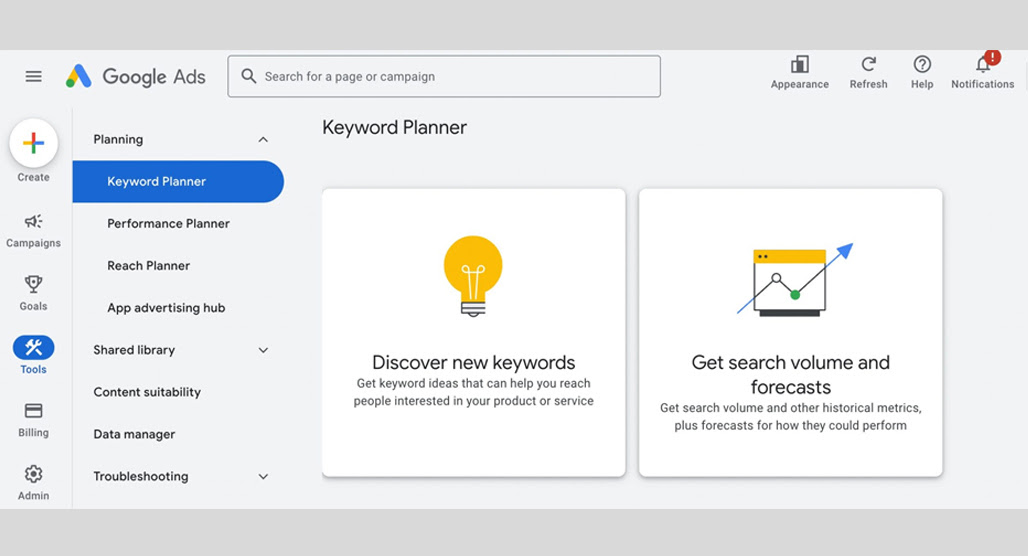
The downside to using Google's tool is that it's honestly not actually all that good for a lot of purposes.
- The estimated traffic numbers are very broad ranges. Two keywords that both fall into the 10k-100k range can have very different values if one is 11,000 searches per month and the other is 99,000 searches per month, right?
- It's industry-wide rather than for specific competitors. Google isn't giving you insight into what specific people are doing with Google Ads; they're giving you overall keyword data and performance metrics. It's less for competitive research and more for industry research.
- Google tends to lump a lot of similar keywords together via semantic understanding, which has gotten even more intense with the advent of LLMs. This means specific keywords are more like related word clouds they don't tell you about, and the traffic numbers are often overestimated.
Using the Google Keyword Planner can be a good place to start and gather a bunch of very basic information, but it's not precise enough for either competitive research or, really, a lot of the more specific keyword planning you're going to want to do. If you need more precision, tools that offer accurate keyword difficulty checks may serve you better.
That said, if you're planning to use the keyword data you find to plan your own Google Ads campaigns, then the Keyword Planner is the place to be; it's tangible data that reflects competition and pricing for ads.
My Favorite Tool: Ahrefs
No guide on keyword research is complete without mention of Ahrefs, and I'm putting it basically at the top because it's been one of my favorite tools for many years now, and they just keep making it better. I'm a little cynical about some of their AI trend-chasing, but at the end of the day, they have just about the biggest Big Data harvesting engines this side of Google, meaning their data is as accurate as it's possible to be with a third-party tool.
You can do a ton with Ahrefs. I wrote a whole guide to using it just to find competitor guest posts, for example.
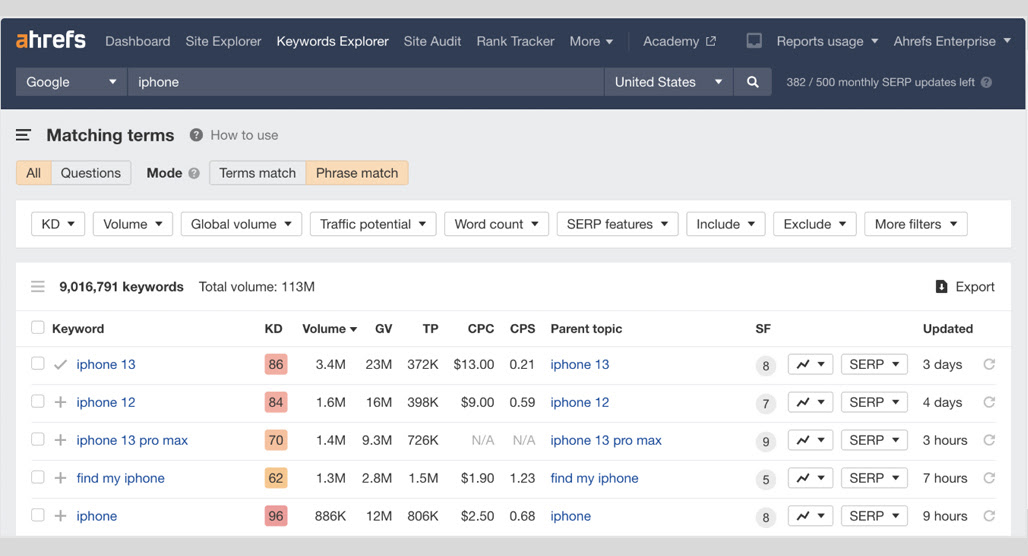
Finding competitor keywords, including both keywords in general and keywords they use specifically for ads, is super easy. Their main tool, the site explorer, gives you pretty much all of that data just by plugging in a URL.
Unlike a lot of other tools, you can dig really deep into the data, as well. If you ever think "hey, I wonder if I can look up X" or "what if I compared Y and Z", chances are Ahrefs not only has a dashboard to do it for you, they'll even tell you why it's useful, or why it's not.
I also honestly recommend the Ahrefs blog. They have some very deep and detailed writing on various topics and go through the thought processes behind why some metrics are valuable and others are not, along with tutorials for getting the most out of Ahrefs itself and other non-Ahrefs tools you might want to use in conjunction with it.
If you only have the budget to pick up one tool, make it Ahrefs.
Direct Competitive Spying with SpyFu
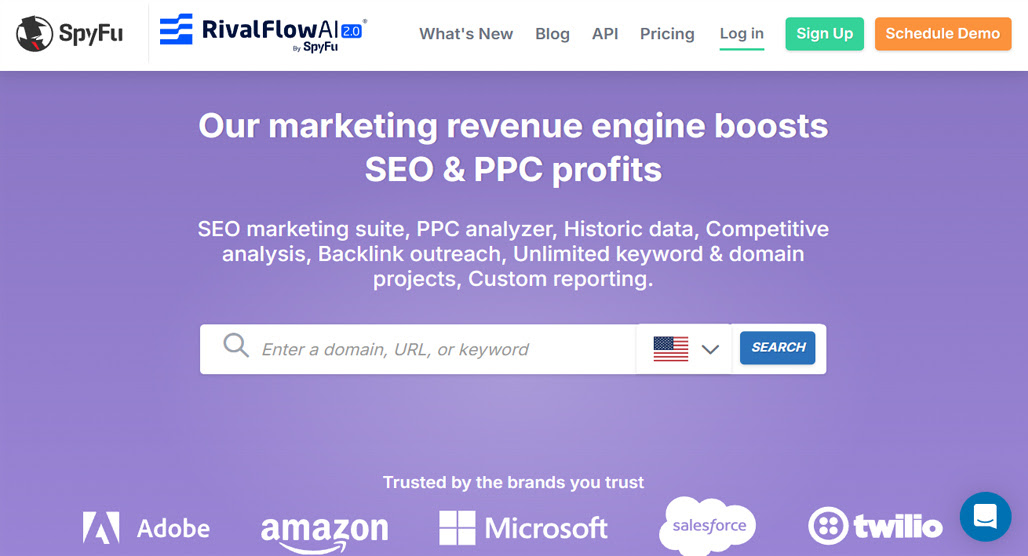
SpyFu is probably one of the oldest names in competitive intelligence, and they've been going for nearly two decades now. They've kept up to date with changes in SEO along the way, too, and have earned their position as one of the top tools for analyzing your competitors.
SpyFu gives you a ton of handy data you don't find elsewhere, including a breakdown of how much of a site's traffic comes from organic versus paid sources, which I've found to be surprisingly useful at gauging the strength of a competitor.
It's also a tool fairly well-scaled for the size of the businesses using it, though I do find the limits chafe sometimes. The cheaper plans don't let you analyze larger sites, but then, you probably aren't reasonably able to consider those larger sites as competitors, so it's not too bad as long as you don't have eyes bigger than your stomach.
If you're willing to do the import-export game with their data, SpyFu can be very handy for digging deep into your direct competitors. It's a tool limited exclusively to competitive spying, though, so it can't do a lot of the things other, larger tools like Ahrefs can do. For example, you can use Ahrefs to find your competitor's guest posts - something SpyFu simply isn't built for.
Semrush: A Wealth of Data, for a Price
Semrush is another top-tier tool, and I often feel like it gives Ahrefs a run for its money, though they haven't quite overtaken it yet. Ahrefs just has such a huge advantage with their datacenters; it's hard to beat.
That said, Semrush does a lot of different things, and it does almost all of them very well. It's a lot less focused than something like SpyFu, but it very much serves as a one-stop shop for basically everything you would want to be doing with keyword analysis.
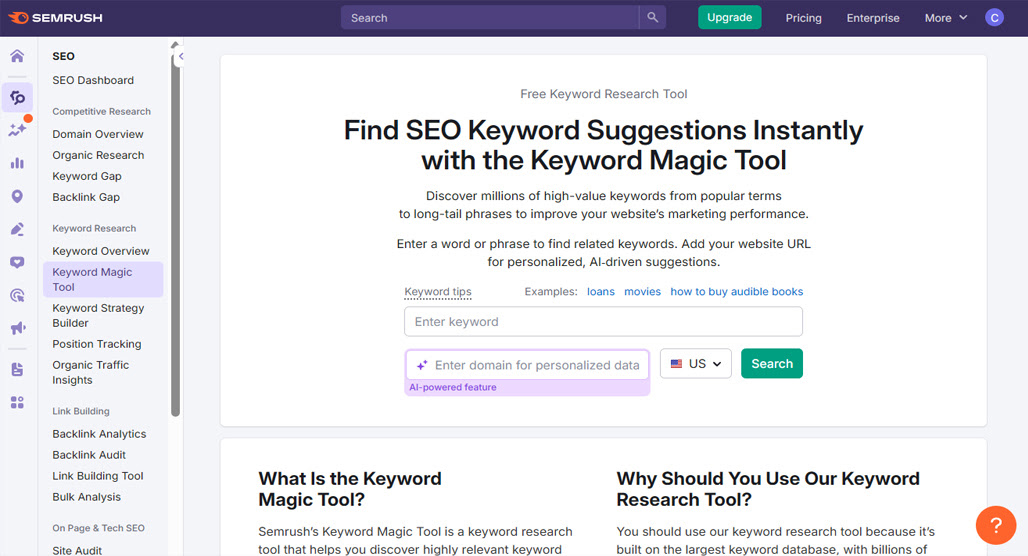
It's pretty darn expensive, though, so it's a tough sell for a lot of people. If you're on the lower end of the budgetary scale, consider smaller, more affordable tools first.
Deep Competitive Analysis with Serpstat
Another of the most commonly-recommended tools out there is Serpstat. It's not my favorite (because Ahrefs takes that spot), but it's definitely pretty solid, and can be worth a look if you think Ahrefs is too complex, has too much friction, or is too expensive.
One of the best features of Serpstat is its competitive analysis tool, which is great since that's what I'm talking about most here today. You can compare two domains and see how they stack up in terms of keywords, relevance, visibility, and more. If you aren't sure which domains to compare, you can analyze a keyword and look for the competitors' ranking for it, and then analyze those competitors.
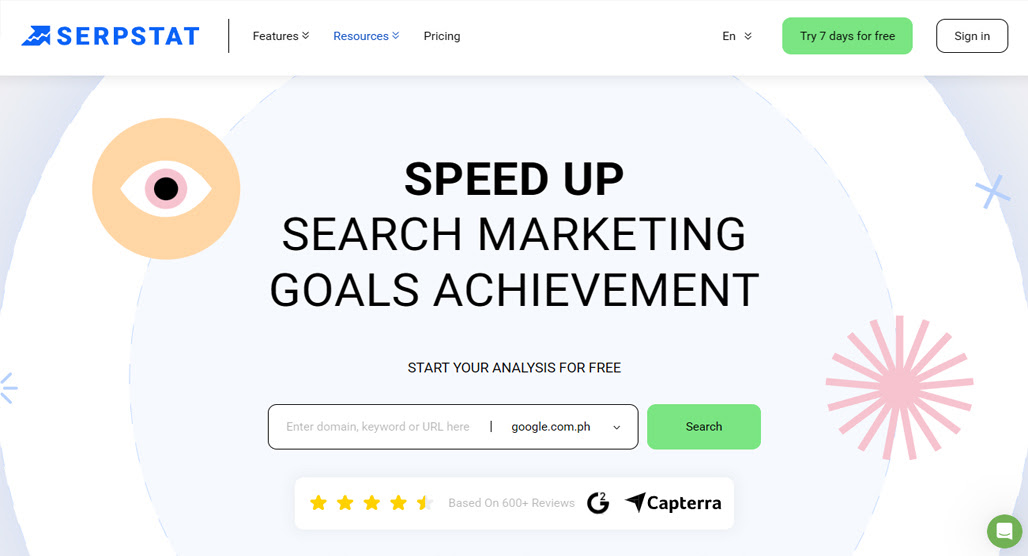
What I like the most about his tool is the way you can dig deeper into any individual competitor and see their specific keywords, and then check for gaps in coverage between competitors and yourself. It gives you opportunities, areas to focus on, and places to dig deeper.
Clustering is also useful, which I'll talk about more in this post as well.
Hunting Easy Opportunities with LowFruits
One of my more recent discoveries is LowFruits, a surprisingly powerful tool presented by the AllInOneSEO folks.
LowFruits isn't a broad-spectrum, general-purpose keyword analysis tool like a lot of others try to be. Instead, it's a lot more focused on analyzing the data it has to find good opportunities.
You know how a lot of keyword research involves looking for that sweet spot between competition levels and potential value? Finding keywords that stand out because they have shockingly high value for their competition level and difficulty ratings is a big part of seeking out these opportunities.
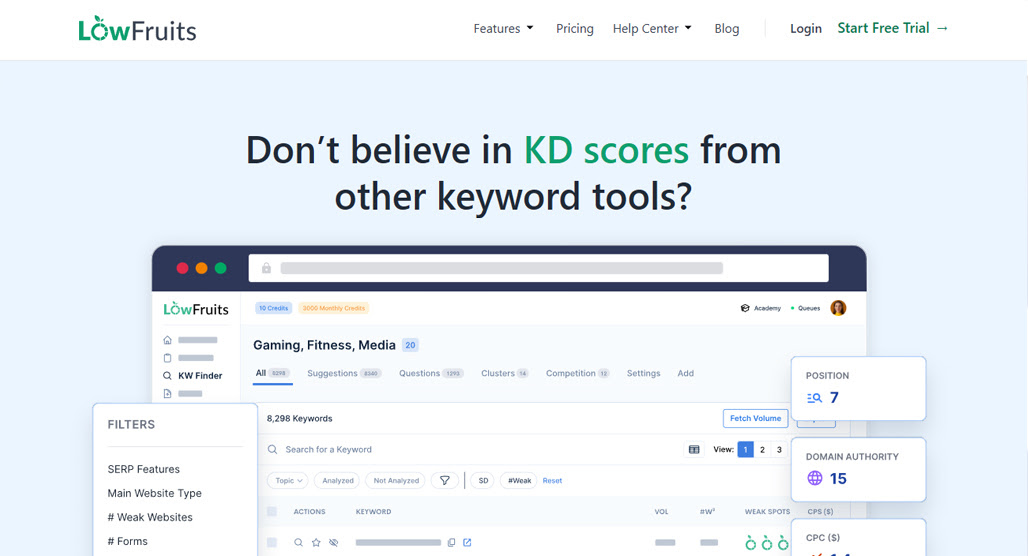
LowFruits does that for you. It's a bulk analyzer that takes keyword difficulty to the next level by analyzing a lot of the data surrounding the keyword's usage rather than just some arbitrary difficulty rating. I have a lot of problems with difficulty as a metric in the first place, and it's nice to see other tools acknowledge them as well.
It also helps with monitoring and identifying keyword clusters, and looking for keywords that can be a good opportunity for a cluster of your own, or orphaned keywords that can stand alone without a cluster. It's flexible, powerful, and fairly inexpensive for what it is.
For the purposes of today's post, focusing on Google Ads, I will say that it's not the best. It does offer some elements of paid advertising as part of the metrics it looks at, but it's not a tool designed for that purpose. I just think it's good enough to mention, regardless, honestly.
Convenient Keyword Data with Keywords Everywhere
Keywords Everywhere is not a unique data source; it really just pulls data from bigger tools like Moz and Google's suite. The power of this particular tool is in the way it gives you that data.
Keywords Everywhere is a browser plugin that lets you scope out keyword data directly on the sites you're browsing. When you do a Google search, you can activate it to give you deeper information about what you see there. When you're browsing trends or social media, you can get another hit. It's all very convenient.
The trick is that it's very easy to burn through your credits if you leave the tool active, so you really need to monitor your usage. When you use it intentionally, though, it's incredibly handy to keep around, and can minimize a lot of the tabbing through tools that can eat up a ton of time and energy throughout a workday. If you're weighing your options, it's worth checking out a comparison of Keyword Surfer vs Keywords Everywhere to see which fits your workflow better.
Is KeywordSpy Worth a Look?
In the past (and even in the post I linked above), I mentioned that KeywordSpy is a pretty good alternative for competitive analysis.
The data they give you is solid, including ad data, ad positions, click volume, keywords, and some organic SEO data. It also has some features for scraping through and spying on affiliate marketing specifically.
One of my complaints with KeywordSpy from my two-year-old review was the dated look of the homepage and the friction in using it. There's no mobile version, there are captchas in the way of data gathering, and so on.
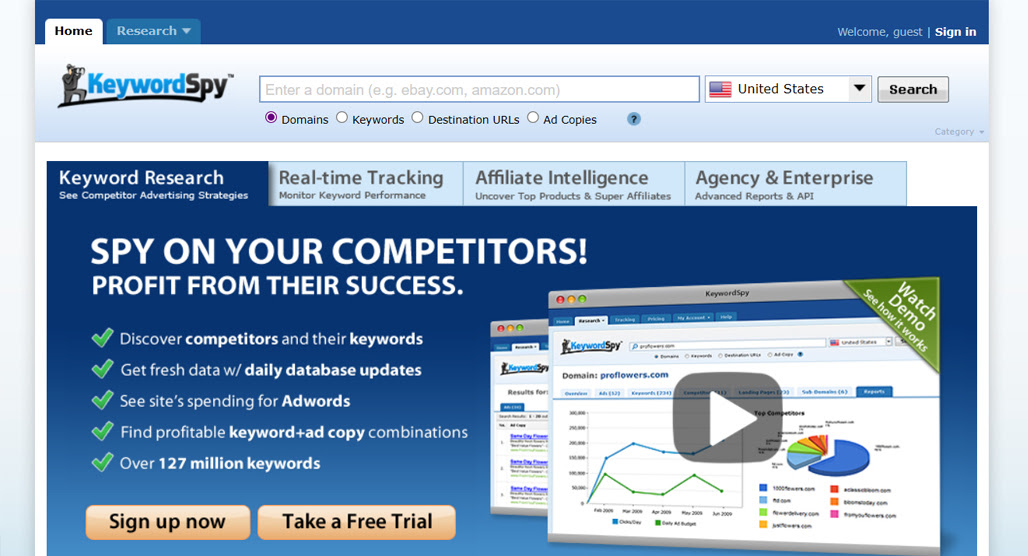
Has anything changed in the last two years? Unfortunately, no.
Or, rather, some things have changed, but not for the better. Their homepage is still dated, but now with the added bonus of broken images. Frankly, I'm not sure I would trust them to have viable data anymore. Fortunately, there are plenty of other good options, so you aren't stuck using this one.
Free Tools for Keyword Research on a Budget
Sometimes you're just starting out, or you're in a slow season or pushing through a rough patch, and you just don't have the budget to use the top-tier tools. That's when free tools come into play.
Honestly, you can get a lot of really good data and real work done with free tools. You just have to put more time into it and, probably, do a little bit of your own coding and data analysis behind the scenes. I find that the more free tools you're using, the more you're also relying on piles of Google Sheets and import-export CSVs, whereas the paid tools tend to let you use APIs or just do the analysis for you.
There's nothing wrong with spending time to save money, just like there's nothing wrong with spending money to save time. It's all about using the resources you have as efficiently as possible.
One downside is that a lot of free tools don't do real-time monitoring of things like PPC ads, because they change more rapidly than organic keyword information, or the information they give you can't be as easily gathered from other whitelabeled services. If you're looking for capable options, check out some of the best free alternatives to Semrush available today.
Again, nothing you can't get around with some math and some cleverness and some time, but it's something to keep in mind as a limitation. Sometimes, hiring a data analyst might be the best step to take.
Using Tools to Find Niche Keywords
One of the main tasks you want to accomplish with any of these tools is finding niche keywords you can target. The usual filters apply; you want keywords that aren't so generic and top-level that they're impossible to rank for, but also aren't so ultra-niche that even reaching 100% saturated gets you barely enough people to fill a classroom. You want keywords that aren't so difficult you'll never hit them, but aren't so easy that they're basically worthless at the same time.
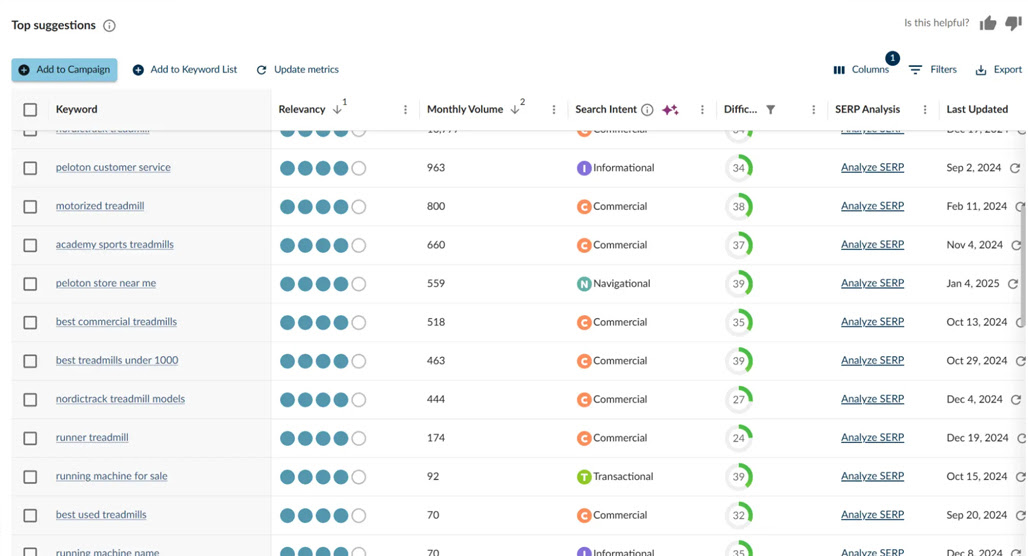
Finding these niche keywords can be tricky, but there are a lot of ways you can use tools to find them, including the tools I've listed here. Add to that data from social media, techniques like keyword gap analyses and clustering, and tricks like iteration and roundups, and you've got a recipe for a great roster of content.
Pick your favorite tools, gather the data, and find viable niche keywords. Then it's just a matter of using them appropriately.
Putting Data Together with Keyword Clustering
At some point, it stops mattering what tools you use to gather data. Instead, what matters is what you're doing with that data.
Keyword clustering is one of the most important techniques available to marketers today. The idea of creating a sort of spiderweb, with a variety of different, interrelated posts all feeding into one core pillar post, is a structure that works more than just a pile of disconnected posts or a more isolated model.
One of the choices you'll have to make is whether you're going to use a dedicated keyword clustering tool or if you want a higher-level tool that does research as well as clustering. Several of the tools above have keyword clustering features, but I've often found that they end up something of an afterthought. Using a stand-alone keyword clustering tool can be more powerful, though it's obviously going to be more expensive to use two tools than just one in most cases.
Keyword clustering is as much of an art as it is a science. It's one area where advancements in LLMs have helped, just because a huge part of how LLMs work is by mapping out the associations between words. I wouldn't just go to ChatGPT and ask it to cluster keywords since that's not how LLM output works, but tools based on similar technologies can be very useful.
Clustering can also help you identify ad opportunities that might be cheaper but beneficial for your needs. For example, if your primary keyword is very expensive, you could run ads to cluster keywords aimed at landing pages that feed into the primary keyword's page, as a backdoor method for getting that targeting. You have to weigh if the price per click or conversion is worth it, but that's no different than normal ads.
Using Ads Data for Organic Marketing
Putting everything together can be tricky. One of the biggest disjoints is between spying on competitors' PPC efforts and using that data for your own marketing.
If you just want to run your own PPC ads, by all means, take what you know and figure out how to undercut or avoid the most direct competition to get ahead. Having direct comparative data instead of relying on something like Google's broad ranges or estimates of the ads auction can be very handy.
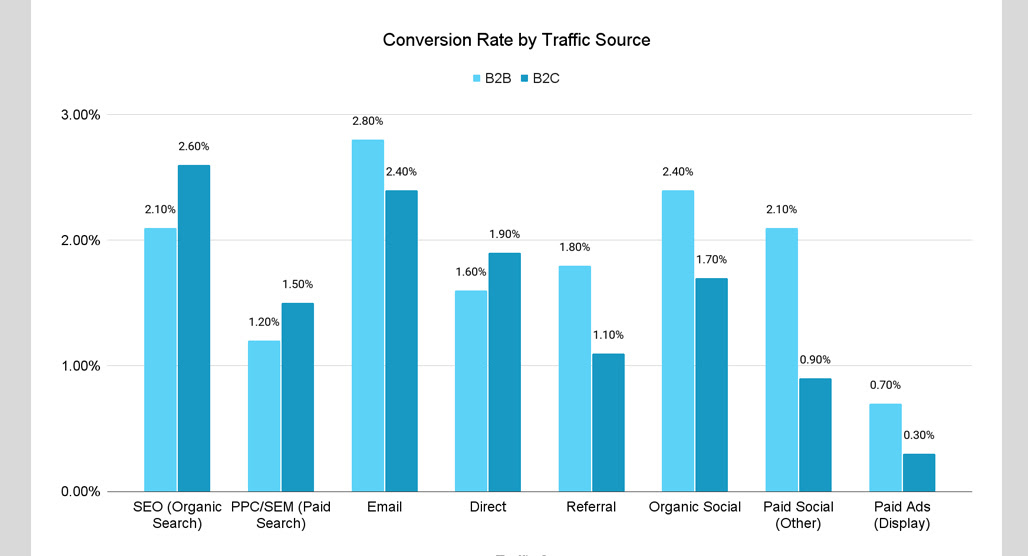
Converting PPC to organic data is where it gets tricky. You can use it to target the things your competitors are trying to dominate, or avoid them. You can use it to get a picture of where they're focusing their efforts and find opportunities to compete without having to spend your own budget. It's all useful, but limited.
When you can get the ball rolling, though, competitive research can be some of the best data you have available. Why not give it a try?

Related Posts


Leave a Comment


Fine-tuned for competitive creators
Topicfinder is designed by a content marketing agency that writes hundreds of longform articles every month and competes at the highest level. It’s tailor-built for competitive content teams, marketers, and businesses.
Get Started