What Are Co-Occurrence Keywords and How to Use Them?
 Written by James Parsons • Updated April 15, 2026


One thing I often have to teach people who are new to SEO is that "keywords" aren't really one particular set of words and phrases that have special power in the search engines.
What constitutes a keyword can vary. Critically, some words can be keywords in some contexts, but not in others. The meaning of a word can also change depending on the context.
One of the key concepts used by modern search engines and LLMs here is co-occurrence. What is it, how do you use it for SEO, and are there risks to focusing too much on it? Let's dig in.
Key Takeaways
- Co-occurrence refers to the relationship between words that frequently appear together, helping search engines understand content context and meaning.
- Google uses co-occurrence to semantically understand topics, detect spun content, and rank pages even without exact keyword matches.
- Natural writing about a topic automatically creates co-occurrence signals; leaving out related terms may indicate artificial content.
- Co-citations differ from co-occurrence - they involve brands being mentioned together across sites, and can't be directly controlled on your own website.
- Practically, co-occurrence keywords are simply related keywords from research tools; using a wider range of them improves topical coverage.
Explaining Co-Occurrence in Keywords
Before getting into the SEO implications, let's start with an overview of what co-occurrence is. The easiest way to grasp it is with an example. Consider these three words:
- Starter
- Proof
- Yeast
Taken individually, they could cover a bunch of different topics.
- When you're talking about a starter, maybe you're diagnosing an automotive problem, maybe you're talking about the athletic brand, or maybe you're writing a gaming resource about the latest Pokémon game.
- When you're mentioning proof, maybe you're talking about the evidence needed to back up a claim, or the mathematical backing behind operations, or maybe the deceased rapper from Detroit or the 2005 movie.
- When you're discussing yeast, you could be talking about homebrewing, an infection, or the nutritional yeast used as a vegan alternative to cheese flavoring.
When you take all three of them together, though, the context starts to become clear. Your yeast is fed and formed into a starter and mixed with ingredients to make a dough that you then proof and bake into a nice loaf of sourdough.
Co-occurrence is the relationship between words that often appear together, and the context that surrounds them.
A word like "starter" can appear in many different contexts. So can the word "yeast". But when they appear together, there's a 99% chance that the text is talking about bread, usually sourdough.
Co-occurrence goes both ways in terms of context.
A search engine like Google can analyze a million pages of content all about one particular subject, and learn that terms that are commonly used on those pages (but not used as much, or not used together) on other pages, are going to be related to that subject.
Conversely, if there are four terms that consistently appear alongside one another, always in the context of one particular subject (like breadmaking), and a fifth term is also consistently appearing on those pages, a search engine like Google can understand that the fifth term is likely also related to breadmaking.
This is one element of how natural language processing is done, and in a way, how building LLMs and training them is done. LLMs are effectively just immensely complex maps of the relationships between words, after all.
Co-occurrence is also one way that Google could detect things like artificially spun content back before the era of LLMs. Content spinners would often identify important words in a text and replace them with thesaurus-based alternatives. Ostensibly, that would work fine, but some of those alternative terms aren't used in the same context, so they stand out.
How Co-Occurrence Relates to SEO
Where does co-occurrence come into play with SEO?
It can play a role from both the search engine side and the content side, though the way it works from the content side might not be as helpful as you might hope.
From the side of the search engines, co-occurrence is one of the many factors they use for language analysis.
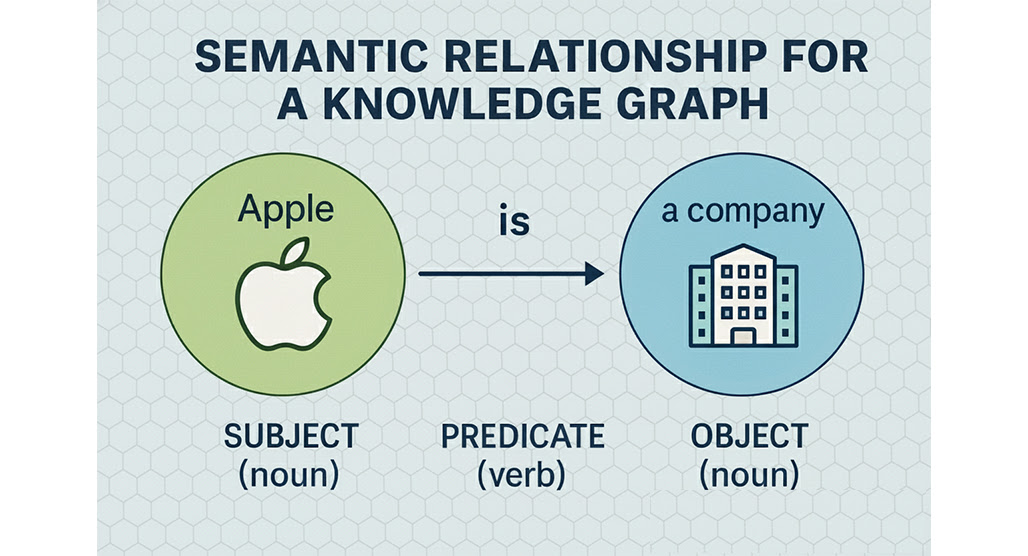
Google can use co-occurrence analysis to gather a lot of information:
- They can use it to semantically understand concepts and the terms related to those concepts. That way, when they analyze a new piece of content, they can know what it's about in a way beyond relying just on keywords.
- They can use it to identify off-kilter or poorly-generated content, such as in the spun content example above. When a given piece of content stands out as not matching their co-occurrence understanding, they might analyze whether or not it's a real relationship or fake.
- They can use it to build relational suggested content. When you search for a movie title, they can recommend queries about the actors in it, because they know those terms have strong co-occurrence.
In the case of search engines, it's all about building a robust understanding of topics. It's also a big part of why, these days, you can search for a specific keyword and find top-ranking results that don't actually use that keyword at all, but are still about the same topic. Google understands that the terms are related, even if the specific term isn't used in an exact match sense.
Co-Occurrence and Entity Marketing
What about from the website's end?
On your end, co-occurrence is something you're probably already doing, and it can impact your content in two ways.
The first is in natural writing and the use of terminology surrounding the concepts you're covering.
When you write about a topic, you write about different elements and aspects of that topic as you go. The terms you use are going to be relevant to that topic, even if they aren't the primary keyword you're targeting with the post.
For example, even if you're writing a guide about building a sourdough starter, you're still probably going to mention terms like proofing (even though it's from a later stage of breadmaking) or gluten development, and so on. In fact, leaving out those terms might be a sign of artificial content, and could even potentially hold you back.
Ironically, since so many blog posts about co-occurrence use the bread example, breadmaking terms now have a minor co-occurrence with SEO. Funny, right? It's not enough to get your breadmaking site ranking in marketing circles or vice versa, but it's an amusing detail.
The second way co-occurrence relates to your SEO is in the research phase.
I often talk about how a blog post can rank for hundreds or thousands of different keywords and queries, even if they aren't the keywords you're targeting. That's because of the semantic understanding of language and the use of co-occurrence in search rankings.
By using co-occurrence, you can examine these semantic relationships and look for keywords that are related to your topics that you haven't covered yet. Sometimes, those minor terms can become posts all their own, or can become part of a content cluster that feeds into one more overarching guide.
All of this comes back to something Google has been pushing for over a decade: entity-based SEO. Google wants you to write organically about subjects with an aim of providing information for people. They don't want you to be focusing on narrow terms to the point of excluding relevant information for fear of "diluting" the keyword.
Co-occurrence is part of this analysis. The more you use a natural level of co-occurrence in your content, the more you're going to fit into the entity-based paradigm of SEO, which is what Google has been trying to get people to do for ages.
Are Co-Citations Related to Co-Occurrence?
You may have seen mention of co-citations when looking into co-occurrence, because a lot of resources cover them at the same time. But are they related?
Only a little. Both terms use co- and have to do with the relationship of elements on a page, but that's about it.
Co-citations are like co-occurrence, specifically for mentions of third-party brands or websites.
Say, for example, you were trying to build a list of the best soft drink brands in the world. But you've never heard of any soft drink brands before, except for Pepsi. What you have is a million webpages, all talking about different soft drinks.
If you analyze all of those webpages, you might find that most of them mention "Pepsi and Coke" or "Pepsi and Coca-Cola" in the same breath. Other brands are mentioned too, of course; Faygo, Gatorade, Fanta, Red Bull, whatever. But, in your analysis, the ones that have the most prominence are Coke and Pepsi.
From this, you can conclude that Coke is also a top-tier brand, because it's always mentioned alongside Pepsi, the one you know of as a top-tier brand. You can even build something of a ranking out of how frequently others appear in proximity to one or the other of those two.
Co-citations are when various websites mention other websites or brands together, which allows search engines like Google to understand that there's a commonality between them.
This can also allow newcomers to break into an industry by being good enough. If thousands of websites started mentioning "the three great soft drink brands: Coke, Pepsi, and Bob's Soda," then eventually, you would be able to conclude that Bob's Soda Company has entered the ranks of the greats.
Unlike co-occurrence, co-citation isn't something you can really use on your website. If it was going to benefit you, it would have to be because other sites are mentioning your brand alongside other brands, which are higher-tier than yours. This is related to the difference between links and citations and how each one can influence your standing in search.
Can You Use Co-Occurrence to Improve Your Ranking?
Since all things in SEO come down to this question, let's talk about it. Can you use the knowledge of co-occurrence to boost your search rankings?
Directly, no. Indirectly, maybe.
Co-occurrence is all about writing naturally about your topics. It's about using terms freely and demonstrating a robust knowledge of your topics. Whether it's representation in a single blog post or across the whole of your site, you want coverage that shows a breadth of knowledge.
You aren't going to find an easy "co-occurrence analyzer" tool out there, and you won't find a co-occurrence letter grade for your content.
But that doesn't mean you can't use some of what you know about co-occurrence to fuel future content marketing.

It all comes down to keyword research. In fact, it's something you're likely already very familiar with.
Whenever you do keyword research and you plug in a single keyword phrase into a tool, and you get a whole list of related keywords? Those are co-occurrence keywords.
So, use them. That's it, that's what it all comes down to. Just use a wider range of related keywords when you talk about a topic.
There are a few tricky strategies you can try, though they aren't guaranteed to work.
One example you see a lot, even though marketers rarely realize they're doing it, is the New Word Technique. Coin a new term related to your overall subject, and use it throughout the content about the subject. Over time, especially if other people pick up the term, that term can start to become associated with the subject. As the person who coined the new term, you gain some small value from it.
Similarly, you can do a lot of third-party posting, guest posting, and outreach. The goal with them would be to cover your topic for other sites, in a way that adds some term of yours (your name, your brand name, your product name, or even a term you coined) to the context of the discussion. It's kind of like brute forcing the co-occurrence of yourself with the subject entity.
Overall, though, co-occurrence is really just about understanding that the era of individual keywords is largely past, and we're all about semantic word clouds and entity SEO now. Once you shift your way of thinking, you'll have a better grasp of the concept.

Related Posts


Leave a Comment


Fine-tuned for competitive creators
Topicfinder is designed by a content marketing agency that writes hundreds of longform articles every month and competes at the highest level. It’s tailor-built for competitive content teams, marketers, and businesses.
Get Started