How Many Blog Posts Should You Write Each Month?
 Written by James Parsons • Updated April 15, 2026


Running a blog is a lot of work, but how much work is it? There are different schools of thought and a lot of variance between industries, niches, and even people within those niches.
I've seen a lot of different businesses with different mindsets over the years as I've run my content marketing agency. I know some successful bloggers who write maybe one post per month, and there are certainly other successful sites that publish multiple posts per day. I've landed somewhere in the middle: one post per week for this site, two per week for my agency's site, and generally one post per week for most of my clients.
Is that ideal? Are there statistics to back it up? What factors come into play to influence the decision? I wanted to dig in and see if there were any recent studies, so settle in and let's take a look.
Key Takeaways
- HubSpot's 2020 data suggested 11-16+ posts monthly boosted traffic, but their 2024 update reversed this, prioritizing quality over volume.
- Posting frequency should match what you can sustain without sacrificing uniqueness, quality, and genuine value for readers.
- Publishing too often risks thin content penalties, running out of valuable topics, and burnout from unsustainable production schedules.
- Successful infrequent bloggers typically combine deep, high-value posts with heavy promotion through social media, outreach, and link building.
- The author reduced his own posting frequency and found intentional, value-focused content produced significantly better results than high-volume output.
Looking at Data
Before digging into more opinion-based discussions and conceptual details, I want to see what the data says, if there's any reliable data available.
Let's start with a LinkedIn post from early 2020. Looking any further back could be interesting but won't be terribly important for a discussion of modern blogging, so I'm not digging further back.

This LinkedIn post uses data from HubSpot and I can't link here because they've updated the post with newer data, so I'll discuss it later. As of 2020, HubSpot found that publishing somewhere in the range of 11+ times per month is where frequency started to have a more noticeable positive impact on traffic. Blogs publishing 16+ times per month saw the most traffic. Blog publishing 0 through about 10 posts per month saw the least.
But is this data meaningful?
If you publish more often, then sure, you'll get more traffic simply because it's a numbers game. If you go fishing, you'll catch more fish if you have 25 hooks in the water than you will if you only have one. But neither strategy is viable if you're trying to fish in a swimming pool.
HubSpot also broke this down, at the time, by size of business, and found that companies with over 200 employees were fairly equal anywhere from 0 to 10 blog posts per month, but shot up at 11. They don't have the raw data, but my assumption is really just that larger companies are willing to throw more at marketing, and so the sample size for infrequent bloggers was just very small.
Publishing 11+ times per month means publishing about once every three days or around three times per week. If I had to hazard a guess, I would assume a Monday-Wednesday-Friday schedule was most common.
This LinkedIn post also pulls in data from Orbit Media, where bloggers report strong positive results and saw an increasing scale in frequency; the more a blogger published, the more they reported their results as positive.
One huge caveat to this data is that it's from before AI hit it big, which will be relevant today.
Skip forward a year to 2021 and look at a post from The Media Captain.
I'm not going to dig through every statistic of this post, but the conclusions are pretty clearly a reaction to the previous post and its contemporaries. Posting 2-4 times per month is "a good start," but they specifically call out the assumption that publishing more means more results. Why?
- Google loves fresh content, yes. But the best-ranking posts are almost always at least a year old.
- AI made it easier than ever to spam out a lot of low-quality or unhelpful content, which could have results in the short term but is unlikely to stand the test of time.
- There are other ways you can focus on content marketing beyond publishing new posts, like updating old posts or growing your blog through other channels.
One part of this was a core update from midway through 2020 that penalized a lot of sites with thin content and is what happens when you focus on volume over value. You'll see me make this case a lot.
Another year forward, what about early 2022? Digital Empires published this one. They talk more about the constraints on volume, things like being able to come up with ideas, or even the physical time it takes to write a blog post versus using tools to do some of the work, and so on. Their overall conclusion is one I'll echo later: your goal is sustainability in production, not sheer volume.
2023 brings us to ContentWriters.com's take on the issue. Now, obviously, an agency that sells blog posts is going to promote posting as often as possible, so there's a little bias here. At the same time, if you look at their pricing page, they start with blog posts in the 300-500-word range, which will definitely earn you a nice thin content penalty if that's all you use. Still, they cite a lot of the same advice: post as often as you can, as long as you aren't sacrificing uniqueness, quality, and value in doing so.
Now, back to HubSpot. I mentioned that they updated their post; they did so in early 2024. Anything new to report?
It's actually more or less a complete retooling of their previous advice. They even cite a marketer whose posting schedule is once every 1-2 months, whose results outdo a lot of other sites publishing much more frequently. Rather than returning to the old advice of publishing as often as possible, they conclude on the same note I will: do what you can, sustainably and with good value.
What a Blog Post Is
One of the details that gets brought up in these posts and is worth considering is what the definition of a blog post even is. That content agency above selling 500-word blog posts in 2025 is probably doing their clients a disservice. My own agency averages 2,000-word blog posts, and sometimes, they need to be longer just to do a topic justice.
There's a trap that a lot of marketers fall into, which is coming largely from a tech and business background. That is, trying to pin down specific statistics for something as variable as knowledge.
It's not like conveying an idea can be done in a specific number of words, right? Some ideas are much larger and more complex than others, and while you can break them down, the smaller bits aren't necessarily valuable on their own. It takes thought and awareness to convey an idea in the proper way it deserves.

Defining what a blog post is requires knowing what your purpose with the post is. Are you bringing attention to a relatively narrow topic, want to include a lot of graphical aid, and don't have a lot of words to write about it? Or are you discussing something deep that requires a lot of data and analysis and could easily be an eBook?
There are some boundaries here. Anything too short is likely to be ignored by Google, either because they view it as too thin to be valuable or simply because anyone else covering the topic will do so in greater depth and outrank you. On the other hand, there's not necessarily a cap on length, though the longer your posts get, the more likely you would be to benefit from breaking them apart and making a content cluster instead. It's also worth knowing which type of blog post gets the most traffic before deciding on your format and depth.
Aligning with your Content Marketing Goals
Another important detail is the purpose of the content. I would argue that there's no such thing as a "blog post" as a single concept. Different kinds of posts have different goals, different purposes, and different formats. The content you write to explain a concept to clients is going to be very different from the content you write to instruct customers on how to use a product, or present the data from a case study. There are many different types of blog post styles worth understanding.
One part of this is figuring out the search intent of the people searching for the keywords you're targeting. The other part is figuring out your own intent with writing the content and how it aligns with the search intent.

This is the biggest difference that separates amateur bloggers from professionals. Amateurs will go through a bunch of tools to build a big keyword list and then just write something for each of those keywords and hope it works. Professionals figure out what the intent is behind those keywords and how to leverage that intent for the benefit of the business. It helps to validate your content topics before committing to writing them.
This is also where AI-generated content doesn't work. AI doesn't have any concept of intentionality behind it, and even if you try to write that into a prompt, it's practically more work to get the prompt to output that kind of intentionality than it is to just write yourself.
Scope and Scale
Something that HubSpot and several of the other posts brought up is that the size of the business and the blog also matter. But not necessarily in the way you think.
A big business has more money and more people to throw at content marketing, and that often (but not always) leads to more volume. It can also lead to more and deeper value in posts, more resources to present unique information, or more varied presentation of content. A big business blogging once a week doesn't mean they're wasting opportunities if they're also producing videos, podcasts, infographics, and other media to boot.

Similarly, a blog that has multiple authors might be able to publish daily or more than once per day. But that volume isn't necessarily going to be valuable. Sites like Forbes publish a ton of content. But how much of it is viewed? How much of it really brings in value to the site
Supporting the Blog
Another factor to consider is what happens beyond just writing and publishing the blog post. Do you share it on social media? Do you post it in discussions on Reddit? Do you perform blogging outreach and link building?
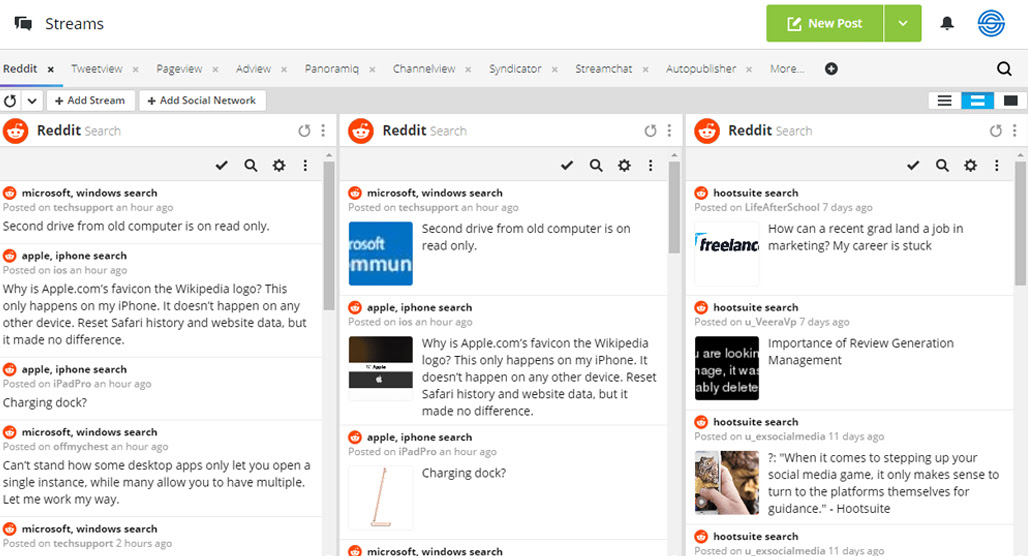
A lot of bloggers who see results from infrequent blogging do so because they're doing two things. They're putting a ton of depth, detail, and value into their posts, and they're heavily promoting them after publication.
Is Writing Too Often a Bad Thing?
On its own, no.
But, writing too often has risks.
One is spam concerns. This is what ends up hitting a lot of AI-generated sites and sites that try to scale too big, too quickly, with no intentionality and no real value. A mass of thin content might get you an initial burst of traffic and maybe even some decent revenue. But it will fall off very quickly. It's not sustainable.

Another is reaching a point where you run out of things to say. The more you write, the harder it is to find new topics that are valuable enough to cover. Part of blogging more slowly means you can go back and revisit old topics you covered a couple of years ago - that doesn't work if you last covered them 36 days ago in your push to reach 100 posts a day. If you're struggling, there are ways to find content ideas even when inspiration runs dry.
It's also almost guaranteed to leave you burnt out.
Why I Do What I Do
What do I do?
I post once per week here on Topicfinder and twice per week on my agency's blog. I don't just write three blog posts per week, though - since I have clients for my agency, I'm often writing upwards of a dozen posts per week alongside my writers.

I strive to keep things sustainable. Years ago, I wrote one post per day per blog, and I ran several different blogs. The posts were shorter, they often ended up surface-level and lacking in value, and they felt more like checking boxes for a keyword list than producing anything people actually wanted to read.
I found that dialing back and putting more focus on the intentional value behind every post has had a massively positive effect. I've also seen similar effects in clients I've convinced to do the same.
What Should Your Answer Be?
Whatever you can sustain with value.
If you're an experienced writer and have a lot to say, can write a unique, valuable, useful blog post every day of the week, and still have time to do other work to promote your blog? Go ahead and post every day if you like.

If you have a lot of other things to do and can only manage to write one high-quality blog post per month? If it's good, and you're promoting your site in other ways, that can work perfectly well.
Remember, there are a lot of ways you can grow a site that aren't just publishing more content. Make sure what you put out into the world is the best it possibly can be - never try to saturate your industry for the sake of saturation.

Related Posts

Leave a Comment


Fine-tuned for competitive creators
Topicfinder is designed by a content marketing agency that writes hundreds of longform articles every month and competes at the highest level. It’s tailor-built for competitive content teams, marketers, and businesses.
Get Started