What is Search Demand Curve and How Does It Apply to SEO?
 Written by James Parsons • Updated June 3, 2026

Search demand isn't spread evenly across keywords. A small number of terms draw giant search volume. But millions of others get searched only a handful of times per month. Here's what makes that interesting: those lower-volume searches, taken together, usually represent more total traffic than the popular terms at the top. This isn't a quirk - it's a pattern, and it has a name: it's called the search demand curve.
This curve changes how you think about keyword research, content strategy, and where to actually focus your effort. It explains why some sites with no high-volume rankings still pull in organic traffic, and why chasing head terms alone can leave opportunity on the table.
I'll break down what the search demand curve is, how it's structured, and what it means for building an SEO strategy that works across the full spectrum of search - not just the loudest part of it.
Table of Contents
What the Search Demand Curve Actually Shows
The search demand curve is a graph that maps search volume against the number of keywords that produce that volume - it sounds technical, but the shape tells an easy story.
On the left side of the graph, you have a small number of terms that get searched a giant number of times. Think of words like "shoes" or "weather" - single words or short phrases that millions of people type every month. The line at this end sits very high up on the graph.
As you move to the right, the line drops fast. The more right you go, the more specific the search terms become and the fewer times each one gets searched. By the time you reach the far right end of the graph, you're looking at phrases that might only get searched a handful of times per month. But there are millions of those phrases, and that's the part that matters.
The shape itself looks like a cut-back slope that levels off into a long, flat tail stretching out to the right - it falls hard at the start and then spreads wide across a giant number of low-volume terms. That wide, flat section represents the bulk of all search activity when you add it all up.
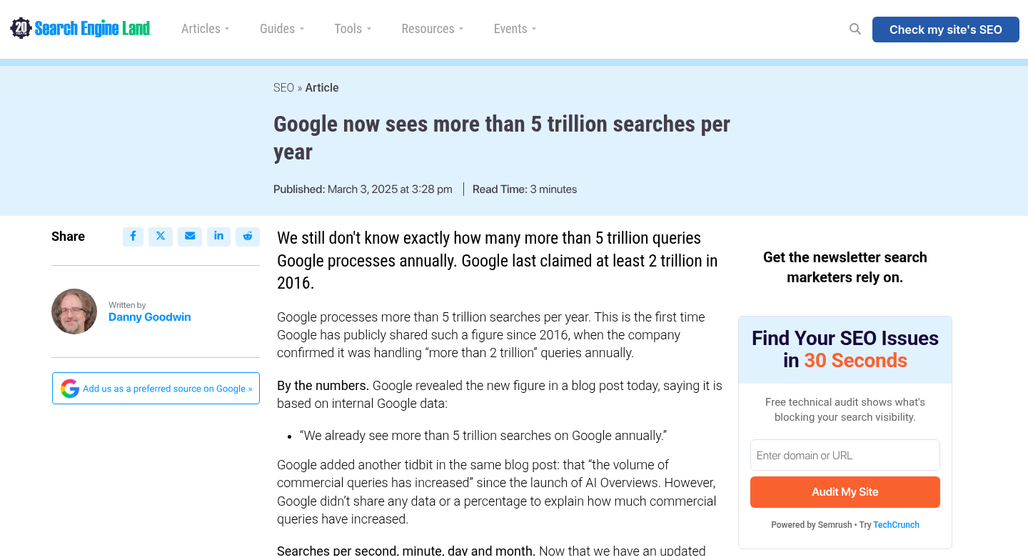
To appreciate the scale here, Google processes over 5 trillion searches every year. That number makes the curve less of an abstract concept and more of a map of human curiosity at a widespread level. Most of those trillions of searches are not single generic words.
A large portion of searches every day are phrases that have never been searched before in that exact form. People string words together in their own way to find what they need, and that gives you an almost endless number of search queries spread across the right side of that curve.
Some terms carry massive traffic on their own, and millions of other terms share the rest between them. That distribution is uneven in a way that has implications for how websites get found.
Fat Head, Chunky Middle, and Long Tail - Breaking Down the Three Zones
The search demand curve splits into three zones, and each one behaves very differently.
The fat head sits at the top of the curve. These are the short, broad terms that pull in massive search volume - think "running shoes" or "email marketing." They make up roughly 18.5% of searches by occurrence. But they draw giant competition from businesses with big budgets and years of authority built up.
The chunky middle sits between the two extremes. These are two- or three-word phrases with moderate volume and moderate competition. They are more targeted than head terms but not as narrow as the tail. A newer site can realistically compete here with the right content and a bit of patience.
Then there's the long tail, and this is where things get interesting. According to Backlinko's analysis of 306 million keywords, the long tail accounts for 91.8% of all search queries. That number alone tells you something important about where most of the internet's searching actually happens.

The long tail is made up of longer, more specific phrases - the kind a person types when they know what they want. A term like "best waterproof trail running shoes for wide feet" is a good example. These phrases get far fewer searches individually. But they add up to a giant share of total search demand.
Here is a stat worth sitting with: 92% of all keywords get 10 or fewer searches per month. That means the majority of search queries are quite rare on their own. The tail is not one big keyword - it's millions of small ones.
Chasing only fat head terms is a tempting strategy because the volume looks great on paper. But those terms are hard to rank for and the people searching them are not necessarily ready for anything yet. They might just be browsing.
A site that ignores the long tail leaves ground uncovered. The traffic from any single long-tail keyword may be small. But together those terms represent the bulk of search activity happening every day.
| Zone | Search Volume | Competition Level | Share of Queries |
|---|---|---|---|
| Fat Head | Very high | Very high | ~18.5% |
| Chunky Middle | Moderate | Moderate | Varies |
| Long Tail | Low per keyword | Low to moderate | ~91.8% |
Why Long-Tail Keywords Convert Better Than Head Terms

Consider the difference between typing "shoes" versus "women's waterproof trail running shoes size 9." These are not two versions of the same search - they represent two different moments in a person's choice process.
The person typing "shoes" could be browsing, daydreaming, or just getting started. They have no destination yet. But the person typing that long phrase knows what they want. They've done the research, narrowed it down, and they're ready to act. That level of specificity is usually a signal of intent.
That's what makes long-tail keywords so helpful in practice. The more words someone uses to describe what they want, the closer they usually are to doing something about it - buying, booking, signing up, or reaching out. A vague query leaves room for interpretation. A precise query leaves almost none.
It's helpful to try to see what that person is actually feeling when they type a hyper-specific search. They're not looking around anymore. They've already gone through the research phase and come out the other side with a choice nearly made. At that point, the job is to be there with the right answer.
Lower competition is another big part of the story here. Head terms draw giant amounts of traffic. But they also draw giant amounts of competition. Ranking for "shoes" means going up against some of the biggest retailers in the world. Ranking for a precise, intent-heavy phrase is a more achievable goal for most websites.
The question worth sitting with is this: would you rather have 10,000 visitors who aren't sure what they want, or 500 visitors who are ready to buy? Volume looks great. But conversions are what actually matter to a business. Lower traffic with higher intent performs better where it counts.
Head terms have value for brand awareness and top-of-funnel reach. But for driving results, long-tail phrases are where that happens. The specificity that makes them less popular in search volume is the exact same thing that makes them more likely to convert. If you want to see what this looks like in action, examples of high-intent blog posts can help illustrate the difference.
How AI Overviews Are Pushing Search Demand Further Down the Tail
Something measurable has changed in how people type search queries. BrightEdge tracked AI Overview-triggering queries and found that the average query length grew from 3.1 words in June 2024 to 4.2 words by the end of that same year. That is not a dramatic leap in numbers. But it represents a behavioral change happening across millions of searches.
People are writing longer, more conversational queries because that's what gets them a helpful answer. When someone expects an AI-generated response at the top of results, they instinctively give more context in the question. Instead of typing "knee pain causes," they write something closer to "what causes knee pain when walking downstairs." That second query is more down the tail, and it's also far more specific about the person's situation.
This matters for the search demand curve because it means volume is redistributing. Demand is not disappearing - it's moving toward queries that carry more words and intent. The head of the curve still gets traffic. But the long tail is deeper and populated with queries that would not have existed in that form a few years ago.
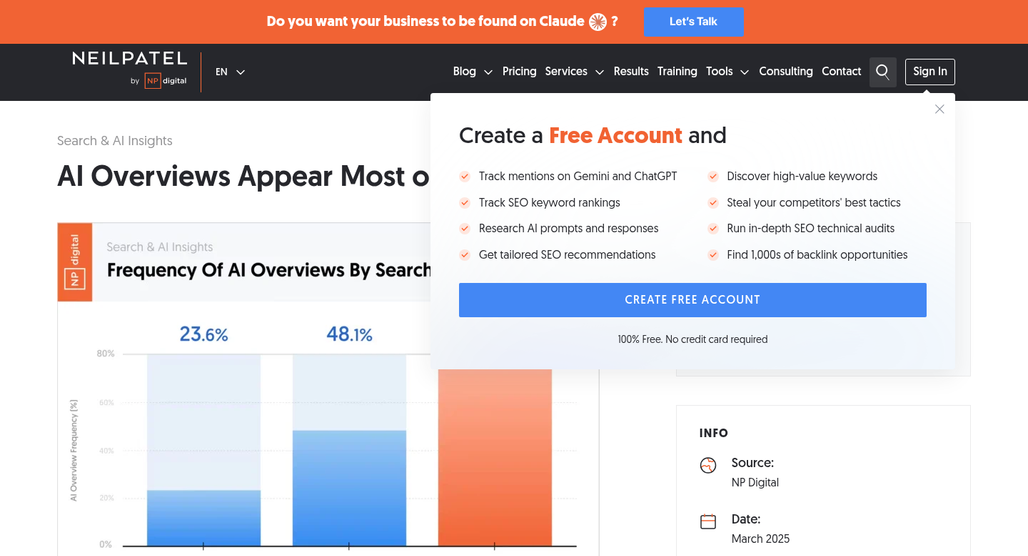
For content, this changes what "good" looks like on the page. A short answer to a large question is less likely to satisfy a searcher who asked something specific and conversational. Content that speaks to a scenario, explains a process step by step, or addresses a precise situation is what tends to line up with the query that now triggers AI Overviews.
It also means that query research needs to include longer phrases and question-based terms more than it used to. Tools that surface people also ask data and conversational keyword variations are more helpful now than a list of high-volume head terms alone. Understanding entity-based keywords has also become more relevant as queries grow more descriptive and context-rich.
None of that means AI is rewriting SEO from scratch. Searchers are being more specific because they have learned that specificity gets better results. The search demand curve has always rewarded content that matches intent - what is changing is where that intent is showing up and how much detail it comes packaged with.
Mapping the Curve to Your SEO Strategy Across Content Types
Different parts of the search demand curve call for different types of content; it's not a coincidence - it's the whole point of the curve.
Head terms, the ones with the highest search volume, are best assigned to your most authoritative pages. Think homepages, core service pages, and pillar content that covers a large topic in depth. These pages need to carry weight because the competition for head terms is intense and established sites tend to dominate them.
The middle of the curve is where blog posts, how-to guides, and comparison pages like to live. Search volume is lower than head terms but the intent is more focused, which makes it easier to write content that legitimately matches what searchers need - a productive zone for most sites to work in.
Long-tail content is a natural fit for FAQ pages, niche landing pages, and very specific guides. The traffic per page is small. But these searches come from people who are close to a choice. That matters.
| Curve Zone | Content Type | Primary Goal |
|---|---|---|
| Head (high volume) | Pillar pages, homepages | Build authority and visibility |
| Middle | Blog posts, guides, comparisons | Capture intent-driven traffic |
| Long tail (low volume) | FAQ pages, niche landing pages | Reach ready-to-act audiences |
If you run a smaller site, the long tail is not a fallback for when head terms feel out of reach - it's a place to start. You can rank, get traffic, and build credibility without going head-to-head with sites that have years of domain authority on you.
One of the more common mistakes is to focus on only one zone. Sites that chase only head terms have a hard time ranking and miss an opportunity for easier wins. Sites that go too narrow never build enough topical presence to grow.
The other thing to watch is search intent. A high-volume keyword means nothing if your content doesn't match what the searcher actually wants to do - read, compare, buy, or learn.
Start Where the Curve Bends, Not Where Everyone Else Is Looking
A keyword strategy that only chases the head ignores the majority of search demand. Auditing your latest strategy against the curve - recognizing where your content sits and where the gaps are - can show more growth potential than any single optimization change.

Here are a few concrete steps to start:
- Pull your current keyword list and categorize each term as head, middle, or long tail based on monthly search volume.
- Identify your long-tail gaps by using tools like Google Search Console, Ahrefs, or Semrush to surface queries you're ranking for but haven't explicitly targeted with dedicated content.
- Map content to intent - for each long-tail cluster you find, consider whether your existing pages actually answer the specific question being asked, or just touch on it loosely.
- Prioritize one underserved niche in the tail and build out a focused content piece this week, before expanding further.
Consider your own site: if you removed every piece of content targeting high-volume keywords, how much traffic would remain? That answer tells you more about the health of your SEO strategy than almost any metric, and it's worth thinking about as you plan your next move.

Related Posts



Leave a Comment


Fine-tuned for competitive creators
Topicfinder is designed by a content marketing agency that writes hundreds of longform articles every month and competes at the highest level. It’s tailor-built for competitive content teams, marketers, and businesses.
Get Started