What Are Entity-Based Keywords and How Do You Research Them?
 Written by James Parsons • Updated April 24, 2026

Google has spent the better part of a decade moving away from reading content as a collection of matching strings and toward understanding it the way a knowledgeable person might. The phrase that captures this change best came directly from Google itself: "things, not strings." Instead of just pattern-matching your words, Google tries to find the real-world concepts - the places, products, ideas, and relationships - that your content is actually about. These concepts are called entities, and they form the foundation of how modern search works.
This doesn't mean keywords are dead - it means the definition of a keyword has quietly expanded. Entity-based keywords aren't just the words themselves - they're the concepts those words represent: the web of related ideas, attributes, and associations that help a search engine understand context and meaning. When you start thinking this way, keyword research starts to look a little different.
This guide breaks down what entity-based keywords actually are, why they matter for your content strategy, and how you can research them without needing a data science degree. Whether you're a solo content creator or an SEO trying to sharpen your process, the goal here is being helpful - not abstract theory.
Key Takeaways
- Google's 2012 Knowledge Graph and 2019 BERT shifted search from word-matching to understanding real-world concepts and relationships.
- Entities are distinct, identifiable things like people, places, and organizations - vague phrases like "best coffee" don't qualify.
- Entity-based SEO rewards depth across related topics, with topic clusters delivering around 38% more organic traffic on average.
- Google's Knowledge Panels, Wikipedia, Wikidata, and the Natural Language API help identify which entities matter for your content.
- Write naturally first, then check entity coverage - a focused page covering fewer entities well outperforms one referencing everything.
Table of Contents
How Google Moved From Matching Words to Understanding Things
For most of its early life, Google worked by matching the words in your search to the words on a page. Type in "apple recipes," and Google looked for pages that contained those exact words - it was functional. But it had a weakness - words mean different things in different contexts, and Google had no way to tell them apart.
That started to change in 2012 when Google launched the Knowledge Graph. The idea was to move away from strings of text and start building knowledge of real-world things and how they connect to each other. As of May 2024, the Knowledge Graph holds over 1.6 trillion facts about 54 billion entities; it's a staggering amount of structured knowledge, and it's what lets Google connect "Leonardo da Vinci" to the Mona Lisa, to Florence, to the Renaissance - without needing a page to spell that out.
Then came BERT in 2019, and it changed how Google reads sentences. BERT is a language model that helped Google understand the relationship between words in a query instead of just the words themselves. A search like "can you get a visa to Brazil without a passport" stopped being a hunt for those particular words and became something Google could actually interpret as a question with context and intent.
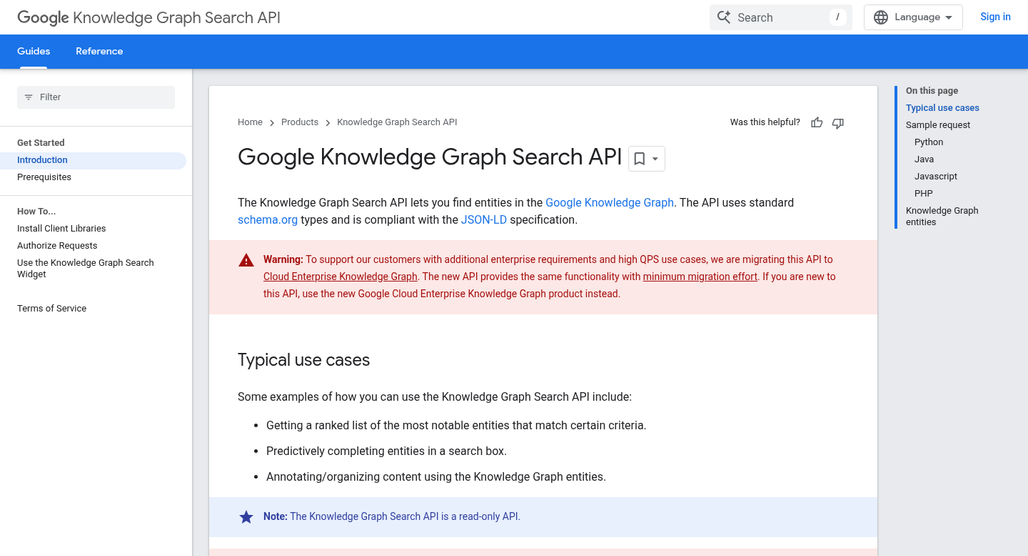
These two developments pulled in the same direction. The Knowledge Graph gave Google a map of the world's information and how it's connected. BERT gave Google a better way to read what people actually mean when they search. Together, they pushed Google toward meaning instead of just matching text.
This matters for anyone who creates content or thinks about search. If Google is working from a structured map of the world, then the words you use on a page are only part of the picture. What those words refer to - the things, places, and concepts behind them - carries weight in how Google interprets and ranks content.
It's trying to know what your page is about in a much wider sense, and that's the foundation for everything that entity-based keyword research is built on.
What Counts as an Entity (and What Doesn't)

An entity, in Google's eyes, is anything that's distinct and identifiable. That includes people, places, organizations, products and concepts - as long as Google can point to it as a defined thing in the world.
Think about the difference between "coffee" and "Starbucks." Coffee is a large concept - it refers to a drink, a category, a general idea. Starbucks, on the other hand, is a company with a history, a headquarters, a set of products and a recognizable presence. Google can build a profile around Starbucks - it can't do the same with "coffee" on its own.
That distinction matters more than it seems. A phrase like "the best coffee" is neither an entity nor an idea with edges - it's an opinion about something vague. Google can interpret it. But it can't anchor it to anything in the Knowledge Graph.
To make this more concrete, here's how a few examples break down.
| Term | Entity or Not? | Why |
|---|---|---|
| Starbucks | Entity | A distinct, identifiable organization with a known profile |
| Coffee | Concept (borderline entity) | Broad and general - Google understands it but can't pin it to one thing |
| The best coffee | Not an entity | An opinion with no fixed, identifiable referent |
| Marie Curie | Entity | A specific person with a documented identity and attributes |
| Good scientists | Not an entity | Too vague to anchor to anything real |
Ambiguity is the problem here. If Google can't determine what something refers to, it can't connect it to related entities or rank content about it with confidence. This is also why the difference between SEO topics and keywords matters - topics tend to map more cleanly to identifiable entities than loose keyword phrases do.
That's part of why Google ran what's been referred to as a "Clarity Cleanup" in June 2025 - removing around 3 billion outdated or ambiguous entities from its systems; it's a large-scale effort to keep the Knowledge Graph precise and reliable.
The line between a vague topic and an entity can depend on whether Google can point to a defined thing. If yes, you're working with an entity. If the answer is "it depends on context," you're probably not - and that ambiguity can affect everything from how long-tail keywords rank to how confidently Google surfaces your content at all.
Why Entity-Based Keywords Work Differently Than Traditional Keywords

Traditional keyword targeting is built around frequency. The idea was simple: use a phrase enough times and Google will associate your page with it. Entity-based keywords don't work that way because Google isn't counting words anymore - it's building a picture of what your content is actually about.
Google's Knowledge Graph connects entities to each other based on meaning and context. A page about "Einstein" that also discusses relativity, physics and Princeton sends a very different signal than a page that just drops the name a few times.
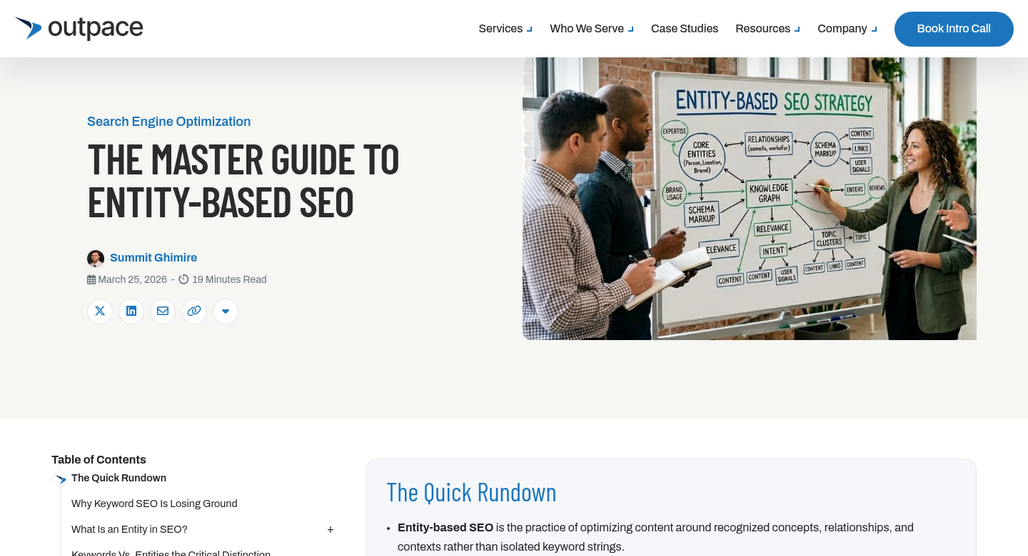
This is where topic clusters come in. Entity-based SEO means building content that covers a subject from multiple angles so the connections between ideas reinforce each other, instead of writing one page to target one keyword. SEMrush data has shown that sites using topic clusters see around a 38% increase in organic traffic on average - not a small number.
Google rewards content that shows depth across a subject instead of content that repeats a single phrase. An entity-rich page earns relevance through association - through what it links to, what links to it and what related ideas it addresses. Frequency alone doesn't build that credibility.
There's also a helpful difference in how you research these keywords. With traditional keywords, you look for high-volume phrases and fit them into your content. With entity-based keywords, you have to map the full subject territory - what people, places, concepts and events belong to this topic - and then find the language that connects them. Finding alternative, synonym, and related industry keywords is one way to start building that map.
If your content is still targeting isolated phrases without context, it's basically telling Google that the page is about a string of words instead of a subject; it's a weaker signal in a search environment that has been built to know meaning.
Entity-based keywords don't replace traditional keyword research - they expand it. You want to move from targeting a phrase to legitimately covering a topic, which means understanding how the ideas within that topic relate to each other and letting that shape the content you create.
Tools and Signals You Can Use to Find Entity-Based Keywords
The good news is that Google will already teach you what it knows about entities - you just have to know where to look. Start with the Knowledge Panel that appears on the right side of search results when you search for a person, place, brand, or concept. That panel is basically Google telling you "here is what I understand this entity to be," and the labels, categories, and related links inside it are all worth noting.
The "People Also Search For" box is another helpful signal. When Google groups names or topics together in that section, it's showing you how it connects entities to each other. Those relationships matter because Google does not rank content in isolation - it understands how ideas link together, and your content can benefit from reflecting those same connections.
Wikipedia and Wikidata are two of the most helpful starting points for entity research. Google draws heavily from structured sources like these to build its understanding of the world, so if an idea has a Wikipedia page and a Wikidata entry, it's almost treated as a confirmed entity. Reading through those pages gives you an idea about the categories, related topics, and descriptive language that Google associates with a given subject.
For a more technical strategy, Google's Natural Language API lets you paste in text and see which entities Google pulls from it - it's free to use at a basic level and gives you a direct look at how the algorithm reads content. You can test your own drafts or a competitor's page to see which entities come through most strongly.
One thing to watch for: a keyword with high search volume is not automatically an entity. "Best running shoes" is a phrase people search for. But it's not something Google has a structured understanding of in the way it does a brand or athlete.
Taken together, these tools give you a picture of how Google categorizes and connects information in your topic area. You want to know the relationships between the entities your content touches on - not just to collect a list of terms.
How to Build Content Around Entities Without Losing Your Natural Voice
Once you have a list of entities to work with, the next step is to write content that actually uses them well. That means being steady with how you name things. If your page is about a person, a place, or an idea, you can use the same name throughout instead of switching between variations. Google connects entities partly by recognising steady references, so mixing up names can make it harder for the page to register as being about one thing.
Internal linking helps too. When you link to other pages on your site that cover related entities, you give Google more context about how those topics connect. A page about espresso that links to your pages on coffee grinders and brewing methods is telling a clearer story than one that just mentions those things in passing.
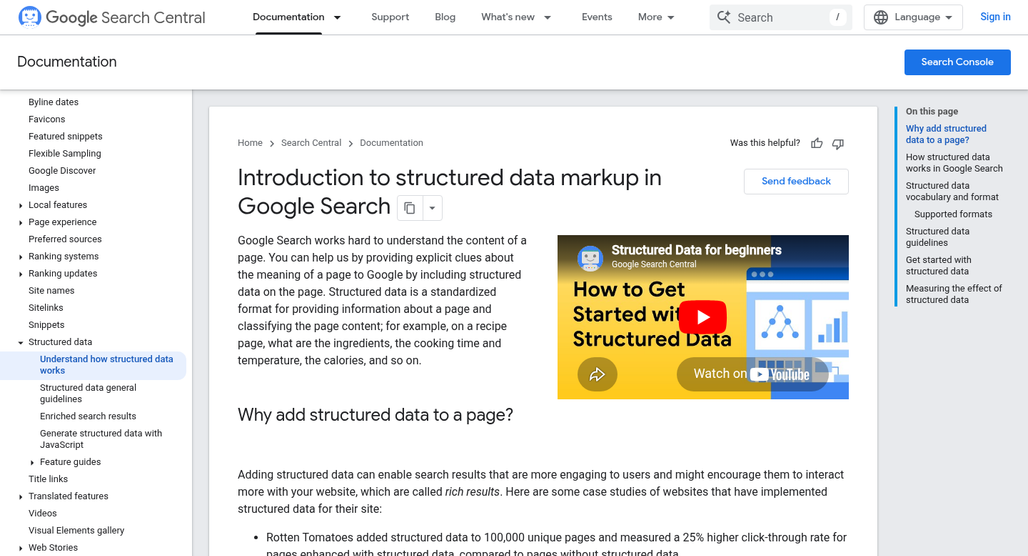
Structured data is worth adding when it fits. Schema markup lets you label entities explicitly, and it helps Google understand what a page is about without having to guess. You don't need it on every page, but for topics that matter it can make a difference to how your content is interpreted.
Here is the tension that writers feel: if you load a page with entity references and structured data, the writing can start to feel stiff. Content that reads like a checklist tends to lose readers quickly, and that can affect your performance in ways that no amount of technical optimisation can fix. Diversifying the types of content you create can help keep things feeling fresh and reader-focused.
The way to manage this is to write for the reader first and then check your entity coverage afterward. Get your ideas down in natural language, then go back and look at whether the important entities are named and used - this light editing pass is much less disruptive than trying to work entities into every sentence from the start.
You also don't need to mention every related entity you found in your research. Pick the ones that legitimately belong in the piece and let the rest go. A focused page that covers a handful of entities well will usually perform better than one that tries to reference everything at once.
The goal is a page that reads like it was written by a person who knows the topic well. That authority comes through in the writing itself, and that's what entity-based content is trying to signal to Google. Tools like Perplexity can help you write more naturally while still covering the ground your topic requires.
Entities Are the Long Game - Here's How to Start Small
You don't need to rebuild your entire content strategy overnight. A helpful place to start is picking one topic cluster or one core entity your brand or site is closely connected with, mapping out its relationships, and making sure your content aligns with those connections. From there, the process can become more intuitive - and the gaps become easier to find.
It's also worth keeping the bigger picture in mind. With 82% of users already finding AI-powered search more helpful than traditional results, the systems looking at your content are better at context, authority, and meaning. Establishing entity authority now is about making sure your content is understood correctly by the tools that are increasingly shaping how people discover information.
The change is less daunting than it sounds. Start small, think in relationships, and let your expertise speak for itself; it's what entity-based SEO is asking of you. Building that foundation is also one of the best methods to increase your domain authority over time.

Related Posts


Leave a Comment


Fine-tuned for competitive creators
Topicfinder is designed by a content marketing agency that writes hundreds of longform articles every month and competes at the highest level. It’s tailor-built for competitive content teams, marketers, and businesses.
Get Started